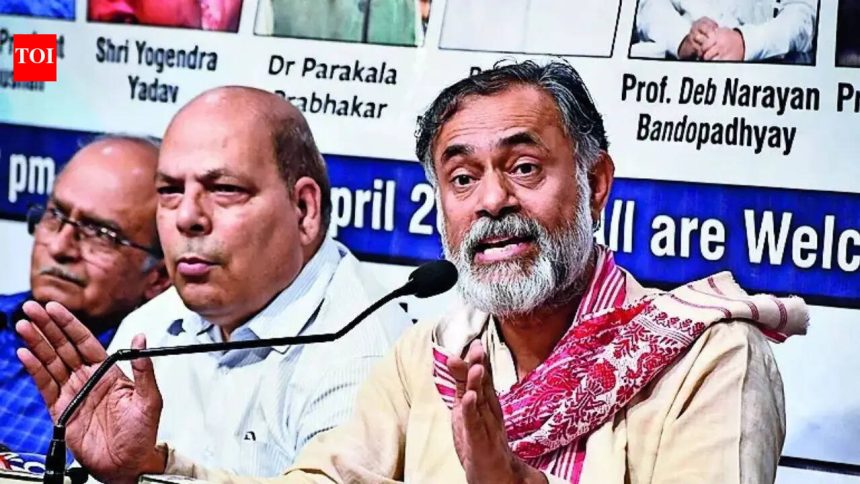
The recent introduction of the Special Intensive Revision (SIR) in Bengal has sparked widespread criticism and alarm among experts, who have branded the move as a ‘bloodless political genocide.’ Economist Parakala Prabhakar was among the first to speak out, voicing his concerns at a high-profile event. With the SIR set to significantly alter the electoral landscape in the state, many are left wondering whether this is a genuine attempt to reform or a clever ploy to consolidate power.
Flaws in the System
At the heart of the SIR is a complex web of electoral reforms aimed at streamlining the voting process and reducing voter turnout. While this may seem like a laudable goal, critics argue that the new system will disproportionately benefit the ruling party. The introduction of a new voter list, which will see an estimated 3.5 million voters deleted, has raised eyebrows among opposition parties, who claim that this will give their rivals a significant advantage. Furthermore, the SIR has also been criticized for its lack of transparency and the absence of clear guidelines on how the new system will be implemented. This lack of clarity has led many to speculate that the true intention behind the SIR is to manipulate the outcome of future elections.
Prabhakar’s scathing critique of the SIR has been echoed by several other experts, who have expressed similar concerns about the potential for electoral manipulation. ‘The SIR is a thinly veiled attempt to consolidate power and suppress the opposition,’ said one analyst, who wished to remain anonymous. ‘By altering the electoral landscape in this way, the ruling party is essentially rewriting the rules to suit their own interests.’
Constitutional Concerns
The SIR has also sparked fears about the potential erosion of democratic norms in Bengal. Many are worried that the new system will undermine the principles of free and fair elections, which are enshrined in the Indian Constitution. The Constitution’s Article 326, which guarantees the right to vote to all citizens, has been cited by several experts as a key concern. ‘The SIR is a clear contravention of Article 326,’ said Prabhakar. ‘By making it more difficult for citizens to cast their ballots, the ruling party is effectively undermining the very fabric of our democracy.’
As the SIR continues to make headlines, many are left wondering what the long-term consequences will be. While some have hailed the move as a necessary reform, others see it as a brazen power grab. One thing is certain, however: the SIR has sparked a heated debate about the future of democracy in Bengal.
International Scrutiny
The SIR has also attracted international attention, with several human rights organizations expressing concern about the potential impact on the state’s democratic institutions. The United Nations has been monitoring the situation closely, with several senior officials weighing in on the matter. ‘The UN is deeply concerned about the potential for electoral manipulation in Bengal,’ said a spokesperson for the UN High Commissioner for Human Rights. ‘We urge the government to ensure that the SIR is implemented in a transparent and inclusive manner.’
As the debate rages on, one thing is clear: the SIR has become a major flashpoint in the struggle for democratic rights in Bengal. With the state’s electoral landscape set to undergo a significant transformation, many are left wondering what the future holds for the state’s citizens.
As the SIR continues to dominate the headlines, it remains to be seen whether this will be a moment of truth for Bengal’s democratic institutions or a further erosion of the state’s democratic norms.