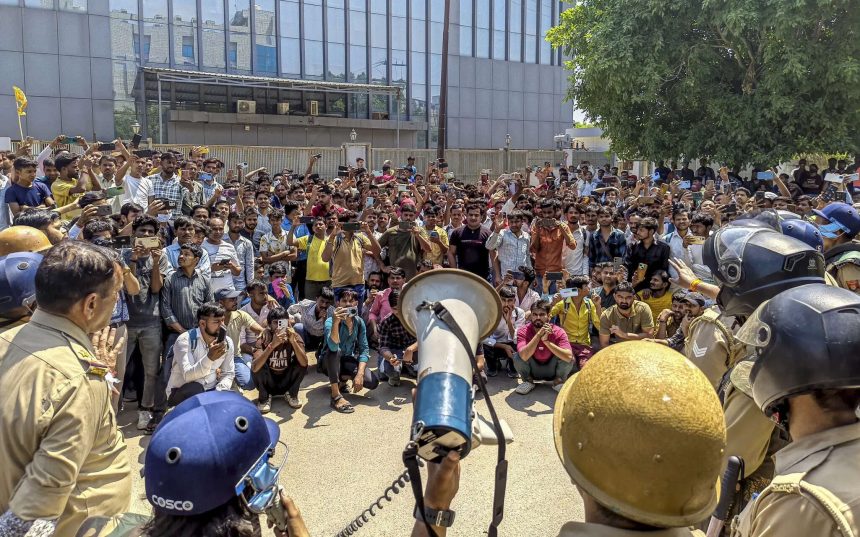
The usually tranquil streets of Noida’s industrial hubs were transformed into a battleground on Monday as factory workers took to the streets to protest against their meager wages and deplorable working conditions. What began as a peaceful demonstration quickly escalated into violent clashes with the police, leaving several injured and property damaged. At the heart of the protests lies a deep-seated anger and frustration among the workers, who feel that their concerns have been consistently disregarded by the authorities. The incident has brought into focus the harsh realities of India’s manufacturing sector, where workers are often subjected to exploitative practices and poor treatment.
Key Issues Driving the Protests
The protests in Noida are just the tip of the iceberg in a long-standing struggle for workers’ rights in India’s industrial belt. At the core of the issue are the meager wages and benefits that workers receive, which are often barely enough to make ends meet. Many workers are forced to work for 12 hours a day, seven days a week, for a meager salary of Rs 10,000 to Rs 15,000 per month. This is despite the fact that many factories in the area are generating massive profits, with some companies reporting annual revenues of over Rs 100 crore.
The situation is further exacerbated by the lack of job security and social benefits for workers. Many are forced to work on temporary contracts, leaving them vulnerable to exploitation and abuse. The absence of a robust labor laws framework in India has made it easy for companies to take advantage of workers, often pushing them to work in hazardous conditions without adequate safety measures. The Noida protests highlight the urgent need for reforms in India’s labor laws, which must prioritize the rights and welfare of workers.
Wages and Other Demands of the Workers
So, what are the key demands of the workers in Noida? At the top of their list are wage hikes, which they feel are long overdue. Workers are asking for a minimum wage of Rs 20,000 per month, which is a significant increase from the current rate of Rs 10,000 to Rs 15,000. They are also demanding better working conditions, including regular breaks, adequate safety measures, and a reduction in working hours. In addition, workers are seeking better benefits, including health insurance, pension schemes, and leave privileges.
The workers are also demanding an end to the practice of hiring temporary workers, who are often paid lower wages and denied basic rights. They want a guarantee of job security and a say in decision-making processes within their factories. The workers’ demands are not just about better wages and working conditions; they are also about dignity and respect in the workplace.
Government Response and Future Directions
The government’s response to the protests has been slow and inadequate. While authorities have promised to look into the workers’ demands, no concrete action has been taken to address their grievances. The lack of a clear policy framework and a robust labor laws framework has left workers vulnerable to exploitation and abuse. To prevent such incidents in the future, the government must take a more proactive approach to addressing workers’ rights and welfare.
The Noida protests are a wake-up call for the government and the industry to take workers’ concerns seriously. It is time for a radical shift in the way we approach labor laws and workers’ rights in India. The future of India’s manufacturing sector depends on it.
As the situation in Noida continues to unfold, one thing is clear: the protests are not just about wages and working conditions; they are about dignity, respect, and the right to a decent life. It is time for the industry and the government to listen to the workers and work towards a more equitable and just society.