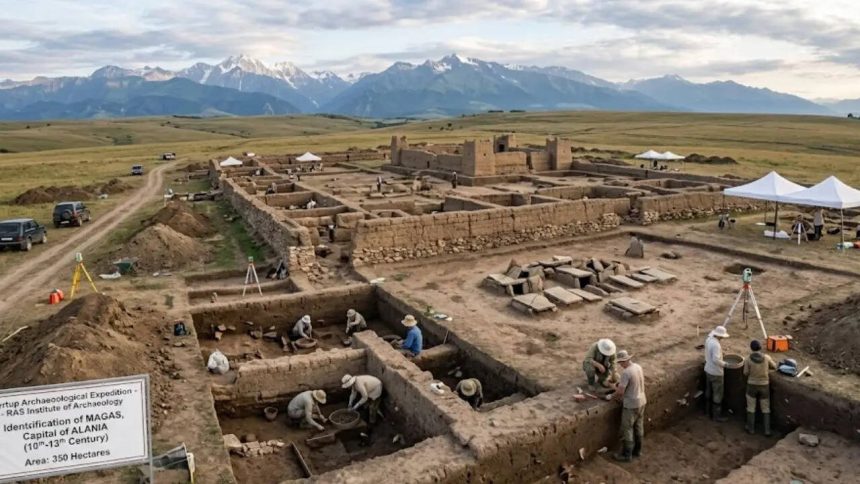
Deep beneath the rugged Chechen terrain, a team of intrepid archaeologists has unearthed a hidden gem, hidden for centuries – the ancient city of Magas. The sprawling metropolis, stretching an impressive 350 hectares, has left experts awestruck, shedding new light on the medieval history of the region. For years, whispers of a lost city had echoed through the annals of history, and finally, the veil has been lifted, revealing a treasure trove of artifacts and relics that promise to rewrite the narrative of this enigmatic civilization.
Unraveling the Mystery of the Mayrtup Burial Ground
The site of the discovery lies within the Mayrtup burial ground, a location steeped in history and intrigue. Archaeologists, armed with cutting-edge technology and a keen eye for detail, combed the terrain, searching for clues that would lead them to the lost city. Weeks of excavations yielded nothing short of a treasure trove, with the team stumbling upon a labyrinthine network of streets, buildings, and artifacts that paint a vivid picture of life in medieval Magas. The city’s ruins are an eerie reminder of a bygone era, a testament to the ingenuity and resilience of a civilization that once thrived in this unforgiving terrain.
Initial estimates suggest that the city dates back to the 12th century, a period marked by significant upheaval and conflict in the region. Despite these challenges, the inhabitants of Magas persevered, building a thriving metropolis that spanned over 3 kilometers in diameter. The sheer scale of the city is a testament to the resourcefulness and determination of its people, who managed to create a thriving community in one of the most inhospitable environments on earth.
Uncovering the Secrets of Magas
As the team continues to excavate the site, a wealth of information is beginning to emerge about the daily lives of the people who called Magas home. Archaeologists have unearthed numerous artifacts, including pottery, coins, and other everyday objects that provide a unique glimpse into the lives of the city’s inhabitants. The finds suggest a sophisticated society, with a strong emphasis on trade and commerce. The city’s strategic location, nestled in the heart of the Caucasus Mountains, would have made it an attractive hub for merchants and traders, who would have traveled from far and wide to exchange goods and ideas.
The team has also made a number of significant discoveries, including a large, stone-built church, which is believed to date back to the 13th century. The church’s intricate stone carvings and ornate frescoes offer a poignant glimpse into the spiritual lives of the people who worshipped within its walls. The discovery of these artifacts has sent shockwaves through the academic community, challenging long-held assumptions about the history of the region and the people who once called it home.
The Legacy of Magas
The discovery of Magas is a groundbreaking moment in the field of archaeology, one that promises to rewrite the narrative of this enigmatic civilization. As the team continues to excavate the site, a wealth of new information is beginning to emerge, shedding light on the lives of the people who once called this lost city home. The discovery of Magas is a testament to the power of human ingenuity and determination, a reminder that even in the most inhospitable environments, life can thrive and civilizations can flourish. As we continue to unravel the secrets of this ancient city, we are reminded that there is still so much to learn, so much to discover, and so much to explore in this vast and wondrous world of ours.