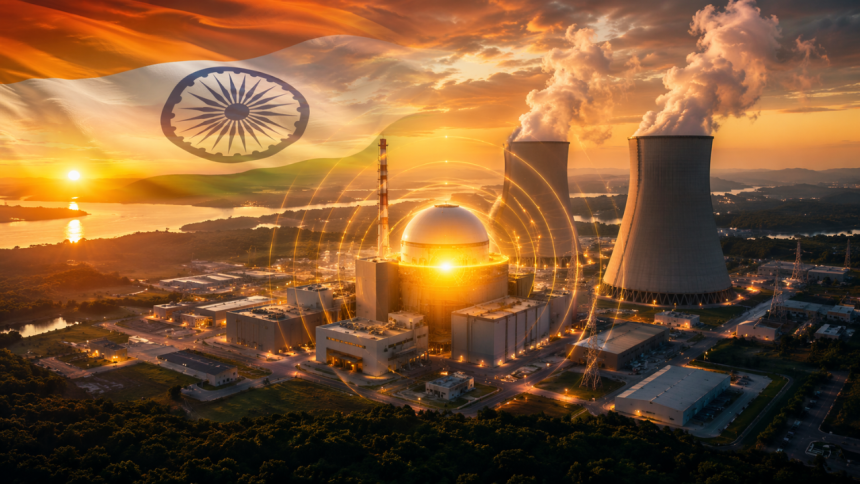
As the world grapples with the challenges of climate change, energy security, and sustainable development, India is poised to take a significant stride towards achieving its ambitious energy goals. With a burgeoning population and a rapidly growing economy, India’s energy demands are skyrocketing, and the country is looking to nuclear power to meet a substantial portion of its energy needs. The recent achievement of Stage 2 criticality at one of its nuclear reactors marks a major milestone in India’s nuclear journey, and is expected to pave the way for a significant expansion of its nuclear programme.
Nuclear Power: The Key to Energy Security
India’s nuclear programme has been guided by the vision of its founding father, Homi Jehangir Bhabha, who had famously said, ‘No power is as costly as no power’. This philosophy has driven India’s nuclear ambitions, and the country has made significant strides in recent years. With a fleet of operational nuclear reactors and several more under construction, India is well on its way to achieving its target of generating 63,000 MW of nuclear power by 2032. The recent achievement of Stage 2 criticality is a significant milestone in this journey, as it demonstrates the country’s ability to design, build, and operate complex nuclear reactors.
The significance of nuclear power in India’s energy mix cannot be overstated. With a growing population and a rapidly expanding economy, India’s energy demands are increasing exponentially. The country is currently dependent on fossil fuels to meet a substantial portion of its energy needs, but this is not a sustainable solution in the long term. Nuclear power offers a clean, reliable, and efficient source of energy, and is essential for reducing India’s carbon footprint and mitigating the impact of climate change.
Technological Advances and International Cooperation
India’s nuclear programme has been driven by significant technological advances in recent years. The country has developed a range of indigenous nuclear technologies, including pressurized heavy water reactors (PHWRs) and fast breeder reactors (FBRs). These technologies have enabled India to build complex nuclear reactors and achieve significant economies of scale. International cooperation has also played a crucial role in India’s nuclear journey, with the country collaborating with several foreign partners to develop new nuclear technologies and build operational nuclear reactors.
One of the key challenges facing India’s nuclear programme is the development of advanced nuclear technologies. The country is currently working on the development of several new reactor designs, including the Advanced Heavy Water Reactor (AHWR) and the Compact High Temperature Reactor (CHTR). These designs offer significant improvements in safety, efficiency, and cost, and are expected to play a major role in India’s future nuclear programme. International cooperation will be essential for the successful development and deployment of these technologies, and India is actively seeking partnerships with foreign companies and research institutions to drive innovation and growth.
Achieving Energy Security and Sustainability
India’s nuclear programme is not just about generating electricity; it is also about achieving energy security and sustainability. The country is committed to reducing its carbon footprint and mitigating the impact of climate change, and nuclear power is expected to play a major role in this effort. By generating clean and efficient energy, India’s nuclear programme will help to reduce the country’s dependence on fossil fuels and decrease its greenhouse gas emissions.
As India continues on its path towards energy security and sustainability, the country is expected to face several challenges. One of the key challenges will be the development of advanced nuclear technologies and the deployment of these technologies on a commercial scale. The country will also need to address concerns around nuclear safety and security, and ensure that its nuclear programme is aligned with international best practices. Despite these challenges, India’s nuclear ambitions remain unchanged, and the country is poised to take a significant leap towards achieving its energy goals. With a strong vision, significant technological advances, and international cooperation, India is well on its way to achieving energy security and sustainability, and the recent achievement of Stage 2 criticality is a major milestone in this journey.