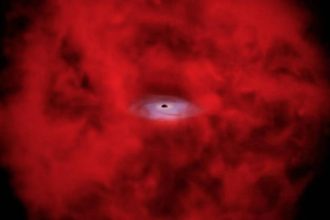
The universe is home to a vast array of galaxies, each with its own unique characteristics and features. However, when it comes to understanding the intricacies of the cosmos, the smallest galaxies are often overlooked. Dwarf galaxies, which are significantly smaller than their larger counterparts, have long been a topic of interest for astronomers and researchers. A new study has now shed light on the role of these tiny galaxies, revealing that they may hold the key to understanding some of the biggest questions in the universe, including the formation and evolution of supermassive black holes.
Understanding Dwarf Galaxies
Dwarf galaxies are defined as galaxies that contain fewer than a billion stars. In comparison, larger galaxies like the Milky Way contain hundreds of billions of stars. Despite their small size, dwarf galaxies are incredibly common, with thousands of them existing in the observable universe. Researchers have long been fascinated by these tiny galaxies, as they offer a unique window into the early universe and the formation of the first stars and galaxies. By studying dwarf galaxies, scientists can gain insights into the fundamental processes that shaped the cosmos as we know it today.
One of the most significant challenges in studying dwarf galaxies is their small size and low luminosity. This makes them difficult to detect, especially when compared to larger galaxies. However, advances in technology have enabled researchers to develop new methods for detecting and analyzing these tiny galaxies. Using sophisticated telescopes and computer simulations, scientists can now study dwarf galaxies in unprecedented detail, revealing their intricate structures and properties.
The Role of Black Holes in Dwarf Galaxies
At the heart of many galaxies, including our own Milky Way, lies a supermassive black hole. These black holes are incredibly massive, with some containing billions of times more mass than our sun. However, the formation and evolution of these black holes are still not well understood. Researchers believe that dwarf galaxies may hold the key to unlocking the secrets of black hole formation. By studying the black holes at the centers of dwarf galaxies, scientists can gain insights into the early universe and the processes that led to the formation of these massive objects.
The study of black holes in dwarf galaxies is a complex and challenging task. Due to their small size, dwarf galaxies have relatively low-mass black holes, which are difficult to detect. However, using advanced computer simulations and observations, researchers have been able to identify and analyze these black holes. The results have been surprising, with many dwarf galaxies found to contain black holes that are disproportionately large compared to their overall size. This has led scientists to re-evaluate our understanding of black hole formation and the role of these objects in the evolution of galaxies.
Implications and Future Research
The discovery of large black holes in dwarf galaxies has significant implications for our understanding of the universe. It suggests that the formation of black holes is a more complex and nuanced process than previously thought. Furthermore, the presence of these black holes in dwarf galaxies raises questions about the role of these objects in the evolution of the cosmos. As researchers continue to study dwarf galaxies and their black holes, they may uncover new insights into the fundamental laws of physics and the nature of the universe.
The study of dwarf galaxies and their black holes is an active area of research, with many scientists working to uncover the secrets of these tiny galaxies. As new observations and simulations become available, our understanding of the universe will continue to evolve. The discovery of large black holes in dwarf galaxies is a significant step forward in this journey, and it highlights the importance of continued research into the mysteries of the cosmos. By exploring the unknown and pushing the boundaries of human knowledge, scientists can gain a deeper understanding of the universe and our place within it.