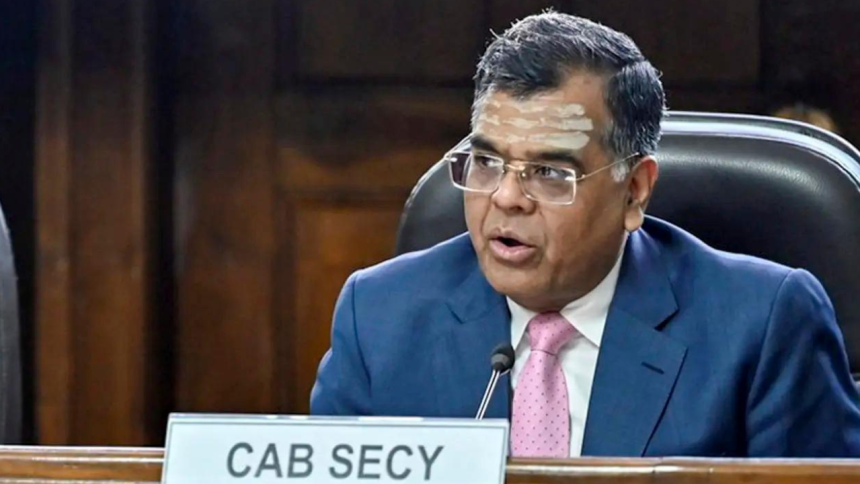
As India commemorates the birth anniversary of Sardar Vallabhbhai Patel, the nation’s first Deputy Prime Minister, Cabinet Secretary TV Somanathan invoked his vision of a politically neutral and integrity-driven group of civil servants. In a stirring address, Somanathan drew inspiration from Patel’s iconic words, where he described civil servants as the ‘iron pillars of the nation’s integrity.’ These words hold profound significance, especially in today’s times when the line between politics and governance tends to blur. Somanathan’s call to action serves as a poignant reminder of the critical role civil servants play in upholding the nation’s values and principles.
Patel’s Vision of a Non-Partisan Bureaucracy
At the heart of Sardar Patel’s vision lies the notion of an apolitical bureaucracy, where officials are free from the shackles of partisan politics. Patel believed that civil servants should be the guardians of the nation’s integrity, untainted by the influence of politics. This conviction is reflected in the Indian Administrative Service (IAS) code, which emphasizes the importance of neutrality and impartiality among bureaucrats. Somanathan’s appeal to civil servants echoes Patel’s sentiment, urging them to remain steadfast in their commitment to the nation’s development and progress.
The Cabinet Secretary’s address comes at a time when the nation is grappling with several critical challenges, including economic growth, healthcare, and education. In such a scenario, the role of civil servants assumes immense importance. Somanathan’s call for fearless and apolitical decision-making is a timely reminder of the need for bureaucrats to take bold steps in the face of adversity. By doing so, they can ensure that the nation remains on course to achieve its developmental goals.
The Imperative of Integrity in Governance
Somanathan’s appeal to civil servants is not merely a rhetorical gesture but a clarion call to action. In a world where corruption and cronyism threaten to undermine the fabric of governance, the need for integrity among bureaucrats has never been more pressing. The Cabinet Secretary’s words serve as a powerful reminder of the importance of upholding the nation’s values, even in the face of adversity. By doing so, civil servants can ensure that the nation’s institutions remain strong and resilient, capable of withstanding the tests of time.
The Cabinet Secretary’s address has sparked a renewed debate on the role of civil servants in modern India. His call for fearless and apolitical decision-making has resonated with many, who see it as a much-needed injection of energy into the nation’s governance apparatus. As the nation looks to the future, Somanathan’s words offer a beacon of hope, reminding civil servants that they are the ‘iron pillars of the nation’s integrity,’ capable of standing tall in the face of adversity.
Empowering India’s Bureaucracy for the Future
The Cabinet Secretary’s appeal to civil servants is a crucial step towards empowering the nation’s bureaucracy for the future. By emphasizing the importance of integrity and neutrality, Somanathan has set a new benchmark for bureaucrats, urging them to take ownership of their roles as guardians of the nation’s integrity. As the nation looks to build a brighter future, the time is ripe for civil servants to stand tall and take bold steps towards achieving India’s developmental goals.
The Cabinet Secretary’s words have left a lasting impression on the nation’s bureaucracy, serving as a poignant reminder of the critical role civil servants play in shaping the nation’s destiny. As India embarks on a new journey of growth and development, Somanathan’s appeal to civil servants is a timely reminder of the imperative for fearless and apolitical decision-making.
As the nation looks to the future, the Cabinet Secretary’s words offer a powerful reminder of the importance of upholding the nation’s values. By standing tall as the ‘iron pillars of the nation’s integrity,’ civil servants can ensure that India remains a beacon of hope and progress in the years to come.