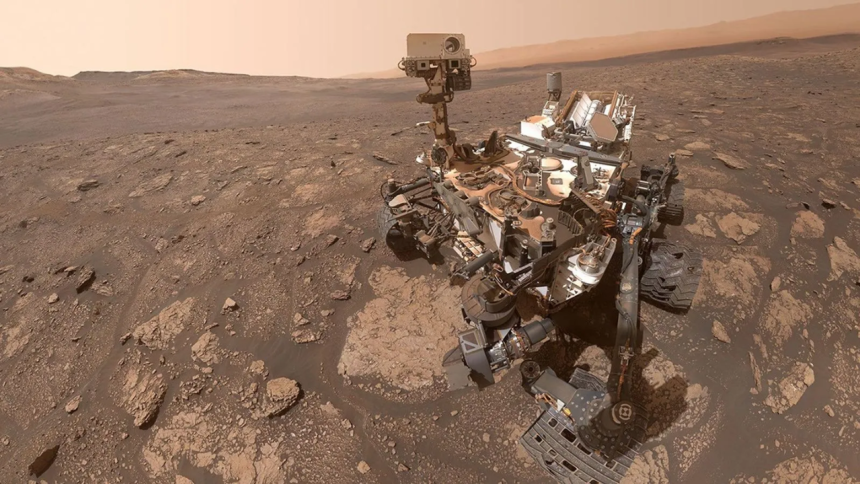
The discovery of new organic molecules on Mars by NASA’s Curiosity rover has sent shockwaves through the scientific community, reigniting speculation about the possibility of life on the Red Planet. For over a decade, the rover has been scouring the Martian surface, uncovering secrets of the planet’s ancient past and shedding light on the mysteries of its barren landscape. The latest find, announced by NASA officials, marks a significant milestone in the ongoing quest to understand the Martian environment and its potential for life.
Organic Compounds: Building Blocks of Life?
The discovery of new organic molecules on Mars is a major breakthrough, as it provides evidence of a fundamental building block of life. Organic compounds, which are composed of carbon and hydrogen, are a key ingredient in the formation of complex molecules and, ultimately, life itself. While the presence of organic compounds does not necessarily mean that life existed on Mars in the past, it does hint at a rich chemical history that may have supported the emergence of life.
The organic compounds discovered by the Curiosity rover are thought to be similar to those found in meteorites and other asteroids, suggesting that the Martian surface may have been bombarded with extraterrestrial matter in the distant past. This raises questions about the possibility of panspermia, the theory that life on Earth originated from elsewhere in the universe. While this idea is still highly speculative, the discovery of organic compounds on Mars adds weight to the argument that the Red Planet may have played a role in the origins of life on our own planet.
Insights into Mars’ Ancient Environment
The discovery of organic molecules on Mars also provides valuable insights into the planet’s ancient environment. By analyzing the chemical composition of the Martian rocks and soil, scientists can reconstruct the conditions under which life may have emerged. The Curiosity rover has been instrumental in this effort, using its suite of instruments to study the Martian geology and search for signs of past water activity.
The organic compounds discovered by the rover are thought to have formed in the presence of liquid water, which was abundant on Mars billions of years ago. The discovery of these compounds suggests that the Martian surface may have been a hospitable place for life to emerge, at least in the distant past. While the conditions on Mars today are inhospitable to life as we know it, the discovery of organic molecules on the planet’s surface offers a tantalizing glimpse into the Red Planet’s ancient past.
The Search for Life on Mars Continues
The discovery of new organic molecules on Mars is a significant step forward in the search for life on the Red Planet. While the presence of these compounds does not necessarily mean that life exists or existed on Mars, it does provide valuable insights into the planet’s ancient environment and its potential for supporting life. The Curiosity rover will continue to explore the Martian surface, searching for signs of past or present life and shedding light on the mysteries of the Red Planet.
As scientists continue to analyze the data from the Curiosity rover, they may uncover even more secrets about the Martian environment and its potential for life. The discovery of organic molecules on Mars is a testament to the power of space exploration and the importance of continuing to explore our solar system. By pushing the boundaries of what we know about the universe, we may yet discover the answer to one of humanity’s most profound questions: are we alone in the universe?