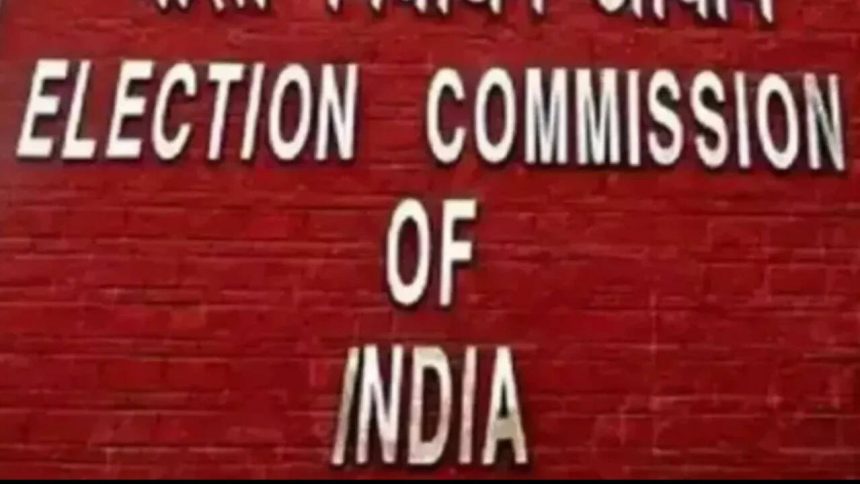
The Election Commission of India has taken a significant step in maintaining the integrity of the democratic process, suspending a police officer in the midst of the ongoing elections in West Bengal. Sandeep Sarkar, the officer-in-charge of Hingalganj Police Station, has been removed from his duties, citing allegations of partisanship and failure to ensure a level playing field. This move is being seen as a bold assertion of the EC’s authority to enforce neutrality in the election process, particularly in a state where allegations of partisan behaviour by law enforcement agencies have been rampant.
Partisan Politics and the Election Commission
The EC’s decision to suspend Sarkar comes after a thorough investigation into allegations of partisanship and bias in his handling of electoral matters. The commission has made it clear that its primary concern is to ensure that the election process remains free from any interference or manipulation, and that law enforcement agencies play a neutral role in maintaining law and order. The suspension of Sarkar is a testament to the EC’s commitment to upholding the principles of democratic elections, and its willingness to take decisive action against any individual who may be compromising the integrity of the process.
The EC’s move is also being seen as a significant development in the context of West Bengal’s ongoing elections. The state has been plagued by allegations of partisan politics and electoral malpractice, with many opposition parties accusing the ruling Trinamool Congress of using the police and other government agencies to intimidate and discredit their supporters. The suspension of Sarkar is being seen as a much-needed step in addressing these concerns, and in restoring the faith of voters in the election process.
Implications for the Election Process and the State Government
The suspension of Sarkar has significant implications for the election process in West Bengal, and for the state government’s handling of electoral matters. The EC’s decision sends a clear message that partisan behaviour by law enforcement agencies will not be tolerated, and that any individual found to be compromising the integrity of the election process will face consequences. This is likely to have a chilling effect on any attempts by the state government to use the police or other government agencies to manipulate the election outcome.
The suspension of Sarkar also raises questions about the state government’s commitment to upholding the principles of democratic elections. The Trinamool Congress has been accused of using the police and other government agencies to intimidate and discredit opposition supporters, and the suspension of Sarkar is being seen as a much-needed step in addressing these concerns. The state government’s response to the EC’s decision will be closely watched, and will likely have a significant impact on the outcome of the elections.
The Road Ahead for the Election Commission and the State Government
The suspension of Sarkar is a significant development in the ongoing elections in West Bengal, and sets the stage for a dramatic showdown between the EC and the state government. The EC’s decision sends a clear message that partisan behaviour by law enforcement agencies will not be tolerated, and that any individual found to be compromising the integrity of the election process will face consequences. The state government’s response to the EC’s decision will be closely watched, and will likely have a significant impact on the outcome of the elections.
The EC’s move is also likely to have far-reaching implications for the relationship between the commission and the state government. The commission’s willingness to take decisive action against any individual who may be compromising the integrity of the election process sends a clear message that it will not be intimidated or influenced by the state government. This is likely to have a significant impact on the state government’s handling of electoral matters, and may even lead to a re-evaluation of its strategy for the elections.
As the elections in West Bengal continue to unfold, the suspension of Sarkar is a significant development that will likely have a lasting impact on the outcome of the polls. The EC’s decision sends a clear message that partisan behaviour by law enforcement agencies will not be tolerated, and that any individual found to be compromising the integrity of the election process will face consequences. The state government’s response to the EC’s decision will be closely watched, and will likely have a significant impact on the outcome of the elections.
The suspension of Sarkar is a bold assertion of the EC’s authority to enforce neutrality in the election process, and sets the stage for a dramatic showdown between the commission and the state government. As the elections in West Bengal continue to unfold, the EC’s decision will be closely watched, and will likely have a lasting impact on the outcome of the polls.