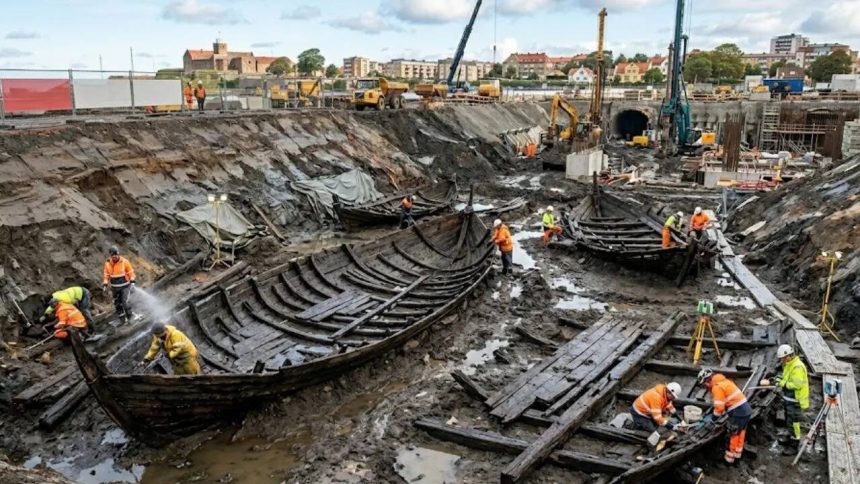
The quiet Swedish city of Varberg has been shaken to its core as construction workers on the West Coast Line expansion project made a groundbreaking discovery: six centuries-old shipwrecks buried beneath the city. The astonishing find, made as the team dug a tunnel through the city’s old center, has left archaeologists and historians reeling with excitement. The shipwrecks, estimated to be from the 13th to 16th centuries, offer a unique glimpse into Sweden’s maritime past, revealing the country’s early connections to international trade and commerce.
Unveiling a Forgotten Era
The discovery of the shipwrecks has sparked widespread interest among historians and archaeologists, who are working tirelessly to excavate and study the finds. Preliminary analysis suggests that the ships were likely merchant vessels, carrying goods such as textiles, spices, and other valuable commodities. Archaeologists have identified several artifacts, including ceramics, metalwork, and wooden fragments, which are providing valuable insights into the lives of medieval traders and sailors. The shipwrecks are believed to have been part of a larger group of vessels that sailed along the Swedish coast, linking the country to the wider European trade network.
The significance of the discovery cannot be overstated. It sheds new light on Sweden’s early maritime history, revealing a complex web of trade relationships with other European nations. The shipwrecks also offer a poignant reminder of the risks and sacrifices made by sailors and traders in the past. As the excavation process continues, researchers are working to piece together the stories of these forgotten sailors and the ships that carried them.
A City’s Hidden Past
Varberg’s residents have been fascinated by the discovery, with many expressing a sense of pride and wonder. The city’s rich history has long been shrouded in mystery, with many of its ancient secrets hidden beneath the surface. The shipwrecks have uncovered a new chapter in Varberg’s story, revealing the city’s importance as a hub of maritime trade and commerce. As the excavation process continues, the city’s residents are eagerly awaiting the opportunity to learn more about their city’s fascinating past.
As the tunnel construction continues, archaeologists are working closely with local authorities to ensure that the shipwrecks are preserved and protected for future generations. The discovery has sparked a renewed interest in Varberg’s history, with many calling for the shipwrecks to be turned into a museum or an interactive exhibit. Whatever the outcome, one thing is certain: the shipwrecks have unearthed a piece of Sweden’s history that was previously unknown, and will undoubtedly leave a lasting impact on the country’s cultural landscape.
A New Era of Exploration
The discovery of the shipwrecks has sparked a new era of exploration in Varberg, with researchers and archaeologists working tirelessly to uncover more secrets from the city’s past. As the excavation process continues, we can expect to learn more about the lives of medieval sailors and traders, and the complex web of trade relationships that existed between European nations. The shipwrecks are a testament to the country’s rich maritime history, and will undoubtedly leave a lasting legacy in the years to come.
The discovery of the shipwrecks has also highlighted the importance of archaeological research in preserving our cultural heritage. As we continue to build and develop our cities, it is essential that we remember the significance of the past and the importance of preserving our cultural legacy. The shipwrecks in Varberg are a poignant reminder of the importance of this work, and the impact it can have on our understanding of history.
As the city of Varberg continues to evolve, its residents can take pride in knowing that their city holds secrets and stories that are yet to be uncovered. The shipwrecks are a testament to the city’s rich history, and will undoubtedly leave a lasting impact on the country’s cultural landscape. As we look to the future, we can expect to learn more about Varberg’s fascinating past, and the secrets that lie hidden beneath its surface.