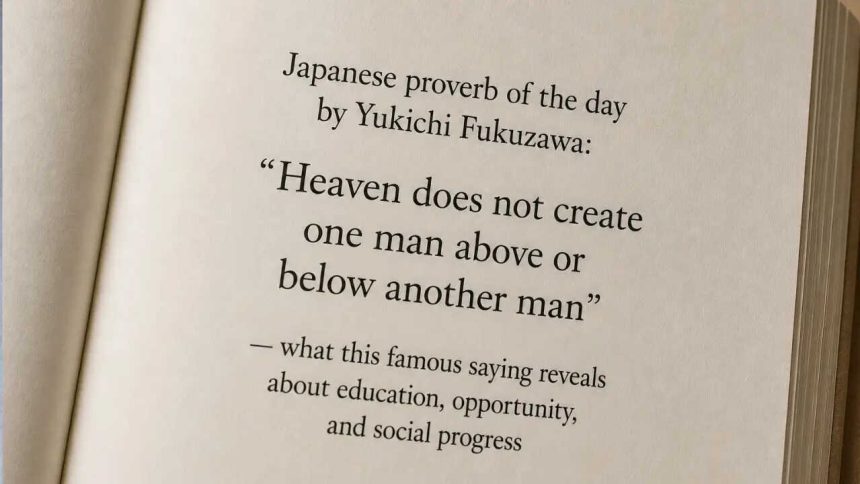
The Japanese proverb, ‘Heaven does not create one man above or below another man,’ spoken by Yukichi Fukuzawa, resonates deeply in today’s society where inequality and disparities persist. This phrase serves as a powerful reminder of the importance of equal opportunities and access to education, emphasizing that every individual deserves a chance to reach their full potential, regardless of their background or circumstances. The notion that everyone is born equal and should have an equal chance to succeed is a fundamental principle that can pave the way for a more just and equitable world.
Education as the Great Equalizer
Education is often regarded as the key to unlocking human potential, and it is through education that individuals can acquire the skills, knowledge, and critical thinking necessary to succeed in life. However, access to quality education remains a significant challenge in many parts of the world, with some communities lacking the resources, infrastructure, and qualified teachers to provide students with a decent education. This disparity can have far-reaching consequences, as it can limit the opportunities available to individuals and perpetuate cycles of poverty and inequality.
Moreover, education is not just about imparting knowledge, but also about fostering critical thinking, creativity, and social skills. It is through education that individuals can develop a sense of purpose, self-awareness, and social responsibility, enabling them to become active and engaged citizens who can contribute positively to their communities. By providing equal access to education, we can empower individuals to break free from the constraints of their circumstances and forge their own paths in life.
Opportunity and Social Progress
The concept of equal opportunity is closely tied to social progress, as it is through the creation of opportunities that individuals can participate fully in their communities and contribute to the greater good. When people have access to opportunities, they are more likely to be engaged, motivated, and committed to making a positive impact. This, in turn, can lead to social cohesion, economic growth, and a more equitable distribution of resources. Furthermore, equal opportunity can help to break down social barriers and challenge entrenched power structures, allowing for a more diverse and inclusive society.
However, creating equal opportunities requires a multifaceted approach that involves not just education, but also economic empowerment, social justice, and community engagement. It is essential to address the systemic barriers that prevent individuals from accessing opportunities, such as discrimination, poverty, and lack of access to resources. By doing so, we can create a more level playing field where everyone has an equal chance to succeed, regardless of their background or circumstances.
Empowering Individuals, Enriching Communities
The Japanese proverb reminds us that every individual has inherent value and deserves to be treated with dignity and respect. By providing equal opportunities and access to education, we can empower individuals to reach their full potential and contribute to the richness and diversity of their communities. This, in turn, can lead to a more vibrant, dynamic, and prosperous society where everyone has the chance to thrive. As we strive to create a more just and equitable world, we must remember that equality is not just a moral imperative, but also a necessary condition for human flourishing and social progress.
The phrase ‘Heaven does not create one man above or below another man’ is a powerful call to action, urging us to work towards a world where everyone has an equal chance to succeed. By embracing this principle, we can unlock human potential, foster social cohesion, and create a brighter future for all. As we move forward, we must prioritize education, opportunity, and social progress, recognizing that these are the essential ingredients for building a more just, equitable, and prosperous world for generations to come.