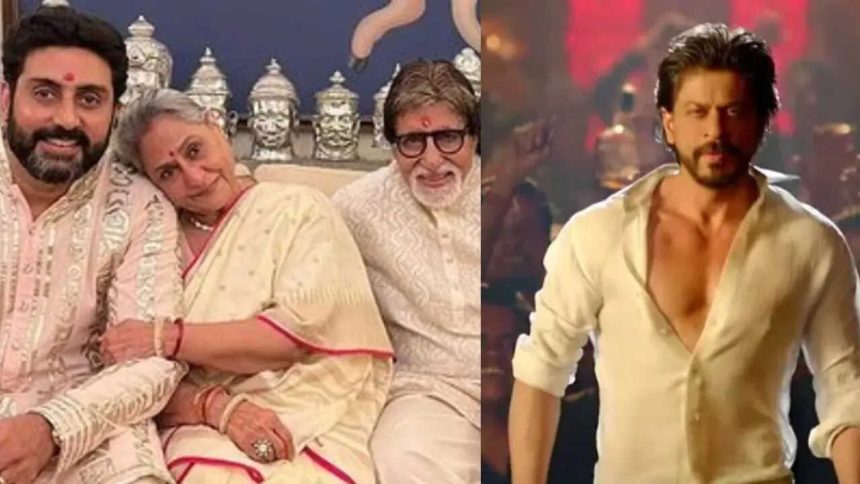
Farah Khan, the acclaimed Bollywood film director and choreographer, has been known for her extravagant and entertaining movies that often leave a lasting impression on audiences. However, it appears that not everyone in the film industry shares the same enthusiasm for her work. In a recent revelation, it was disclosed that Jaya Bachchan, the veteran actress and wife of Amitabh Bachchan, had expressed her disappointment and labeled one of Farah Khan’s films as nonsensical. This statement has sparked a wave of curiosity among fans and critics alike, prompting them to revisit Farah Khan’s filmography and assess the impact of her movies on the industry.
Early Success and Criticism
Farah Khan’s directorial debut, ‘Main Hoon Na’, was released in 2004 and starred Shah Rukh Khan, Sushmita Sen, and Suniel Shetty. The film was a major commercial success and received positive reviews from critics, with many praising its unique blend of action, comedy, and drama. However, not everyone was impressed, and some critics felt that the film’s plot was overly complicated and relied too heavily on special effects. Despite these criticisms, ‘Main Hoon Na’ is now widely regarded as a cult classic and is often cited as one of the best Bollywood films of the 2000s.
Farah Khan’s subsequent films, including ‘Om Shanti Om’ and ‘Tees Maar Khan’, also received mixed reactions from critics and audiences. While some praised her ability to craft engaging storylines and memorable characters, others felt that her films were overly formulaic and relied too heavily on tired Bollywood tropes. Jaya Bachchan’s comments about one of Farah Khan’s films being nonsensical have sparked a renewed debate about the director’s body of work and her impact on the Bollywood film industry.
Assessing Farah Khan’s Filmography
A closer examination of Farah Khan’s filmography reveals a complex and often contradictory picture. On the one hand, her films have consistently pushed the boundaries of Bollywood’s visual and narrative styles, incorporating innovative special effects, elaborate song-and-dance numbers, and bold storytelling. On the other hand, some of her films have been criticized for their lack of depth and nuance, with characters and plotlines that feel underdeveloped and overly reliant on cliches.
Despite these criticisms, Farah Khan remains one of the most successful and influential filmmakers in Bollywood today. Her ability to craft engaging, entertaining films that appeal to a broad audience has earned her a loyal following among fans and critics alike. As the Bollywood film industry continues to evolve and grow, it will be interesting to see how Farah Khan adapts and responds to changing audience tastes and critical expectations.
Legacy and Impact
Farah Khan’s legacy as a filmmaker is complex and multifaceted, reflecting both the strengths and weaknesses of her body of work. While some critics have praised her innovative storytelling and visual style, others have criticized her reliance on formulaic plotlines and tired Bollywood tropes. Nevertheless, her films have undoubtedly left a lasting impact on the Bollywood film industry, inspiring a new generation of filmmakers and shaping the course of popular Indian cinema.
As the news of Jaya Bachchan’s comments about Farah Khan’s film continues to generate buzz, it is clear that the director’s work remains a topic of intense debate and discussion. Love her or hate her, Farah Khan is a true original, a filmmaker who has consistently pushed the boundaries of what is possible in Bollywood. As she continues to create and innovate, it will be exciting to see how her films are received by audiences and critics alike, and what impact they will have on the ever-changing landscape of Indian popular cinema.