Deep beneath the Canadian wilderness lies a secret that has remained hidden for millions of years – a reservoir of water so ancient, it predates the emergence of animals on Earth. Scientists have successfully drilled 1.5 miles into the bedrock, uncovering a treasure trove of liquid water trapped within the rock’s labyrinthine passages. This extraordinary discovery is set to revolutionize our understanding of the Earth’s history, providing a window into a time when the planet was vastly different from the one we know today.
Unlocking the Secrets of Earth’s Ancient Past
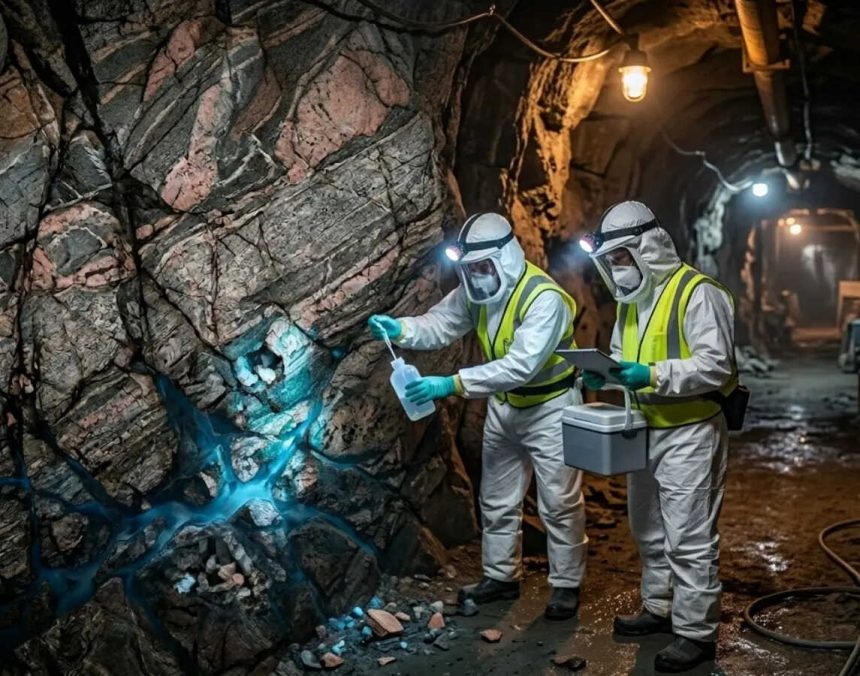
Researchers employed a state-of-the-art drilling technique, carefully extracting samples from the rock’s depths without disrupting the delicate ecosystem. The retrieved water, estimated to be between 1.5 and 2 billion years old, provides a unique snapshot of the Earth’s past, allowing scientists to study the chemical composition and isotopic signature of this ancient liquid. By analyzing these samples, researchers hope to gain insights into the Earth’s climate, geology, and the evolution of life on our planet.
The water, stored within the rock’s pores and fractures, has undergone minimal alteration over the millennia, preserving its original characteristics. This is a crucial aspect of the discovery, as scientists can now study the water’s isotopic signature, which is thought to be a record of the Earth’s past climate and geological processes. The findings have significant implications for our understanding of the Earth’s history and the potential for life on other planets, particularly those with subsurface oceans.
Revealing the Hidden Ocean Beneath Our Feet
The discovery of ancient water trapped beneath the Canadian rock has far-reaching implications for astrobiology and planetary sciences. Scientists believe that similar subsurface oceans may exist on other planets and moons in our solar system, such as Europa and Enceladus. The existence of liquid water beneath the surface of these celestial bodies raises the possibility of life existing in these hidden environments. By studying the chemical composition and isotopic signature of the Canadian water, researchers can better understand the conditions necessary for life to emerge and thrive in these extraterrestrial environments.
The study of subsurface water on Earth also has implications for our understanding of the Earth’s geological processes. The water trapped in the Canadian rock may hold clues to the Earth’s tectonic and volcanic history, providing valuable insights into the planet’s evolution over billions of years. By unraveling the secrets of this ancient water, scientists hope to gain a deeper understanding of the complex interactions between the Earth’s crust, mantle, and atmosphere.
Unlocking the Secrets of the Subsurface Ocean
As researchers continue to analyze the samples and data collected from the Canadian drilling project, the scientific community is abuzz with excitement. The discovery of ancient water trapped beneath the Earth’s surface has opened a new frontier in the search for life beyond our planet. While the journey ahead is challenging, the potential rewards are immense, offering a glimpse into a world hidden beneath our feet – a world that holds the secrets of our planet’s ancient past and the key to unlocking the mysteries of the universe.
As scientists continue to explore the hidden world beneath our feet, they are reminded of the vast mysteries that lie hidden beneath the Earth’s surface. The discovery of ancient water trapped in Canadian rock is a testament to the power of human curiosity and the importance of continued exploration and research. By pushing the boundaries of scientific knowledge, we may yet uncover the secrets of the universe, and in doing so, reveal the hidden patterns and processes that shape our world and beyond.