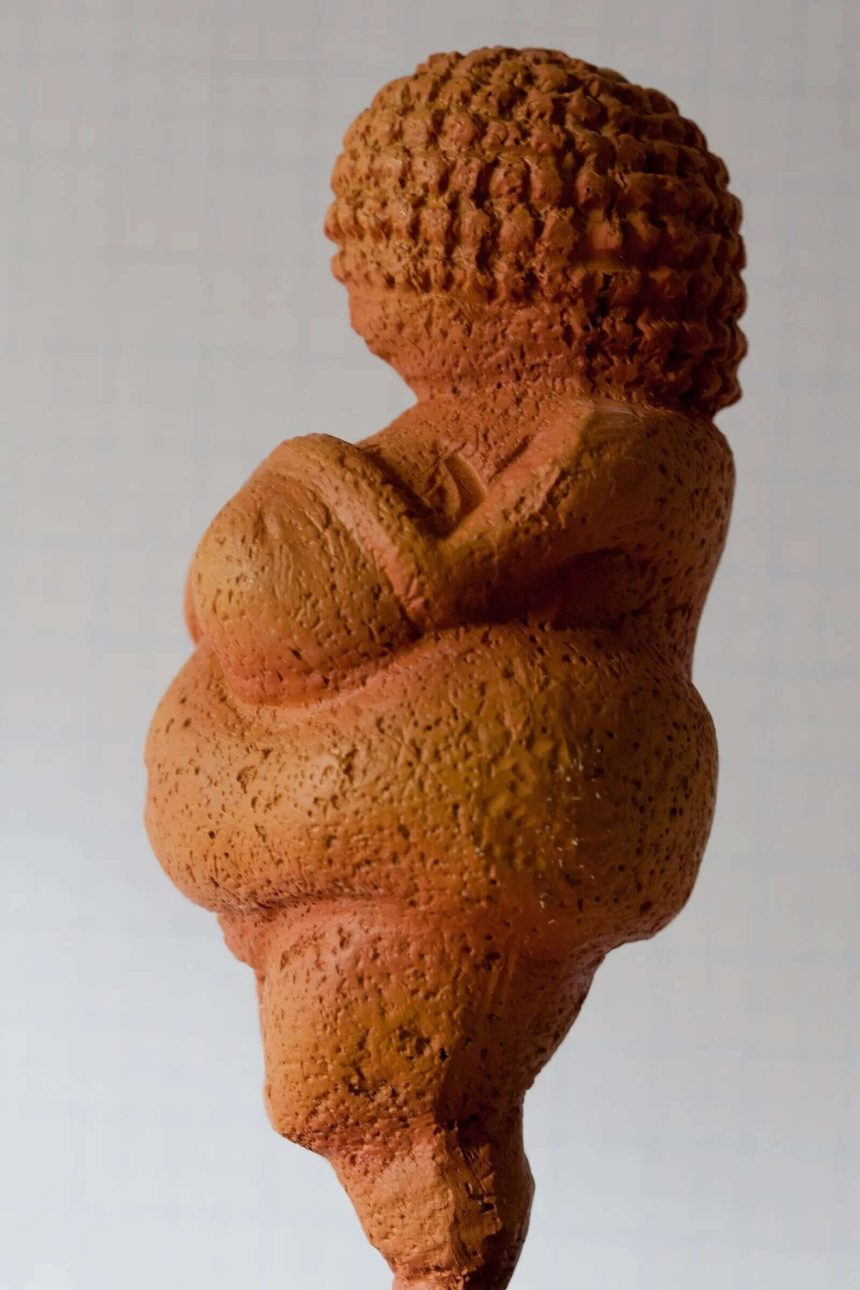
Deep within the mud of a modest construction site in the Austrian village of Willendorf, a chance discovery was made on a sweltering summer day in 1908 that would forever alter the course of human history. On August 7th, a group of workers stumbled upon a small, intricately carved stone figure – a woman with no discernible face – buried beneath nearly 30,000 years of sediment. This serendipitous find, now known as the Venus of Willendorf, would challenge prevailing theories about the Ice Age and our understanding of ancient human civilization.
The Dawn of a New Era in Paleolithic Research
The discovery of the Venus of Willendorf sent shockwaves throughout the academic community, as its estimated age of 25,000 to 30,000 years made it one of the oldest known pieces of prehistoric art. This petite, 11-centimeter-tall figurine, carved from a single piece of oolith limestone, was remarkably well-preserved, despite the harsh conditions it had endured. Initially, the find was met with both excitement and skepticism, as some questioned its authenticity and significance. However, as experts began to study the Venus, they realized that it was, in fact, a masterpiece of Paleolithic art, created by a people who were previously unknown to us.
The Venus of Willendorf’s enigmatic face, characterized by a smooth, featureless surface, was unlike anything seen before. This unusual design sparked intense debate among scholars, with some speculating that it was intentionally left faceless as a form of artistic expression, while others believed it was simply a result of the artist’s skill level. Regardless of the intention, the Venus’s unique appearance would go on to influence the development of future art forms and challenge our understanding of the evolution of human creativity.
The Art of Ancient Times: Unraveling the Mysteries of the Venus
As researchers continued to study the Venus of Willendorf, they began to unravel the mysteries surrounding its creation. The figurine’s intricate details, including its tiny hands, feet, and pubic area, suggested a high level of technical skill and attention to detail. This level of craftsmanship was previously unknown in Paleolithic art, leading many to speculate that the Venus was created by a group of skilled artisans, rather than a solitary artist. The Venus’s significance extended beyond its artistic value, as it provided a glimpse into the daily lives and rituals of our ancient ancestors. The discovery of the Venus of Willendorf would go on to inspire new areas of research, including the study of Paleolithic art, symbolism, and spiritual practices.
The Venus of Willendorf also sparked a renewed interest in the art and culture of the Upper Paleolithic period, a time characterized by significant advancements in human technology, social complexity, and artistic expression. The figurine’s discovery highlighted the sophistication and creativity of our ancient predecessors, challenging the long-held notion that they were primitive and unsophisticated. As we continue to study the Venus of Willendorf, we are reminded of the importance of preserving our cultural heritage and the power of art to shape our understanding of the world and ourselves.
The Lasting Impact of the Venus of Willendorf
The discovery of the Venus of Willendorf in 1908 marked the beginning of a new era in Paleolithic research, as it challenged prevailing theories and sparked a wave of new discoveries. The figurine’s significance extends far beyond its age and artistic value, as it provides a unique window into the lives and culture of our ancient ancestors. As we continue to explore the mysteries of the Venus of Willendorf, we are reminded of the importance of preserving our cultural heritage and the power of art to shape our understanding of the world and ourselves.
Today, the Venus of Willendorf is considered one of the most important and enigmatic artifacts of the Paleolithic period, and its discovery continues to inspire new generations of researchers, artists, and museum-goers. As we look to the future, we are reminded that even the most modest of discoveries can have a profound impact on our understanding of the world and our place within it.