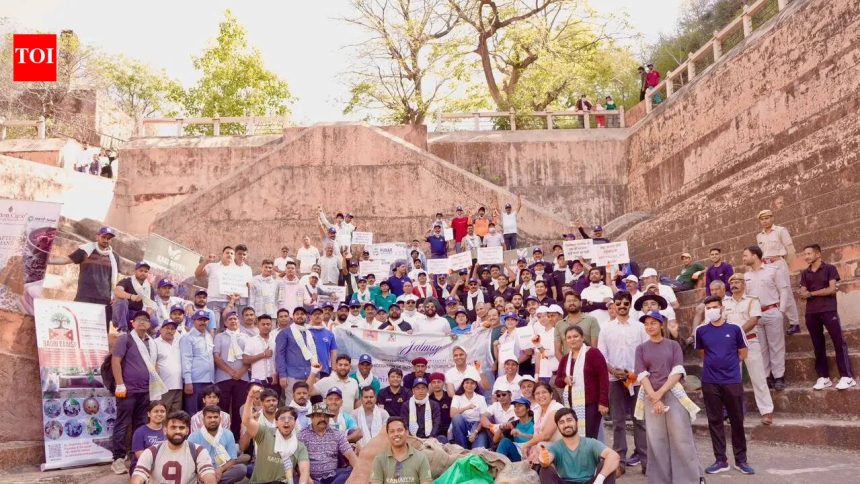
As the sun rose over the historic Nahargarh Fort in Jaipur, a group of dedicated volunteers embarked on a mission to clean up the treasured heritage site. What they found was a stark reminder of the city’s struggle to balance tourism with responsible visitor behavior. Heaps of discarded plastic, bottles, and other waste littered the kunds and baoris, a grim testament to the scale of the problem that has been plaguing this iconic landmark for far too long.
The Devastating Impact of Visitor Littering
The sight of Nahargarh’s pristine water bodies and scenic views marred by trash was a heart-wrenching experience for the volunteers. The sheer volume of waste collected over the course of the day was staggering, with plastic bags, water bottles, and food packaging making up a significant portion of the debris. The volunteers’ efforts were hindered by the lack of proper waste disposal facilities and the absence of a clear waste management plan for the site.
As the clean-up drive progressed, it became apparent that visitor littering was not just a minor issue, but a deeply ingrained problem that required a comprehensive solution. The volunteers expressed concerns over the long-term effects of pollution on the site’s ecosystem and the potential damage to the ancient structures. The situation at Nahargarh serves as a microcosm for the larger issue of pollution in Jaipur, where the city’s rich heritage is at risk of being compromised by the very visitors who come to admire it.
The Need for Sustainable Tourism Practices
As Jaipur continues to attract millions of tourists each year, the pressure on its heritage sites is mounting. The city needs to adopt sustainable tourism practices that prioritize the preservation of its cultural and natural assets. This includes implementing effective waste management systems, promoting eco-friendly practices, and educating visitors about the importance of responsible behavior. The Jaipur Municipal Corporation and the State Government must work in tandem to address this pressing issue and ensure that the city’s heritage sites remain pristine for future generations.
The volunteers’ clean-up drive was a small but significant step towards raising awareness about the importance of preserving Nahargarh’s heritage. However, it is just the beginning of a larger effort to address the scale of visitor littering and promote sustainable tourism practices in Jaipur. As the city looks to the future, it must prioritize the protection of its rich cultural heritage and the well-being of its citizens.
A Collective Responsibility
The clean-up drive at Nahargarh was not just a one-day event, but a stark reminder of the collective responsibility that lies with each and every one of us to protect Jaipur’s heritage. As visitors, we must take pride in our behavior and respect the sites we come to admire. As residents, we must demand action from our authorities to address the issue of pollution and promote sustainable tourism practices. By working together, we can ensure that Jaipur’s heritage sites remain a source of pride for generations to come.
The cleanup drive at Nahargarh was a poignant reminder of the importance of preserving our cultural heritage. As the sun set over the fort, the volunteers’ efforts were a testament to the power of collective action and the determination to protect this iconic landmark. As Jaipur looks to the future, it must remember that the preservation of its heritage is not just a moral obligation, but a fundamental responsibility that lies at the heart of its identity as a city.