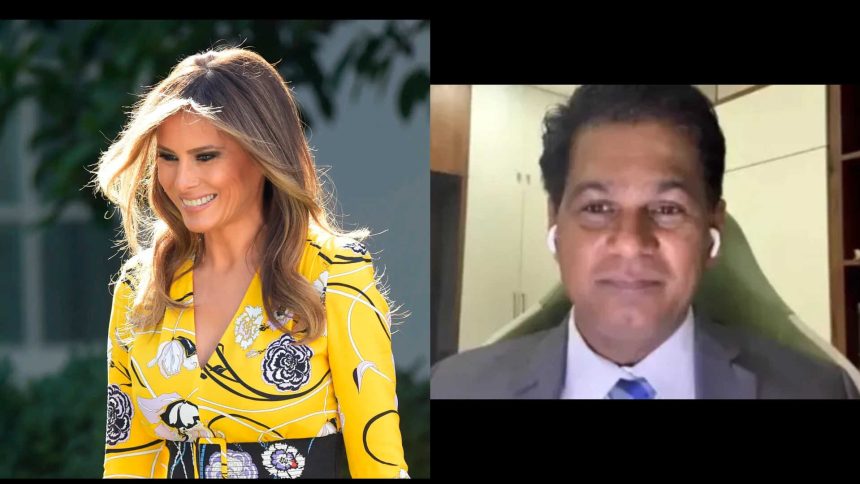
On a recent visit to the White House, Indian-origin immigration attorney Rahul Reddy couldn’t help but feel a sense of unease as he listened to a presidential aide describing non-US citizens as ‘aliens.’ The word may be a staple of American parlance, but Reddy believes it has become a dehumanizing label that reflects the dark underbelly of the country’s immigration policies. As the US grapples with some of the most contentious immigration debates in recent history, Reddy’s words serve as a timely reminder of the need to reclaim the narratives surrounding non-citizens, and redefine the way we talk about ‘others’
Dehumanizing Language: A Legacy of Exclusion
The term ‘alien’ has a long and complex history in the US, dating back to the 19th century when it was first used to describe non-citizens in immigration law. However, its usage has evolved over time, taking on a more pejorative tone that reduces non-citizens to mere abstractions. This shift is particularly concerning given the increasing use of dehumanizing language in US immigration discourse, which often pits ‘citizens’ against ‘aliens’ in a zero-sum game. By labeling non-citizens as ‘aliens,’ the White House sends a chilling message: that certain individuals are not fully human, and therefore, do not deserve the same rights and dignity as US citizens.
Reddy, a vocal critic of the White House’s immigration policies, believes that this kind of language has real-world consequences. ‘When you dehumanize a group of people, you create a sense of otherness that can be exploited by politicians and policymakers,’ he argues. ‘This is especially true in the context of immigration, where non-citizens are often portrayed as a threat to national security and economic prosperity.’ By using language that reinforces these stereotypes, the White House contributes to an environment of fear and mistrust, making it more difficult for non-citizens to access basic rights and services.
Reclaiming the Narrative: The Power of Language in Immigration Debate
So, what can be done to reclaim the narrative surrounding non-citizens? Reddy believes that it starts with a simple yet profound shift in language. By using terms like ‘immigrants,’ ‘refugees,’ or ‘migrants,’ we can begin to humanize non-citizens, recognizing their agency, their stories, and their contributions to US society. This is not just a matter of semantics; it’s a question of how we choose to perceive and engage with non-citizens. By using language that emphasizes shared humanity, we can build bridges between communities, rather than reinforcing walls of exclusion.
Reddy’s advocacy is part of a broader movement to challenge the dominant narratives surrounding immigration. From grassroots organizing to advocacy groups, there is a growing recognition that language matters, and that the way we talk about non-citizens has real-world consequences. By reclaiming the narrative and redefining the way we talk about ‘others,’ we can create a more just and inclusive society, where non-citizens are recognized as full human beings, deserving of dignity and respect.
The Future of US Immigration Policy: A New Era of Humanity
As the US grapples with some of the most pressing immigration debates of our time, Rahul Reddy’s words serve as a timely reminder of the need to reimagine US immigration policy. By challenging dehumanizing language and advocating for a more inclusive approach, we can create a new era of humanity in US immigration policy. One where non-citizens are recognized as full human beings, deserving of dignity and respect. A future where the terms ‘alien’ and ‘immigrant’ are no longer mutually exclusive, but rather, complementary labels that reflect the complex, messy reality of US society.
As Reddy so eloquently puts it, ‘We need to recognize that non-citizens are not ‘aliens’ in the sense that they are extraterrestrial beings, but rather, they are fellow human beings who deserve our compassion, our empathy, and our solidarity.’ By embracing this vision, we can create a more just, more inclusive, and more human society, where everyone is recognized as a full and equal member of the human family.