Just a week after declaring a proposed agreement with Iran ‘largely finalised’, US President Donald Trump has sent the Iran deal back for revisions, seeking ‘tougher language’ on nuclear terms and the reopening of the Strait of Hormuz. The move has prolonged negotiations and cast fresh uncertainty over efforts to end the conflict. The decision has sparked a mix of reactions, with some hailing it as a necessary step to ensure a more robust agreement, while others see it as a potential deal-breaker. The Iran deal has been a major point of contention between the US and Iran, with the US seeking to impose stricter limits on Iran’s nuclear program and Iran pushing for relief from crippling economic sanctions.
Renewed Uncertainty
The Trump administration’s decision to revise the Iran deal has introduced renewed uncertainty into the negotiations. The US had been working closely with European allies to hammer out a deal that would address concerns over Iran’s nuclear program, while also providing relief from sanctions. However, the latest development has raised questions about the ability of the two sides to reach a mutually acceptable agreement. The US has been seeking to impose stricter limits on Iran’s nuclear program, including the production of enriched uranium and the development of ballistic missiles. Iran, on the other hand, has been pushing for relief from sanctions and a recognition of its right to pursue a peaceful nuclear program.
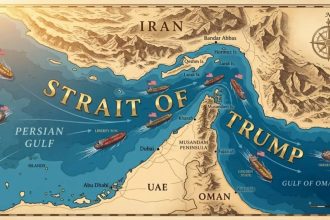
The revised deal is expected to include tougher language on nuclear terms, including stricter limits on Iran’s nuclear program and more robust inspections. The US is also seeking to include provisions that would address concerns over Iran’s ballistic missile program and its support for militant groups in the region. The reopening of the Strait of Hormuz is also a key demand, with the US seeking to ensure that the vital shipping lane remains open to international traffic. The Strait of Hormuz is a critical waterway that connects the Persian Gulf to the Gulf of Oman, and its closure would have significant implications for global oil markets.
Negotiating Challenges
The negotiations between the US and Iran have been challenging, with both sides dug in on key issues. The US has been seeking to impose stricter limits on Iran’s nuclear program, while Iran has been pushing for relief from sanctions. The two sides have been working to find common ground, but the latest development has raised questions about the ability of the parties to reach a mutually acceptable agreement. The US has been working closely with European allies to hammer out a deal, but the latest development has introduced renewed uncertainty into the negotiations.
The European Union has been a key player in the negotiations, seeking to find a middle ground that would address concerns over Iran’s nuclear program while also providing relief from sanctions. The EU has been working closely with the US and Iran to hammer out a deal, but the latest development has raised questions about the ability of the parties to reach a mutually acceptable agreement. The EU has been seeking to preserve the Joint Comprehensive Plan of Action (JCPOA), which was agreed upon in 2015. The JCPOA provided for the lifting of sanctions in exchange for limits on Iran’s nuclear program, but the US withdrew from the agreement in 2018.
Regional Implications
The Iran deal has significant implications for the region, with the US seeking to impose stricter limits on Iran’s nuclear program and Iran pushing for relief from sanctions. The deal also has implications for the broader Middle East, with the US seeking to address concerns over Iran’s support for militant groups and its ballistic missile program. The reopening of the Strait of Hormuz is also a key issue, with the US seeking to ensure that the vital shipping lane remains open to international traffic. The Strait of Hormuz is a critical waterway that connects the Persian Gulf to the Gulf of Oman, and its closure would have significant implications for global oil markets.
The regional implications of the Iran deal are far-reaching, with the US seeking to impose stricter limits on Iran’s nuclear program and Iran pushing for relief from sanctions. The deal also has implications for the broader Middle East, with the US seeking to address concerns over Iran’s support for militant groups and its ballistic missile program. The US is also seeking to work with regional partners to address concerns over Iran’s activities in the region, including its support for militant groups in Iraq, Syria, and Yemen. The US is seeking to build a coalition of regional partners to address concerns over Iran’s activities and to promote stability in the region.