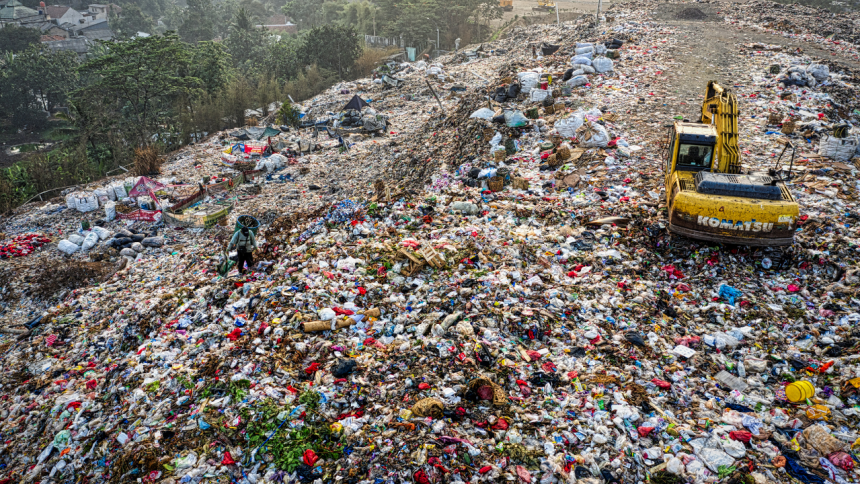
The world has been led to believe that recycling is the answer to the ever-growing plastic waste problem, but a more sinister reality lurks behind the scenes. While many of us diligently sort our trash and send it off to be recycled, a significant portion of exported plastic waste ends up in countries that lack the infrastructure to manage it properly. This has led to a disturbing trend: the open burning of plastic, which releases toxic gases and particulate matter into the atmosphere, posing a significant threat to human health and the environment.
The Global Recycling Crisis
The issue begins with the sheer volume of plastic waste generated worldwide. As consumption increases, so does the amount of waste, and many countries struggle to cope with the deluge of plastic. In an effort to manage the problem, wealthier nations often export their plastic waste to developing countries, where it is supposed to be recycled. However, these countries often lack the necessary facilities and expertise to handle the waste effectively, leading to a significant amount of plastic being burned in the open.
This practice is not only harmful to the environment, but it also has severe consequences for human health. The burning of plastic releases a cocktail of toxic chemicals, including dioxins and furans, which can cause a range of health problems, from respiratory issues to cancer. Furthermore, the particulate matter released into the air can travel long distances, affecting not only local communities but also people living in neighboring countries.
The Economics of Plastic Waste
The economics of plastic waste play a significant role in the recycling crisis. The cost of recycling plastic is often higher than the cost of producing new plastic, making it more economical for companies to manufacture new products rather than recycle old ones. This has led to a situation where plastic waste is often more valuable as a commodity to be burned for energy than it is as a material to be recycled. As a result, many countries are prioritizing the production of new plastic over the recycling of old, exacerbating the problem.
Additionally, the lack of regulation and oversight in the global plastic waste trade has created a Wild West scenario, where unscrupulous operators can exploit loopholes and lack of enforcement to make a quick profit. This has led to a situation where plastic waste is being shipped to countries with lax environmental regulations, where it can be burned or dumped with impunity.
Breaking the Cycle of Waste
So, what can be done to break the cycle of waste and prevent the open burning of plastic? Firstly, there needs to be a fundamental shift in the way we think about plastic and waste. Rather than relying on recycling as a solution, we need to focus on reducing plastic use in the first place. This can be achieved through a combination of extended producer responsibility, where manufacturers are held accountable for the waste generated by their products, and a circular economy approach, where products are designed to be recycled and reused.
Furthermore, governments and international organizations need to work together to establish stricter regulations and enforcement mechanisms to prevent the export of plastic waste to countries that cannot manage it properly. This could include the implementation of a global plastic waste treaty, which would set standards for the management of plastic waste and provide a framework for international cooperation. By working together, we can create a more sustainable and equitable system for managing plastic waste, one that prioritizes human health and the environment over profit and convenience.
The shadow side of recycling is a harsh reality that we can no longer afford to ignore. As consumers, we have the power to demand change and push for a more sustainable future. By making informed choices about the products we buy and the companies we support, we can help to create a world where plastic waste is valued and managed responsibly, rather than burned and dumped in the most vulnerable communities. The time for action is now, and it is up to us to ensure that the dark truth behind plastic waste is finally brought to light.