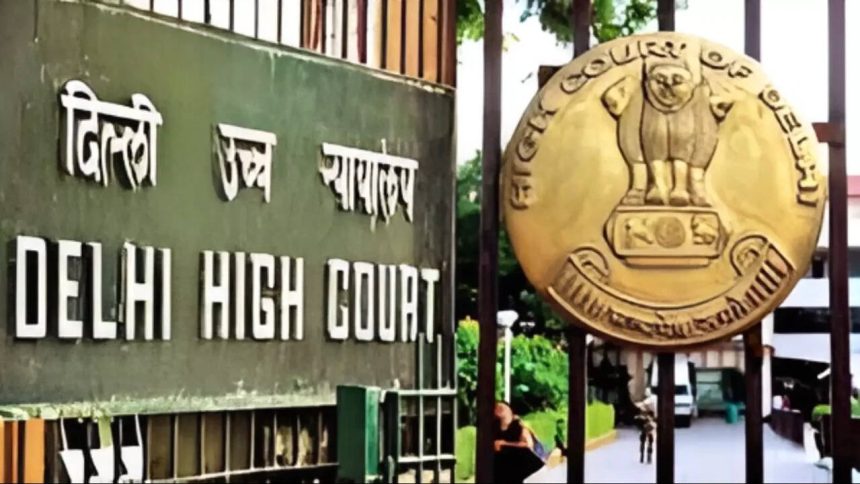
The Delhi high court has taken a significant step towards addressing the concerns of students and educators across the country by issuing a notice to the Central Board of Secondary Education (CBSE) and the Centre. The notice is in response to a plea filed by the National Students’ Union of India (NSUI), which alleges that the newly introduced On-Screen Marking system is plagued by large-scale irregularities and deficiencies. The court’s decision to seek responses from the department of education and the board has sparked hope among those who have been affected by the system’s flaws. The matter is now scheduled to be heard on June 12, and the court’s verdict is eagerly awaited by all stakeholders.
Background of the Controversy
The On-Screen Marking system was introduced by the CBSE with the aim of making the evaluation process more efficient and transparent. However, since its implementation, numerous complaints have surfaced regarding errors and inconsistencies in the marking process. Many students have reported discrepancies in their scores, with some even claiming that they have been wrongly failed. The NSUI, which filed the plea, has demanded that the court intervene to address these issues and ensure that the rights of students are protected.
The introduction of the On-Screen Marking system was seen as a major overhaul of the traditional evaluation process. The system uses technology to mark answer sheets, with the aim of reducing human error and increasing the speed of evaluation. However, the reality has been far from perfect, with many students and teachers expressing concerns about the system’s reliability and accuracy. The court’s notice to the CBSE and the Centre is a significant development, as it acknowledges the gravity of the situation and the need for urgent action.
Implications of the Court’s Decision
The court’s decision to issue a notice to the CBSE and the Centre has significant implications for the education sector. If the court rules in favor of the NSUI, it could lead to a major overhaul of the On-Screen Marking system, with potential changes to the way answer sheets are evaluated. The court’s verdict could also have a bearing on the future of technology-based evaluation systems in India. The use of technology in education is a rapidly growing trend, and the court’s decision could set a precedent for the use of technology in other areas of education.
The CBSE and the Centre will have to respond to the court’s notice and provide explanations for the irregularities and deficiencies in the On-Screen Marking system. The court will then consider their responses and make a decision based on the evidence presented. The outcome of the case is uncertain, but one thing is clear: the court’s decision will have far-reaching consequences for the education sector and the millions of students who are affected by the On-Screen Marking system.
Way Forward
The court’s notice to the CBSE and the Centre is a welcome move, as it acknowledges the concerns of students and educators. However, the real challenge lies ahead, as the court will have to navigate the complex issues surrounding the On-Screen Marking system. The court will have to balance the need for efficiency and transparency with the need to ensure accuracy and fairness in the evaluation process. The verdict will be closely watched by all stakeholders, and it is hoped that the court’s decision will bring relief to the students who have been affected by the system’s flaws.
The Delhi high court’s decision to issue a notice to the CBSE and the Centre is a significant step towards addressing the concerns of students and educators. The court’s verdict will be eagerly awaited, and it is hoped that it will bring about positive changes to the On-Screen Marking system. The future of education in India depends on the ability of institutions to adapt to changing circumstances and to ensure that the rights of students are protected. The court’s decision will be a crucial milestone in this journey, and it is hoped that it will pave the way for a more efficient, transparent, and fair evaluation system.