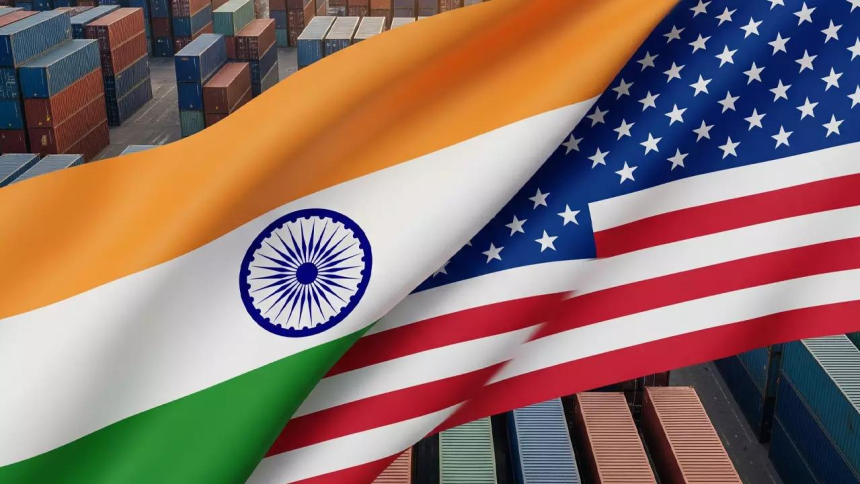
The impending meeting between Prime Minister Narendra Modi and US President Donald Trump at the G7 summit in France has sparked renewed optimism about a potential India-US trade deal. A senior US administration official has hinted that negotiations may continue during the high-profile gathering, paving the way for further discussions. However, a comprehensive agreement is unlikely to be finalized in the near future, leaving many to wonder if the ongoing talks will yield tangible results.
Modi-Trump Meeting: A Chance to Bridge the Gap
The forthcoming meeting between Modi and Trump presents an opportunity for both leaders to rekindle their efforts towards securing a trade agreement. The US has been seeking greater access to India’s agricultural and dairy markets, while India has been pushing for greater protection of its pharmaceutical and IT industries. The negotiations have been ongoing for several months, but the two sides have yet to make significant headway. Despite the challenges, both countries are keen on forging a closer economic relationship, with the US seeking to reduce its dependence on China and India looking to diversify its trade ties.
US Trade Representative Robert Lighthizer has been spearheading the negotiations, and his recent comments suggest that the talks may continue beyond the G7 summit. Lighthizer has emphasized the need for a mutually beneficial agreement, highlighting the potential benefits of a more open and competitive trade relationship between the two nations. While the meeting in France may not result in a formal agreement, it is likely to provide a platform for Modi and Trump to reaffirm their commitment to the ongoing talks.
Challenges Ahead: Tariffs, Protectionism, and More
Despite the renewed optimism, several challenges lie ahead for the India-US trade deal. The US has imposed tariffs on Indian steel and aluminum exports, while India has retaliated with tariffs on US goods such as almonds and apples. The protectionist sentiment in both countries has made it difficult to reach a consensus on key issues like tariffs and market access. Additionally, India’s pharma and IT industries are wary of the potential impact of a trade deal on their domestic markets, leading to concerns about the sustainability of the negotiations.
The US has also been pushing for greater access to India’s agricultural market, which is seen as a significant challenge. Indian farmers have been resisting attempts to open up their markets to foreign competition, and the government has been under pressure to protect their interests. The pharma industry is also a sensitive issue, with Indian companies like Cipla and Lupin concerned about the potential impact of a trade deal on their domestic market share.
G7 Summit: A Platform for Reviving the Talks
The G7 summit in France provides a high-profile platform for Modi and Trump to revive the talks and reiterate their commitment to a trade agreement. The summit is expected to focus on key issues like trade, security, and climate change, with the India-US relationship being a key point of discussion. While a comprehensive agreement may not be finalized during the meeting, it is likely to provide a fresh impetus to the ongoing negotiations. The US and India are keen on forging a closer economic relationship, and the G7 summit may prove to be a crucial stepping stone in this direction.
As the meeting in France approaches, both sides are likely to come under scrutiny for their commitment to the ongoing talks. The outcome of the meeting will be closely watched by trade experts and industry leaders, who are keen to see tangible progress on the India-US trade deal. While the road ahead may be challenging, the G7 summit provides a timely opportunity for Modi and Trump to rekindle their efforts and revive the talks.