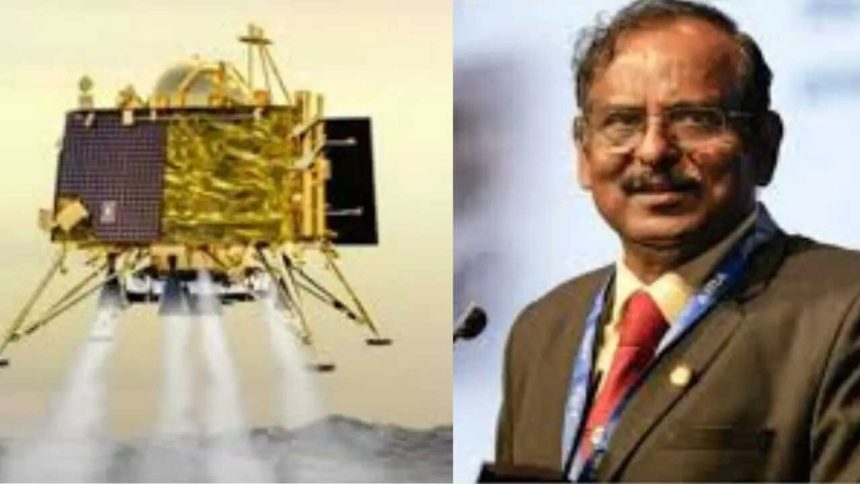
The Indian Space Research Organisation (Isro) is embarking on an ambitious mission to develop a lunar lander that can survive the harsh conditions on the Moon’s surface for an unprecedented 200 Earth days. This groundbreaking endeavour is being undertaken in collaboration with the Department of Atomic Energy (DAE), with the primary objective of creating an advanced artificial heating system that can sustain the lander during the frigid lunar nights. The brainchild of Isro chairman V Narayanan, this innovative project is poised to revolutionise India’s space exploration capabilities and pave the way for future manned missions to the Moon.
Technological Challenges and Innovations
The development of a lunar lander that can endure the extreme temperatures on the Moon’s surface is a complex task that requires cutting-edge technology and innovative solutions. The lunar surface temperature can drop to as low as -173 degrees Celsius during the night, making it essential for the lander to have a reliable heating system to maintain its operational capacity. To address this challenge, Isro and DAE are working together to design an advanced artificial heating system that can provide the necessary warmth to the lander’s components and electronics. This system will be powered by a combination of solar panels and nuclear batteries, which will enable the lander to survive the prolonged periods of darkness on the Moon.
The collaboration between Isro and DAE is a significant development in India’s space programme, as it brings together the expertise of two premier organisations in the country. The DAE’s experience in developing nuclear batteries and other advanced technologies will complement Isro’s expertise in space exploration, enabling the development of a robust and reliable lunar lander. The success of this project will not only demonstrate India’s capabilities in space technology but also open up new avenues for scientific research and exploration on the Moon.
Scientific Objectives and Implications
The development of a lunar lander that can survive for 200 Earth days on the Moon’s surface has significant scientific implications, as it will enable scientists to conduct prolonged experiments and gather valuable data on the lunar environment. The lander will be equipped with a range of scientific instruments, including seismometers, spectrometers, and cameras, which will provide insights into the Moon’s internal structure, composition, and geological processes. The data collected by the lander will be transmitted back to Earth, where it will be analysed by scientists to gain a better understanding of the Moon’s evolution and its potential for supporting human life.
The success of this mission will also have significant implications for future manned missions to the Moon, as it will demonstrate the feasibility of establishing a sustainable human presence on the lunar surface. The development of a reliable and efficient heating system will be critical to the success of such missions, as it will enable astronauts to survive the harsh conditions on the Moon and conduct scientific experiments over prolonged periods. The collaboration between Isro and DAE is a significant step towards achieving this goal, and it is expected to pave the way for more ambitious space exploration projects in the future.
Future Prospects and Collaborations
The development of a lunar lander that can survive for 200 Earth days on the Moon’s surface is a testament to India’s growing capabilities in space technology and its commitment to advancing scientific knowledge. The collaboration between Isro and DAE is a significant development in this context, as it brings together the expertise of two premier organisations in the country. The success of this project is expected to have a profound impact on India’s space programme, as it will demonstrate the country’s ability to develop and execute complex space missions.
As India continues to push the boundaries of space exploration, it is likely to collaborate with other countries and organisations to achieve its objectives. The development of a lunar lander that can survive for 200 Earth days on the Moon’s surface is a significant achievement that will enable India to participate in international space missions and contribute to the global effort to explore and understand the universe. With its growing capabilities and expertise in space technology, India is poised to play a major role in the future of space exploration, and its collaboration with DAE is an important step in this direction.