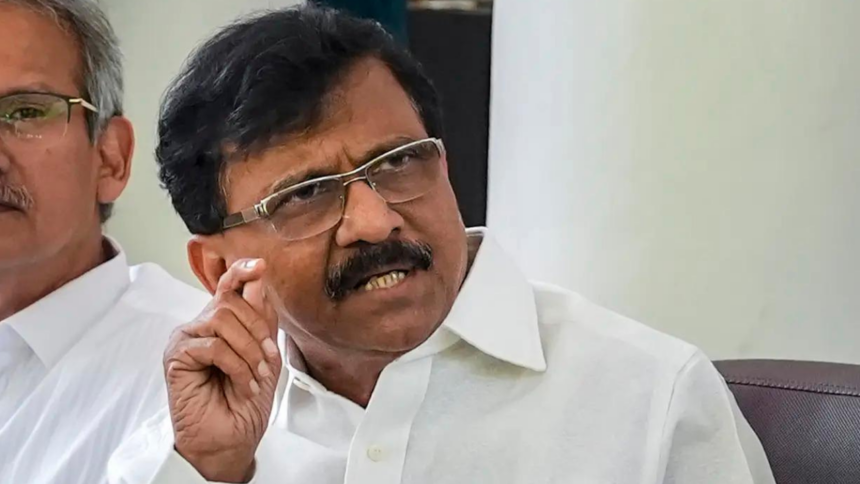
The Indian political landscape is witnessing a significant stir as Shiv Sena (UBT) Rajya Sabha MP Sanjay Raut has sparked controversy with his recent remarks directed at suspected rebel party MPs. Raut’s unapologetic stance on his choice of words has added fuel to the fire, with the leader claiming that the expressions he used are part of common Marathi usage. This development comes at a time when the Shiv Sena is grappling with internal divisions, leading to speculations about a possible split within the party.
Defending His Remarks
Raut’s defense of his comments has been met with mixed reactions, with some hailing his forthrightness and others condemning his language. The MP has been unflinching in his stance, stating that he is well aware of when and which language to use, implying that his words were deliberately chosen to convey a strong message. This assertion has raised questions about the party’s internal dynamics and the extent to which its leaders are willing to go to assert their dominance.
The controversy surrounding Raut’s remarks has also brought to the fore the issue of language and its usage in politics. While some argue that politicians should maintain a level of decorum in their public discourse, others believe that the use of colloquial language can help leaders connect with their constituents on a more personal level. As the debate rages on, it remains to be seen how Raut’s comments will impact the Shiv Sena’s reputation and his own standing within the party.
Implications for the Shiv Sena
The current turmoil within the Shiv Sena has significant implications for the party’s future. The suspected rebellion by some MPs has created an air of uncertainty, with many wondering if the party will be able to withstand the internal pressures. Raut’s comments have been seen as an attempt to assert his authority and quell the dissent, but they may ultimately prove counterproductive. As the party struggles to maintain its unity, it is essential for its leaders to engage in constructive dialogue and address the grievances of all members.
The Shiv Sena’s internal conflicts are also being closely watched by other political parties, who may seek to capitalize on the situation. The party’s allies and opponents alike will be keenly observing the developments, looking for opportunities to either strengthen their own positions or weaken those of their rivals. As the situation unfolds, it is crucial for the Shiv Sena to demonstrate its ability to resolve its internal differences and emerge stronger.
Broader Political Implications
The Shiv Sena rebellion has far-reaching implications for Indian politics as a whole. The party’s internal divisions reflect the broader challenges faced by political parties in the country, including the struggle to maintain unity and cohesion. As the Indian political landscape continues to evolve, parties will need to adapt to changing circumstances and find ways to address the concerns of their members. The Shiv Sena’s experience serves as a reminder of the importance of effective leadership and communication in navigating internal conflicts and maintaining party unity.
As the drama surrounding the Shiv Sena continues to unfold, it is clear that the party’s future hangs in the balance. Raut’s remarks have added a new dimension to the situation, and it remains to be seen how the party will respond to the challenges ahead. One thing is certain, however: the Shiv Sena’s ability to navigate its internal conflicts will have significant implications for the party’s future and the Indian political landscape as a whole. The coming days and weeks will be crucial in determining the outcome of this saga, and all eyes will be on the Shiv Sena as it grapples with its internal demons.