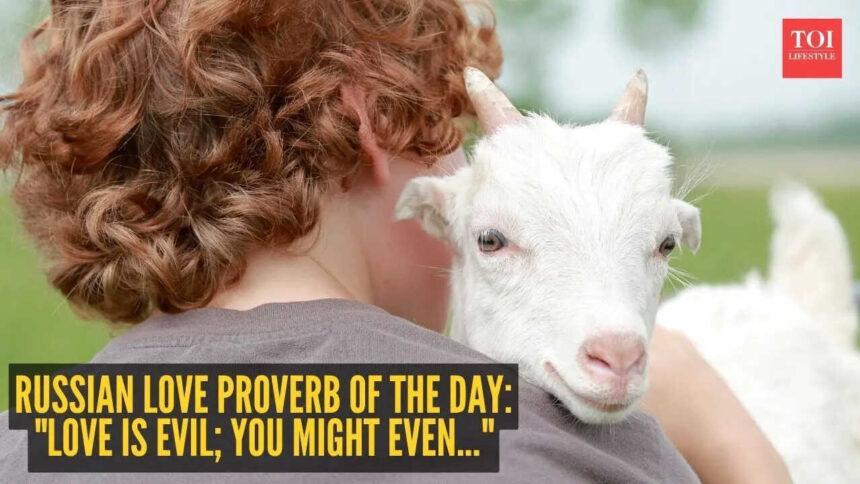
The Russian love proverb ‘Lyubov’ – zla, polyubish’ i kozla’, which translates to ‘Love is evil, you might even fall for a goat’, is a witty and relatable saying that highlights the unpredictable nature of love. This phrase suggests that love can be so all-consuming and blinding that it can lead us to overlook even the most obvious flaws in a partner, making us fall deeply in love with someone who may not be the most conventional or suitable match. The idea that love can make us act irrationally and see the world through a distorted lens is a universal concept that transcends cultures and languages.
Understanding the Proverb
The Russian proverb ‘Love is evil, you might even fall for a goat’ is a metaphorical expression that uses humor and exaggeration to convey the idea that love can be a powerful and overwhelming force. The image of falling in love with a goat is an absurd and comical one, but it serves to illustrate the point that love can lead us to do and feel things that might seem irrational or unreasonable to others. This proverb is not meant to be taken literally, but rather as a lighthearted warning about the potential dangers and unpredictabilities of love.
The concept of love being blind is a common theme in literature, art, and music, and it is a phenomenon that has been observed and experienced by people throughout history. The idea that love can make us overlook flaws and imperfections in a partner is a complex one, and it is influenced by a variety of factors, including emotions, hormones, and personal experiences. While the Russian proverb ‘Love is evil, you might even fall for a goat’ is a humorous and entertaining way to express this idea, it also touches on a deeper truth about the human experience and the nature of love.
The Psychology of Love
From a psychological perspective, the idea that love can be blind is supported by research on the neuroscience of love and attachment. Studies have shown that the brain’s reward system is activated when we fall in love, releasing dopamine and other neurotransmitters that create feelings of pleasure and euphoria. This can lead to a state of intense infatuation, in which we become obsessed with the object of our desire and overlook any flaws or imperfections. Additionally, the hormone oxytocin, often referred to as the ‘love hormone’, plays a key role in social bonding and attachment, and can contribute to the feelings of closeness and connection that we experience in romantic relationships.
The psychology of love is a complex and multifaceted field, and there is still much to be learned about the neural mechanisms and hormonal processes that underlie human attachment and romance. However, it is clear that love is a powerful and universal force that can have a profound impact on our lives and our well-being. By understanding the psychological and neurological factors that contribute to love and attachment, we can gain a deeper insight into the human experience and the complexities of the human heart.
The Cultural Significance of Love
The Russian proverb ‘Love is evil, you might even fall for a goat’ is a cultural expression that reflects the values and attitudes of Russian society and folklore. The use of humor and irony in this proverb is characteristic of Russian literature and culture, and it serves to highlight the complexities and contradictions of love and relationships. The idea that love can be both beautiful and destructive, redemptive and debilitating, is a theme that is echoed in literature, art, and music from around the world.
The cultural significance of love is a topic that has been explored and celebrated in countless works of art, literature, and music throughout history. From the sonnets of Shakespeare to the novels of Tolstoy, love has been a universal theme that transcends cultures and languages. The Russian proverb ‘Love is evil, you might even fall for a goat’ is a unique and fascinating example of this cultural phenomenon, and it offers a humorous and thought-provoking perspective on the human experience of love.
The Russian love proverb ‘Love is evil, you might even fall for a goat’ is a reminder that love is a mysterious and unpredictable force that can bring both joy and suffering into our lives. By embracing the complexities and contradictions of love, we can gain a deeper understanding of ourselves and the world around us, and cultivate a more compassionate and empathetic approach to relationships and romance. As we reflect on the wisdom and humor of this Russian proverb, we are invited to consider the many ways in which love can shape and transform us, and to approach the mysteries of the human heart with curiosity, humility, and an open mind.