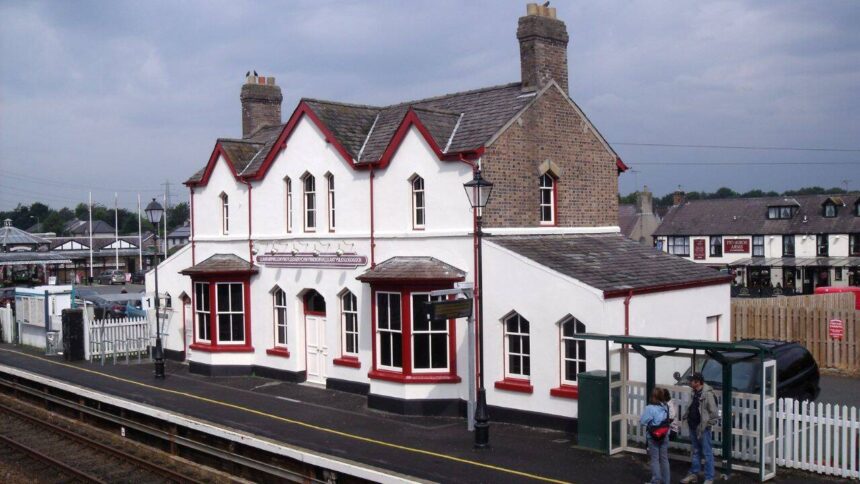
Located in the heart of north-west Wales, Llanfairpwllgwyngyllgogerychwyrndrobwllllantysiliogogogoch has become infamous for its jaw-dropping, 58-letter name. This tiny village has captured the imagination of tourists and locals alike, with many attempting to pronounce it and few succeeding. But what lies behind this enigmatic name, and how did a small Welsh village come to be saddled with a moniker that seems to defy the laws of language?
History and Etymology
The name Llanfairpwllgwyngyllgogerychwyrndrobwllllantysiliogogogoch may seem like a tongue-twister, but it is, in fact, a genuine Welsh placename with a rich history. The village’s name is derived from the Welsh language, and it can be broken down into several components. ‘Llanfair’ means ‘St. Mary’s Church,’ ‘Pwll’ means ‘pool,’ ‘Gwyngyll’ means ‘white hazel,’ ‘Gogerychwyrndrobwll’ means ‘of the red cave,’ and ‘Llantysilio’ means ‘St. Tysilio’s Church.’ The village’s name is a testament to its strategic location near the A5, a major Roman road that connected the British Isles to the continent.
One of the most widely-held theories about the village’s name is that it was created to attract tourists. In the late 19th century, the village’s name was changed from its original ‘Llanfair Pwllgwyngyll’ to its current, longer form. The idea was to create a name that would be unique and memorable, and would attract visitors to the area. Whether or not this theory is true, one thing is certain: the village’s name has become a major draw for tourists, who come from all over the world to see the famous railway sign and attempt to pronounce the village’s name.
Life in Llanfairpwllgwyngyllgogerychwyrndrobwllllantysiliogogogoch
Despite its challenging name, life in Llanfairpwllgwyngyllgogerychwyrndrobwllllantysiliogogogoch is surprisingly normal. The village has a population of just a few hundred residents, who live and work in the surrounding area. The village’s main industries are agriculture and tourism, with many residents running small shops and cafes to cater to the influx of visitors. The village also has a thriving community center, which hosts a range of events and activities throughout the year.
One of the most striking things about Llanfairpwllgwyngyllgogerychwyrndrobwllllantysiliogogogoch is its sense of community. Despite its small size, the village has a strong sense of identity and a deep connection to its history and culture. The village’s residents are proud of their heritage, and they work hard to preserve it for future generations. Whether you’re visiting for the day or living here permanently, Llanfairpwllgwyngyllgogerychwyrndrobwllllantysiliogogogoch is a place that will leave you with lasting memories and a newfound appreciation for the complexities of the Welsh language.
The Future of Llanfairpwllgwyngyllgogerychwyrndrobwllllantysiliogogogoch
As the world becomes increasingly interconnected, it’s inevitable that Llanfairpwllgwyngyllgogerychwyrndrobwllllantysiliogogogoch will continue to attract visitors from far and wide. Whether you’re a linguist, a historian, or simply someone who loves a good challenge, this village is a must-visit destination. As the village looks to the future, its residents are working hard to preserve their unique heritage and ensure that the village remains a place of beauty and wonder for generations to come.
In a world where names are often fleeting and ephemeral, Llanfairpwllgwyngyllgogerychwyrndrobwllllantysiliogogogoch stands as a testament to the power of language and the importance of preserving our cultural heritage. Whether you’re able to pronounce it or not, this village is a place that will leave you in awe of its beauty and its history.