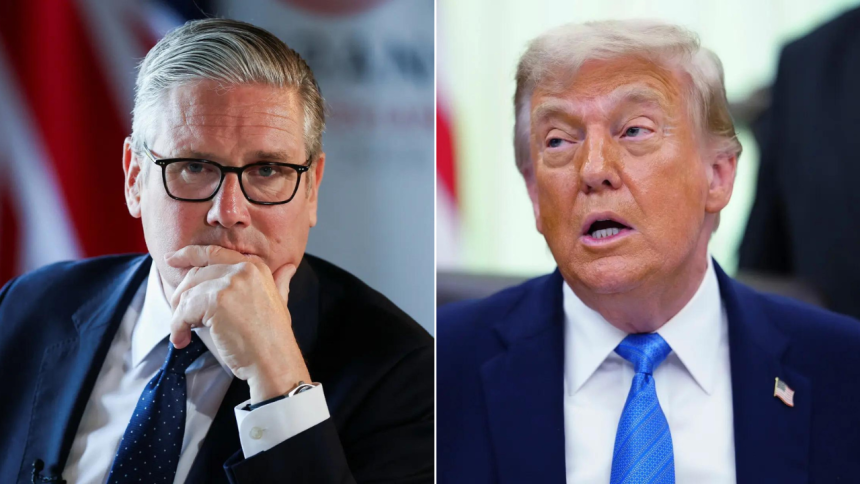
US President Donald Trump has launched a scathing attack on outgoing UK Prime Minister Keir Starmer, stating that his policies on energy, immigration, and relations with Washington were key factors in his resignation. The blunt remarks from Trump came on Monday, as Starmer announced his decision to step down as Labour Party leader and Prime Minister of the United Kingdom. Trump’s comments have sparked a heated debate, with many criticizing the US President for interfering in the internal affairs of the UK.
Energy Policy and Its Ramifications
Trump specifically targeted Starmer’s energy policies, which he claimed were misguided and detrimental to the UK’s economic interests. The US President argued that Starmer’s emphasis on renewable energy and reduction of fossil fuel consumption would lead to increased energy costs and decreased competitiveness for British businesses. This, Trump asserted, would have severe consequences for the UK’s economy and its ability to compete on the global stage. Furthermore, Trump criticized Starmer’s decision to ban fracking, which he believes would have provided a significant boost to the UK’s energy sector and reduced its reliance on foreign imports.
Starmer’s supporters, however, have defended his energy policies, citing the need to address climate change and reduce the UK’s carbon footprint. They argue that the transition to renewable energy is essential for the UK’s long-term economic and environmental sustainability. Nevertheless, Trump’s comments have highlighted the deep divisions within the UK over energy policy and the need for a more nuanced approach that balances economic and environmental concerns.
Immigration and Relations with Washington
Trump also criticized Starmer’s immigration policies, which he claimed were too soft and allowed for unchecked migration into the UK. The US President argued that this would put a strain on the UK’s public services and undermine its national security. Moreover, Trump expressed disappointment with Starmer’s approach to relations with Washington, which he believed were not strong enough. Trump claimed that Starmer’s government had failed to maintain a robust and cooperative relationship with the US, which was essential for the UK’s national interests and global influence.
The UK’s relations with the US have been a subject of intense debate, with many arguing that Starmer’s government had struck a delicate balance between maintaining a strong alliance with Washington and pursuing an independent foreign policy. Trump’s comments, however, have raised questions about the future of UK-US relations and the need for a more coordinated approach to addressing global challenges. As the UK navigates its post-Brexit relationships with the US and other countries, it remains to be seen how Starmer’s successor will approach these complex issues.
Implications and Future Directions
The implications of Trump’s comments are far-reaching, with potential consequences for the UK’s political landscape and its relationships with other countries. As the UK prepares for a new leadership, it is essential to consider the lessons of Starmer’s resignation and the need for a more effective and sustainable approach to policy-making. The UK’s next Prime Minister will face significant challenges, from addressing the energy crisis to navigating the complexities of Brexit and maintaining a strong alliance with the US.
As the UK embarks on this new chapter, it is crucial to engage in a nuanced and informed discussion about the country’s future direction. This will require a thoughtful and reflective approach to policy-making, one that balances competing interests and priorities. The UK’s next leader will need to demonstrate a deep understanding of the complex issues at play and a commitment to finding solutions that benefit the entire nation. Ultimately, the UK’s future prosperity and influence will depend on its ability to navigate these challenges and emerge stronger and more resilient than ever before.