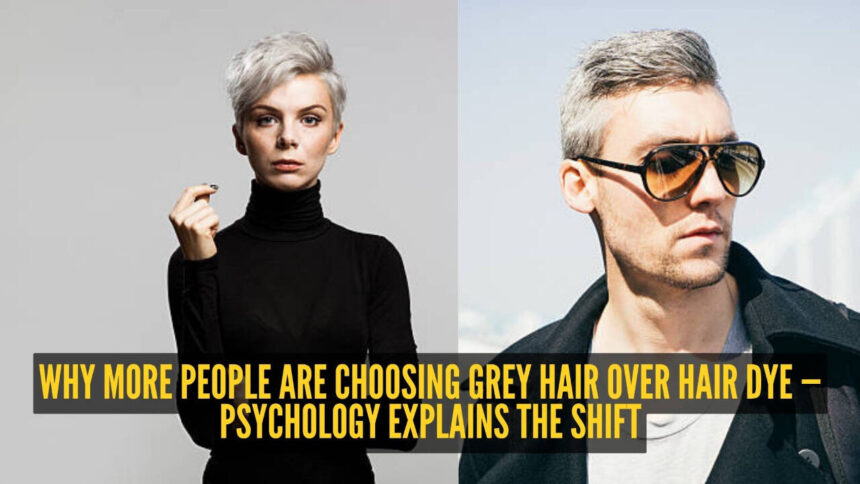
The first grey hair can be a rude awakening, a stark reminder that time is ticking and our youthful days are slowly fading away. Yet, for many, this moment marks the beginning of a journey towards self-acceptance and a rejection of societal beauty standards. As people are ditching hair colour and embracing their greys, a cultural shift is underway, one that celebrates individuality and rejects the pressure to conform to unrealistic expectations of beauty.
Breaking Free from Beauty Norms
Psychology suggests that the decision to stop dyeing one’s hair and embrace grey is often a deeply personal and liberating experience. It’s a declaration of independence from the beauty industry’s dictate that youth and beauty are synonymous. By choosing to go grey, individuals are, in effect, reclaiming their autonomy and rejecting the notion that their worth is tied to their physical appearance. This act of defiance is not just about aesthetics; it’s about challenging the status quo and embracing a more authentic version of oneself.
Furthermore, the trend of embracing grey hair is also closely tied to the concept of self-acceptance. As people age, they often develop a greater sense of self-awareness and self-compassion, leading them to prioritize their inner well-being over external validation. By embracing their grey hair, individuals are, in essence, accepting themselves as they are, without the need for artificial enhancements or societal approval. This mindset shift has far-reaching implications, as it promotes a culture of inclusivity, diversity, and body positivity.
The Psychology of Grey Hair
From a psychological perspective, the decision to go grey is often driven by a desire for authenticity and honesty. As people navigate the complexities of aging, they may begin to re-evaluate their priorities and values, leading them to question the importance of maintaining a youthful appearance. Grey hair, in this context, becomes a symbol of wisdom, experience, and maturity, rather than a source of shame or embarrassment. By embracing their grey hair, individuals are, in effect, embracing their life story and the experiences that have shaped them into the person they are today.
Additionally, the phenomenon of grey hair can also be seen as a form of social signaling, where individuals are using their appearance to convey a sense of confidence, self-assurance, and openness. In a world where beauty standards are often tied to youth and conformity, the decision to go grey is a powerful statement of individuality and nonconformity. As such, it’s not surprising that many people who have made the transition to grey hair report feeling more empowered, confident, and authentic in their daily lives.
A Cultural Shift Towards Self-Acceptance
The growing trend of embracing grey hair is not just a personal choice; it’s also a cultural phenomenon that reflects a broader shift towards self-acceptance and inclusivity. As society becomes increasingly accepting of diversity and individuality, the pressure to conform to traditional beauty standards is slowly lifting. The rise of social media has also played a significant role in this shift, as platforms like Instagram and Facebook have created spaces for people to share their stories, showcase their unique styles, and connect with like-minded individuals.
As the world becomes more accepting of grey hair, it’s likely that we’ll see a ripple effect of positivity, where individuals feel more empowered to be themselves, without fear of judgment or rejection. The silver revolution, as it were, is not just about hair; it’s about challenging societal norms, embracing our true selves, and creating a culture that values authenticity, diversity, and inclusivity. And as we look to the future, it’s clear that this movement will continue to inspire and uplift, one grey hair at a time.