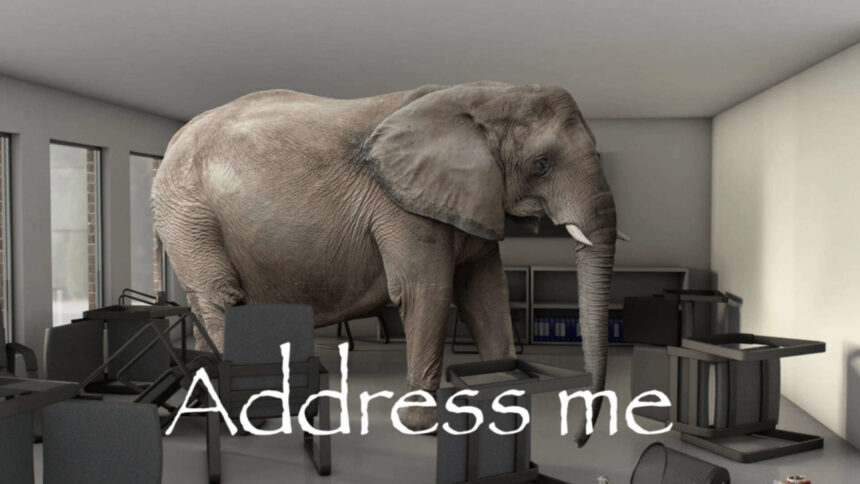
The Indonesian proverb ‘An elephant at the edge of the eye is not seen, but an ant across the ocean is seen’ offers a poignant reminder of the human tendency to overlook the obvious, while fixating on the minutest of details in others. This paradox is a universal phenomenon, transcending cultures and borders, and speaks to our inherent biases and flaws in perception. From the smallest of personal relationships to the largest of global issues, our capacity for self-deception and selective awareness is a pervasive and intriguing aspect of human nature.
The Psychology of Selective Awareness
At the heart of this paradox lies the complex and often contradictory nature of human psychology. On one hand, our brains are wired to recognize patterns and anomalies, allowing us to navigate the world with greater ease and efficiency. However, this same ability to spot discrepancies can also lead us to obsess over minor flaws in others, while remaining blissfully unaware of our own more significant shortcomings. This phenomenon is often referred to as the ‘spotlight effect,’ where we shine a intense beam of attention on the perceived faults of others, while keeping our own vulnerabilities shrouded in darkness.
Furthermore, our social and cultural environments play a significant role in shaping our perceptions and influencing what we choose to see or ignore. The pressures of conformity, the fear of social rejection, and the desire for acceptance can all contribute to a collective blind spot, where entire groups or societies remain oblivious to glaring problems or injustices. By examining these psychological and sociological factors, we can gain a deeper understanding of why we tend to miss the obvious, and how we can work to overcome these limitations.
The Consequences of Collective Blindness
The consequences of our collective blindness can be far-reaching and devastating. From environmental degradation to social inequality, our failure to acknowledge and address the most pressing issues of our time can have catastrophic consequences. The fact that we can recognize the smallest of mistakes in others, while ignoring the most glaring problems in our own backyard, is a stark reminder of the need for greater self-awareness and introspection. By acknowledging and confronting our own biases and flaws, we can begin to build a more just and equitable world, where the needs of the many are prioritized over the interests of the few.
In addition, the paradox of selective awareness highlights the importance of empathy and compassion in breaking down the barriers that separate us. By seeking to understand the perspectives and experiences of others, we can begin to see the world in a different light, and recognize the intricate web of relationships and interdependencies that bind us together. Through this process of empathy and self-reflection, we can cultivate a deeper appreciation for the complexities and nuances of human nature, and work towards creating a more harmonious and inclusive global community.
Breaking the Cycle of Selective Awareness
So, how can we break the cycle of selective awareness and begin to see the world with greater clarity and objectivity? The first step lies in recognizing the existence of our own blind spots, and acknowledging the limitations of our perception. By embracing a sense of humility and openness, we can begin to question our assumptions and challenge our own biases. This process of self-reflection and introspection can be painful and difficult, but it is a necessary step towards greater awareness and understanding.
Ultimately, the key to breaking the cycle of selective awareness lies in cultivating a sense of curiosity and wonder, and embracing the complexity and diversity of human experience. By seeking to learn from others, and acknowledging the validity of their perspectives, we can begin to build bridges of understanding and empathy. As we navigate the complexities of the modern world, it is this sense of curiosity and openness that will allow us to see the world with greater clarity, and to recognize the elephants that have been hiding in plain sight all along.