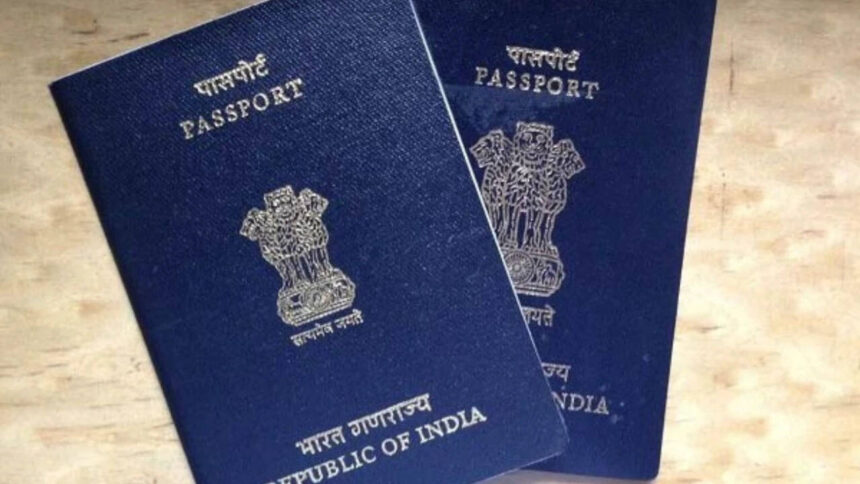
The Indian government’s stance on citizenship has been shrouded in controversy, with many citizens unaware of the real status of their passports. However, in a recent clarification issued by the centre, it has been stated that the Indian passport has never been treated as conclusive proof of citizenship. This announcement has sent shockwaves across the nation, with many left wondering what constitutes proof of citizenship in the first place. According to government officials, this position is neither new nor recently adopted, and is in fact rooted in law dating back to 1967.
Origins of the Misconception
The clarification issued by the centre points to the Citizenship Act of 1955, which was amended in 1967. The amendments introduced a new provision, Section 9A, which clarified that an Indian passport is not conclusive evidence of citizenship. In fact, the provision states that ‘the production of an Indian passport shall not be taken as conclusive evidence of the citizenship of a person’. This means that even if a person possesses an Indian passport, it does not automatically guarantee their citizenship status. The government has clarified that this position has been in place for over five decades, and is not a new development.
Further solidifying this stance, the Bombay High Court has also weighed in on the issue. In a landmark ruling, the court has held that an Indian passport is not a conclusive proof of citizenship. The court’s decision was based on the Citizenship Act of 1955 and the amendments introduced in 1967. The ruling has been cited by the government as evidence that its position on the issue is not only legitimate but also supported by the judiciary.
The Real Proof of Citizenship
So, what does constitute proof of citizenship in India? The government has clarified that the real proof of citizenship lies in the documents that a person possesses, such as the birth certificate, school certificates, and other relevant documents. The Citizenship Act of 1955 provides a comprehensive framework for the acquisition and proof of citizenship, and it is these documents that are considered conclusive evidence of a person’s citizenship status. In other words, an Indian passport is merely a travel document and not a guarantee of citizenship.
The government has also clarified that the clarification is not intended to cause confusion or anxiety among citizens. Rather, it is aimed at setting the record straight and ensuring that citizens are aware of their rights and obligations under the law. By clarifying the position on passport and citizenship, the government hopes to promote a greater understanding of the law and its provisions.
The Way Forward
The clarification issued by the centre is a significant development in the ongoing debate on citizenship and passport. While it has sparked controversy, it is also an opportunity for citizens to learn more about their rights and obligations under the law. The government’s clarification has shed light on the real status of passports and citizenship, and it is hoped that this will contribute to a greater understanding of the law and its provisions. As the centre continues to clarify its position on citizenship, it is clear that the debate is far from over. However, with greater transparency and awareness, it is hoped that citizens will be better equipped to navigate the complexities of citizenship and passport.
In the coming days and weeks, the government is expected to provide further clarification on the issue. Citizens are advised to remain vigilant and to seek guidance from relevant authorities if they have any doubts or concerns. By working together, it is hoped that the nation can move forward with a greater understanding of citizenship and passport.