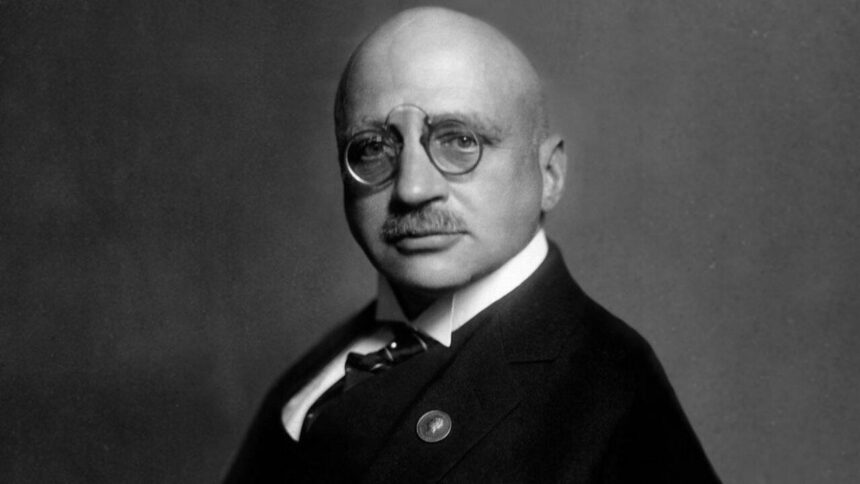
Fritz Haber’s name is etched in history as a man of contradictions – a brilliant chemist who walked the fine line between scientific discovery and industrial application, with consequences that would forever alter the course of human events. Born in 1868 in Breslau, Prussia, Haber’s early years were marked by a curiosity that would eventually propel him to the pinnacle of academic and industrial success. His journey, however, was not without its twists and turns, as he navigated the complex world of late 19th-century German chemistry with a restless energy that would ultimately lead to one of the most significant discoveries of the century.
The Early Years: From Academic Curiosity to Industrial Utility
As a young man, Haber was drawn to the world of chemistry, where he was fascinated by the works of prominent scientists such as Robert Bunsen and Auguste Laurent. His academic pursuits took him to the University of Heidelberg, where he earned his Ph.D. in chemistry, and later to the University of Berlin, where he became immersed in the world of industrial chemistry. It was during this period that Haber first encountered the challenges of scaling up chemical processes for industrial use, a problem that would become a lifelong obsession. His research focused on the synthesis of ammonia, a process that held the key to unlocking the secrets of fertilizer production, a crucial component in the global food supply.
Haber’s work on ammonia synthesis was a direct result of his collaboration with Carl Bosch, a German chemist and engineer who shared his vision for a more efficient and productive industrial process. Together, they developed the Haber-Bosch process, a revolutionary method that used high temperatures and pressures to combine nitrogen and hydrogen, resulting in the production of ammonia on a massive scale. The implications of this discovery were far-reaching, with the potential to feed billions of people around the world by providing a crucial source of fertilizer for crops.
The Dark Side of the Haber-Bosch Process
However, the Haber-Bosch process was not without its dark side. The use of ammonia in industrial agriculture led to a significant increase in crop yields, but it also had a devastating impact on the environment. The process itself was energy-intensive and relied on fossil fuels, which contributed to greenhouse gas emissions and climate change. Moreover, the over-reliance on synthetic fertilizers has been linked to soil degradation and water pollution, threatening the long-term sustainability of our food systems. The consequences of Haber’s discovery were not limited to the environment, as the increased availability of food also led to population growth, which in turn put a strain on resources and infrastructure.
The use of the Haber-Bosch process during World War I further exacerbated the negative consequences of Haber’s discovery. Germany’s use of ammonia-based fertilizers and explosives, such as mustard gas, had a devastating impact on the battlefield, causing widespread harm to soldiers and civilians alike. Haber’s involvement in the development of these chemical weapons has led some to question his legacy, with many viewing him as a pioneer in the field of chemical warfare.
Legacy and Impact
Fritz Haber’s legacy is complex and multifaceted, reflecting the contradictions of his own life and work. On the one hand, his discovery of the Haber-Bosch process has fed billions of people around the world, providing a crucial source of fertilizer for crops and contributing to the growth of global food production. On the other hand, the process has had a devastating impact on the environment and human health, highlighting the need for more sustainable and responsible approaches to industrial agriculture.
Today, Haber’s work continues to shape our understanding of the complex relationships between science, technology, and society. As we navigate the challenges of climate change, food security, and industrialization, we would do well to remember the lessons of Haber’s discovery, and the importance of considering the long-term consequences of our actions. In the end, Haber’s legacy serves as a reminder that scientific progress is not always a linear or straightforward process, but rather a complex and multifaceted journey that requires careful consideration and responsible application.