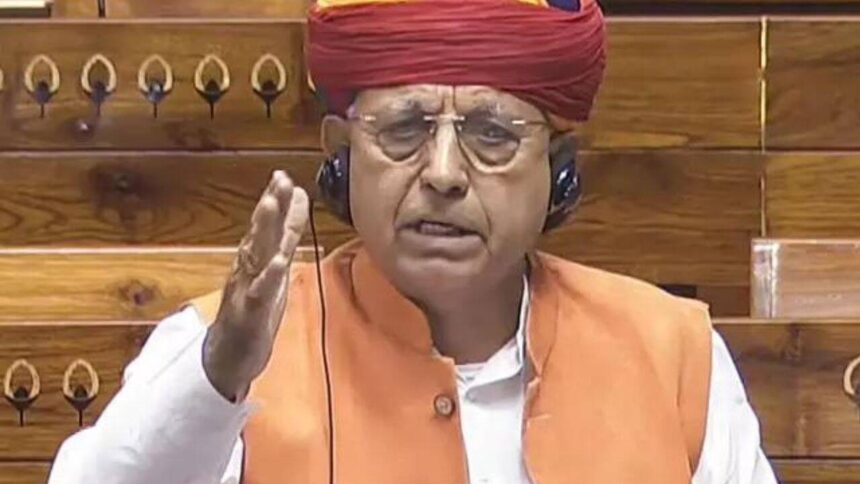
The Indian government’s subsidy schemes have long been a topic of debate, with many questioning the allocation of funds and the beneficiaries of these programs. Recently, Union minister of state for agriculture Bhagirath Choudhary found himself at the center of a controversy when it was revealed that he had received a government subsidy of Rs 99 lakh for his cucumber farming project in Rajasthan. Choudhary, however, has defended his actions, stating that he had applied for the subsidy in 2018, prior to becoming a minister, and had followed all the rules and procedures.
Background of the Subsidy
The subsidy in question was granted under a government scheme aimed at promoting agricultural projects in the country. The scheme provides financial assistance to farmers and agricultural entrepreneurs to help them set up and maintain their projects. Choudhary’s cucumber farming project was one of the many projects that benefited from this scheme, with the minister receiving a subsidy of Rs 99 lakh to support his venture. The minister has argued that he had applied for the subsidy in 2018, when he was not a minister, and had provided all the necessary documentation and information required for the application process.
Choudhary’s defense of his actions has sparked a debate about the allocation of government subsidies and the rules surrounding these programs. Many have questioned how a minister could receive such a large subsidy, especially when many other farmers and agricultural entrepreneurs are struggling to access these funds. The minister has argued that he had followed all the rules and procedures, and that his application was approved based on the merits of his project. However, the controversy surrounding the subsidy has raised questions about the transparency and accountability of the government’s subsidy schemes.
Reaction to the Controversy
The controversy surrounding Choudhary’s subsidy has sparked a reaction from various quarters, with many calling for greater transparency and accountability in the government’s subsidy schemes. The opposition has criticized the government for allocating large subsidies to ministers and their associates, while many farmers and agricultural entrepreneurs continue to struggle to access these funds. The government, on the other hand, has defended its subsidy schemes, arguing that they are necessary to promote agricultural development and support farmers and agricultural entrepreneurs.
The controversy has also raised questions about the rules and procedures surrounding government subsidies. Many have argued that the rules are too lax, allowing ministers and their associates to benefit from these schemes while others are left behind. The government has argued that the rules are in place to ensure that the subsidies are allocated fairly and transparently, but the controversy surrounding Choudhary’s subsidy has raised doubts about the effectiveness of these rules.
Implications of the Controversy
The controversy surrounding Choudhary’s subsidy has significant implications for the government’s subsidy schemes and the agricultural sector as a whole. The controversy has raised questions about the transparency and accountability of the government’s subsidy schemes, and has sparked calls for greater reform and oversight. The government will need to address these concerns and work to restore public trust in its subsidy schemes. The controversy has also highlighted the need for greater support and resources for farmers and agricultural entrepreneurs, who are the backbone of the country’s agricultural sector.
The controversy surrounding Choudhary’s subsidy is a reminder that the government’s subsidy schemes must be transparent, accountable, and fair. The government must work to ensure that these schemes are allocated based on merit and need, rather than privilege and position. The agricultural sector is a critical component of the country’s economy, and the government must do everything in its power to support and promote its development. By addressing the concerns surrounding the subsidy schemes and working to restore public trust, the government can help to promote a more vibrant and sustainable agricultural sector.