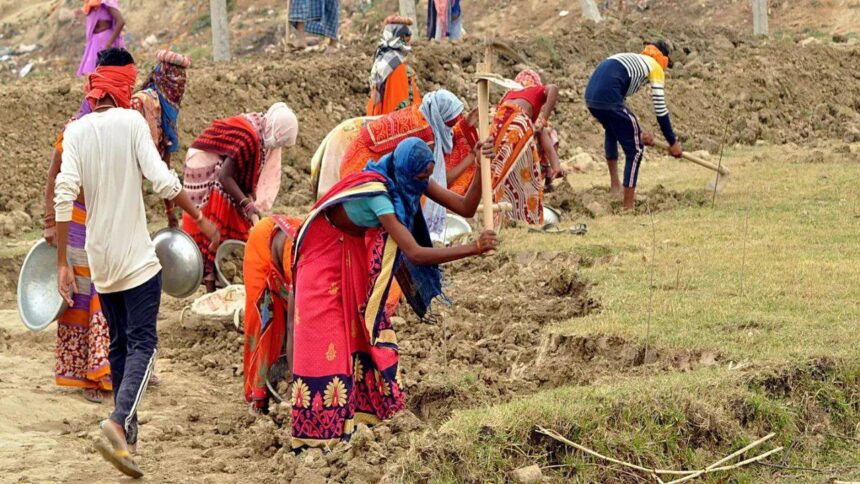
Today marks a significant milestone in the country’s efforts to enhance rural employment opportunities as the Viksit Bharat- Guarantee for Rozgar & Ajeevika Mission (Gramin) comes into force. The government has announced a notable increase in wage rates, with notified wages across states now set at a minimum of Rs 300, aiming to improve the livelihoods of millions of rural workers. This development is expected to have far-reaching implications for the rural economy and the lives of those who depend on it. The new framework is designed to provide a robust platform for job creation, skill development, and social security, ultimately contributing to the nation’s overall growth and prosperity.
Key Provisions of the New Framework
The Viksit Bharat- Guarantee for Rozgar & Ajeevika Mission (Gramin) is built around several key provisions that are intended to address the pressing issues of rural unemployment and poverty. One of the central components of the framework is the guarantee of a minimum of 100 days of wage employment per year to every rural household, ensuring a stable source of income for families. Additionally, the framework includes provisions for skill training and education, aiming to enhance the employability of rural youth and equip them with the skills required for a rapidly changing job market. The emphasis on social security is another critical aspect, with measures to provide health insurance, pension schemes, and other benefits to rural workers.
The decision to increase the wage rate to Rs 300 is seen as a significant step forward, recognizing the rising costs of living and the need to provide workers with a fair and decent income. This move is expected to benefit millions of workers engaged in various rural employment schemes, from construction and infrastructure projects to agriculture and allied sectors. The government has also announced plans to regularly review and adjust wage rates to ensure they keep pace with inflation and economic growth, providing a safeguard against the erosion of purchasing power.
Implementation and Challenges
The successful implementation of the Viksit Bharat- Guarantee for Rozgar & Ajeevika Mission (Gramin) will depend on several factors, including the effectiveness of state-level administration, the availability of funds, and the capacity to create a robust and transparent system for job allocation and wage disbursement. The government has outlined a comprehensive plan for the rollout of the framework, including training for officials, awareness campaigns for beneficiaries, and the establishment of grievance redressal mechanisms. However, challenges are anticipated, particularly in terms of ensuring that the benefits reach the most vulnerable and marginalized communities, and that the quality of work and working conditions are consistently improved.
State governments have been directed to ensure that the enhanced wage rates are implemented without delay, and to take necessary steps to communicate the details of the new framework to rural populations. The role of civil society organizations, NGOs, and community groups will be critical in this process, helping to mobilize support, provide feedback, and facilitate the participation of rural workers in the planning and implementation of local projects. As the framework begins to take shape, it will be important to monitor its progress closely, addressing any shortcomings or inefficiencies promptly to maximize its potential impact.
Looking Ahead
As the Viksit Bharat- Guarantee for Rozgar & Ajeevika Mission (Gramin) embarks on its journey, there is a sense of optimism and hope among rural communities, who see this initiative as a chance for a better future. The government’s commitment to enhancing wage rates and improving working conditions is a significant step in the right direction, acknowledging the dignity and value of rural labor. While there will undoubtedly be challenges along the way, the potential of this framework to transform the lives of millions of people is substantial. By providing a comprehensive and inclusive approach to rural employment, the government aims to not only alleviate poverty but also to foster a more equitable and sustainable model of development.
The coming months and years will be crucial in determining the success of the Viksit Bharat- Guarantee for Rozgar & Ajeevika Mission (Gramin), with the government, civil society, and rural communities all having critical roles to play. As this new chapter in rural development unfolds, it is essential to maintain a focus on the core objectives of the framework, ensuring that the needs and aspirations of rural workers remain at the forefront of policy-making and implementation. With careful planning, diligent execution, and a commitment to the well-being of rural populations, this initiative has the potential to leave a lasting and positive impact on the country’s social and economic landscape.