{“title”:”Japan’s Secret to Earthquake Resilience: A Legacy of Innovation and Planning”,”content”:”
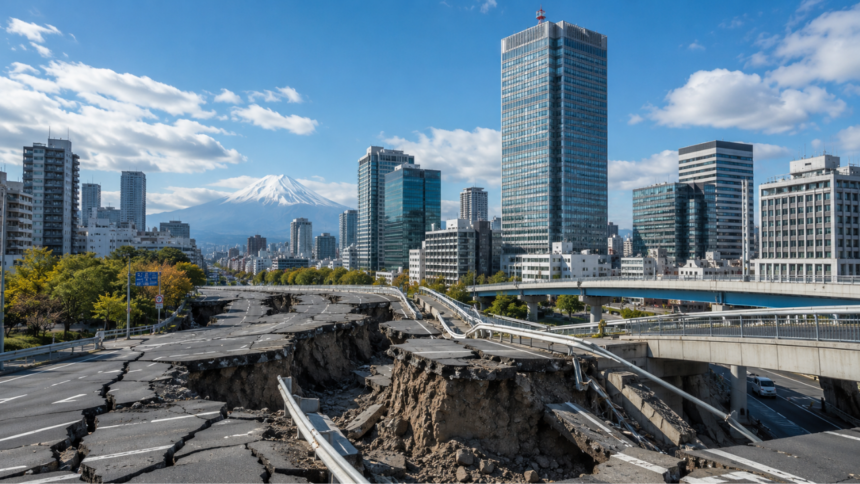
The mere mention of Japan sends shivers down the spines of many, evoking images of devastating tsunamis and skyscrapers reduced to rubble. However, this nation, situated at the crossroads of four tectonic plates, defies the odds by experiencing around 1,500 earthquakes strong enough to be felt every year, yet its cities rarely witness widespread building collapses after major earthquakes. This paradox has left many scientists and architects scratching their heads in awe, seeking to understand the secrets behind Japan’s remarkable earthquake resilience.
Building Codes and Standards: A Foundation for Safety
At the heart of Japan’s earthquake resilience lies a robust building code system, meticulously crafted over decades to ensure that structures are constructed to withstand seismic forces. The country’s unique building code, known as the ‘Seismic Design Standard for Buildings,’ dictates that buildings be designed to resist earthquakes and other seismic events. This code is rigorously enforced, with buildings undergoing regular inspections and testing to ensure compliance. The result is a nation where buildings are designed to flex, absorb, and distribute seismic forces, rather than shattering like fragile glass.
Japan’s building code also places a strong emphasis on the use of advanced materials and innovative construction techniques. For instance, buildings are often constructed with reinforced steel frames, which provide added strength and flexibility in the face of seismic activity. Additionally, the use of advanced materials such as fiber-reinforced polymers (FRPs) and shape-memory alloys (SMAs) has become increasingly common, allowing buildings to adapt and respond to changing seismic forces.
Engineering and Design Innovations: A Focus on Flexibility and Adaptability
Japan’s earthquake resilience can also be attributed to the innovative approaches employed by architects and engineers in designing buildings that can flex and adapt to seismic forces. One such innovation is the use of ‘base isolation’ technology, which involves installing a layer of flexible bearings between the building’s foundation and its superstructure. This allows the building to move independently of the ground, reducing the transfer of seismic forces to the structure above.
Another innovative approach is the use of ‘seismic design’ principles, which involve designing buildings to resist seismic forces through a combination of structural and non-structural elements. For instance, buildings may be designed with a ‘soft story’ – a flexible zone that can absorb seismic forces – or with a ‘dual system’ – a secondary system that can take over in the event of a primary system failure.
Community Engagement and Preparation: A Culture of Resilience
Japan’s earthquake resilience is also shaped by a strong culture of community engagement and preparation. The country’s residents are well aware of the risks associated with seismic activity and take steps to prepare for potential disasters. From regular drills and evacuation exercises to the creation of emergency response plans, communities in Japan are equipped to respond quickly and effectively in the event of an earthquake. Moreover, the country’s residents are encouraged to participate in disaster preparedness and response efforts through various initiatives and programs.
In Japan, earthquake resilience is not just a technical challenge, but a deeply ingrained cultural value. By combining innovative building codes, cutting-edge engineering, and a culture of community engagement and preparation, Japan has created a society that is remarkably resilient to seismic activity. As the world grapples with the challenges of earthquake risk, Japan’s example serves as a beacon of hope and inspiration – a testament to the power of innovation, planning, and community spirit in shaping a safer, more resilient future.
“,”excerpt”:”Japan’s earthquake resilience is a remarkable phenomenon that has left scientists and architects in awe. The country’s unique building code system, innovative engineering approaches, and strong culture of community engagement have all contributed to its remarkable ability to withstand seismic forces without widespread building collapses. By studying Japan’s example, we can gain valuable insights into the key factors that underpin earthquake resilience and develop strategies for creating safer, more resilient communities worldwide.”,”tags”:[“earthquake resilience”,”japan”,”building codes”,”engineering innovations”,”community engagement”],”meta_description”:”Discover the secrets behind Japan’s remarkable earthquake resilience and learn how its innovative approaches can inform strategies for creating safer, more resilient communities.”}