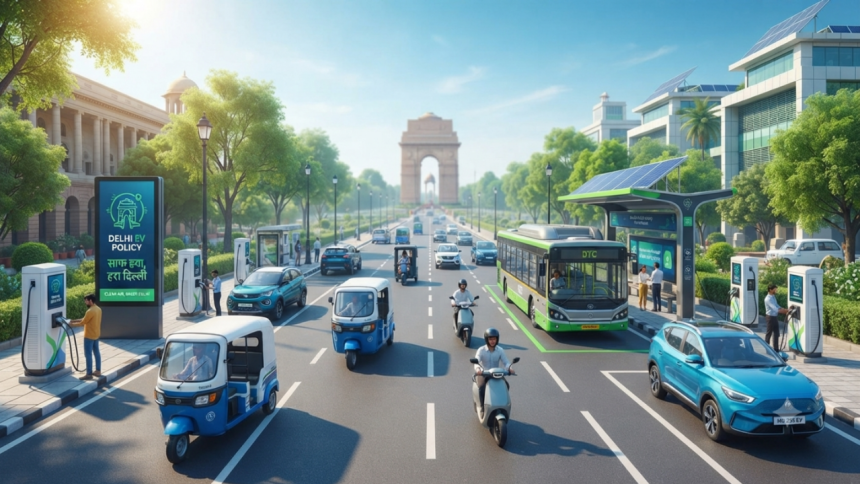
The Government of Delhi has marked a significant milestone in its mission to transform the city’s transportation landscape. After months of anticipation, the Delhi Electric Vehicles Policy 2026 has been officially notified, aiming to fast-track the adoption of electric vehicles (EVs), improve air quality, and fortify the capital’s electric mobility ecosystem. This ambitious policy is poised to revolutionize the way Delhiites move around the city, making it a model for other urban centers to follow.
Financial Incentives and Digital Transparency
The Delhi Electric Vehicles Policy 2026 offers a slew of financial incentives to encourage individuals and businesses to switch to electric vehicles. One of the key benefits is the increased subsidy for e-vehicles, with the government committing to provide a subsidy of up to ₹1.5 lakh to buyers of electric two-wheelers and ₹1.2 lakh for electric three-wheelers. Additionally, the policy promises a reduced registration fee for EV owners, making it more affordable to own and maintain an electric vehicle. Furthermore, the government has also announced plans to establish a digital platform for tracking and monitoring the sales and registration of electric vehicles, ensuring transparency and accountability in the process.
The digital platform will also facilitate the issuance of e-stickers for EVs, eliminating the need for physical stickers. This move is expected to streamline the process of EV registration and make it more convenient for owners. Moreover, the government has also committed to setting up a network of public charging stations, with a target of installing at least 10,000 charging points across the city by 2027. This will ensure that EV owners have easy access to charging facilities, making it easier for them to adopt electric vehicles as their primary mode of transportation.
Key Changes and Roadmap for Action
The Delhi Electric Vehicles Policy 2026 introduces several key changes aimed at promoting the adoption of electric vehicles. One of the significant changes is the introduction of a new category of electric vehicles, known as ‘Neighborhood Electric Vehicles’ (NEVs). These vehicles are designed for short-distance travel and are expected to be more affordable and environmentally friendly. The policy also sets a target of registering at least 25% of new vehicle sales as electric vehicles by 2027, with a vision of achieving 100% electric vehicle sales by 2030.
The government has also announced plans to establish a ‘one-stop-shop’ for EV-related services, including registration, subsidy disbursement, and charging station installation. This will make it easier for individuals and businesses to navigate the process of adopting electric vehicles and accessing related services. Additionally, the policy emphasizes the importance of creating a conducive ecosystem for the growth of the electric vehicle industry in Delhi, with a focus on research and development, manufacturing, and recycling.
Future-Proofing Delhi’s Transportation Landscape
The Delhi Electric Vehicles Policy 2026 is a testament to the government’s commitment to creating a sustainable and environmentally friendly transportation system. By providing financial incentives, digital transparency, and a clear roadmap for action, the policy aims to accelerate the adoption of electric vehicles and make Delhi a model for other cities to follow. As the city embarks on this ambitious journey, it is expected to reap significant benefits, including reduced air pollution, improved public health, and a strengthened economy. With its focus on innovation, sustainability, and community engagement, the Delhi Electric Vehicles Policy 2026 is poised to revolutionize the way Delhiites move around the city, making it a greener, healthier, and more livable place for all.