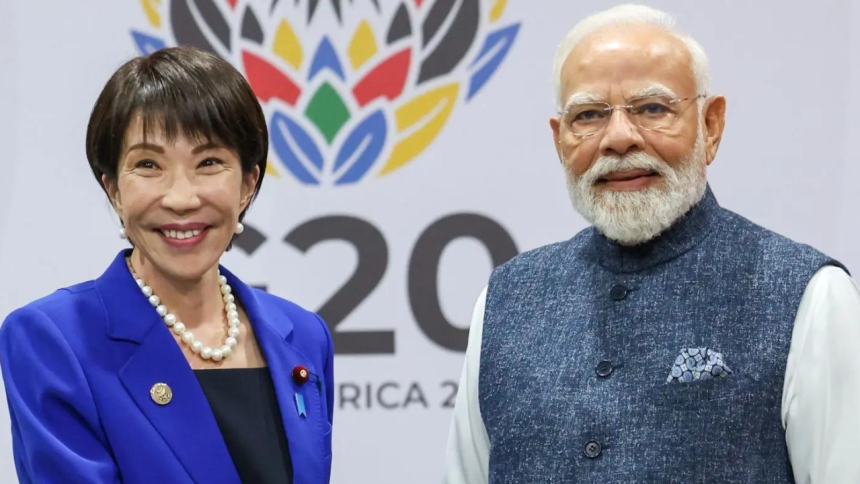
As the world continues to grapple with the aftermath of Russia’s war in Ukraine, India and Japan are joining forces to shore up their liquefied natural gas (LNG) supply chains. The move comes as a strategic countermeasure to mitigate the risks of global supply chain disruptions that have left many nations scrambling for alternative energy sources. Scheduled to be inked during a bilateral meeting between Prime Minister Narendra Modi and Japanese Prime Minister Sanae Takaichi, the LNG security pact is set to redefine the dynamics of energy trade between the two nations.
Strengthening LNG Supply Chains
The agreement will see India and Japan cooperate on a range of fronts, including investment in LNG production, infrastructure development, and technology sharing. With both countries looking to reduce their reliance on imported energy, the pact is expected to provide a significant fillip to their respective economies. According to experts, the deal will also facilitate the creation of a robust LNG supply chain that can withstand the challenges of a rapidly changing global energy landscape.
One of the primary drivers behind the pact is India’s growing appetite for natural gas, which has seen the country emerge as the world’s third-largest LNG importer. Japan, on the other hand, is keen to capitalize on its expertise in LNG technology to help India develop its own indigenous resources. By pooling their collective strengths, the two nations are anticipated to create a formidable LNG powerhouse that can cater to the energy needs of both countries.
Global Implications
The India-Japan LNG security pact is likely to have far-reaching implications for the global energy market. With the two nations accounting for a significant share of global LNG trade, their cooperation is expected to inject much-needed stability into the market. Furthermore, the pact may also encourage other nations to follow suit and explore similar partnerships to secure their energy futures.
However, not everyone is convinced that the pact will have a significant impact on the global energy landscape. Some critics argue that the agreement may not address the root causes of global supply chain disruptions, which are largely driven by geopolitics and economic factors. Nevertheless, the pact is expected to provide a much-needed boost to India and Japan’s respective economies, which have been hit hard by the ongoing global crisis.
Energy Security and Economic Growth
The India-Japan LNG security pact is poised to become a cornerstone of the two nations’ economic relationship, with energy security expected to be a key driver of their bilateral ties. By pooling their collective strengths, India and Japan are anticipated to create a synergy that will yield significant economic dividends for both nations.
As the global energy landscape continues to evolve, it remains to be seen how the India-Japan LNG security pact will shape the future of energy trade. One thing, however, is clear: the pact marks a significant milestone in the ongoing evolution of the India-Japan bilateral relationship, which is poised to become a bellwether for energy security and economic growth in the years to come.