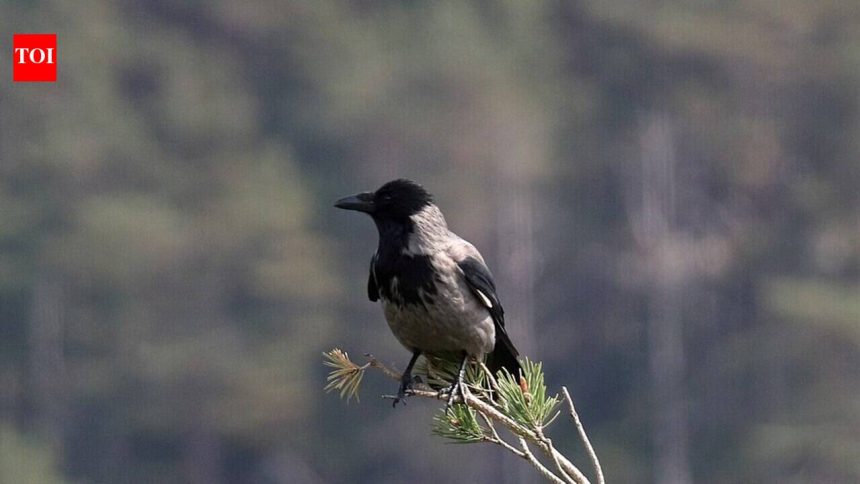
As the last wisps of winter’s chill dissipate, Vancouverites can expect a unique warning to accompany the blooming trees and increasing sunlight – a cacophony of caws and the ominous silhouettes of crows swooping down on unsuspecting pedestrians. This annual phenomenon has become an ingrained part of the city’s springtime experience, with residents and visitors alike bracing for the aerial assaults. The crows, driven by a fierce instinct to protect their young, transform the urban landscape into a veritable battlefield, leaving many to wonder how such intelligent birds could also be so downright menacing.
The Crow Conundrum
The root of this avian aggression lies in the crows’ nesting habits. As spring arrives, these birds begin to build and occupy nests, often in close proximity to human foot traffic. The presence of pedestrians, particularly those with food, is perceived as a threat to their offspring, triggering a defensive response that can range from loud, cautionary caws to full-blown dive-bombing attacks. This behavior, while understandable from a biological standpoint, poses a significant challenge to the community, as the line between admiration for these intelligent creatures and fear for personal safety becomes increasingly blurred.
Vancouver’s residents, rather than merely enduring this seasonal plight, have taken matters into their own hands. By creating and sharing maps of known crow attack zones, they aim to mitigate the risk of unexpected aerial assaults. These grassroots efforts not only serve as a practical tool for avoiding trouble but also underscore the community’s resilience and humor in the face of this peculiar problem. The maps, often annotated with personal anecdotes and crow-sighting stories, have become an integral part of the city’s folklore, symbolizing the residents’ ability to find common ground and shared purpose in the face of adversity.
Understanding the Crows
Behind the crows’ aggressive behavior lies a complex social structure and intelligence that is both fascinating and intimidating. These birds are known for their problem-solving abilities and memory, traits that make them both formidable opponents and intriguing subjects for study. Researchers have shed light on the crows’ communication patterns, revealing a sophisticated language that includes distinct calls for warnings, contact, and even playful interactions. This insight into their social dynamics offers a glimpse into a world where intelligence, cooperation, and adaptability are key to survival, challenging the simplistic view of crows as mere pests.
Moreover, the study of crows and their behavior has broader implications for urban planning and wildlife management. As cities continue to expand and encroach upon natural habitats, conflicts between humans and wildlife are likely to increase. The Vancouver crow situation serves as a microcosm for these larger issues, highlighting the need for innovative, community-driven solutions that balance human needs with wildlife conservation. By embracing the challenge posed by the crows, Vancouverites are pioneering a more inclusive and sustainable approach to urban coexistence.
Toward a Harmonious Coexistence
As the seasons pass and the crows’ nesting period comes to a close, the city returns to a sense of normalcy, with the maps of attack zones serving as a reminder of the springtime ordeal. However, the experience also leaves behind a legacy of community engagement and a deeper appreciation for the natural world. Residents and visitors alike develop a newfound respect for the crows, recognizing that their aggressive behavior is a testament to their dedication to their young and their territory. This shift in perspective encourages a more harmonious coexistence, with individuals taking steps to minimize their impact on crow habitats and reduce the likelihood of encounters gone wrong.
Ultimately, the story of Vancouver’s crow-diving phenomenon is one of resilience, community, and the unpredictable nature of wildlife. It reminds us that even in the most unexpected ways, humans and animals are intertwined, each influencing the other’s existence. As we navigate the complexities of urban wildlife, the example set by Vancouver’s residents offers a compelling model for addressing conflicts with creativity, empathy, and a willingness to understand and adapt to the natural world around us.