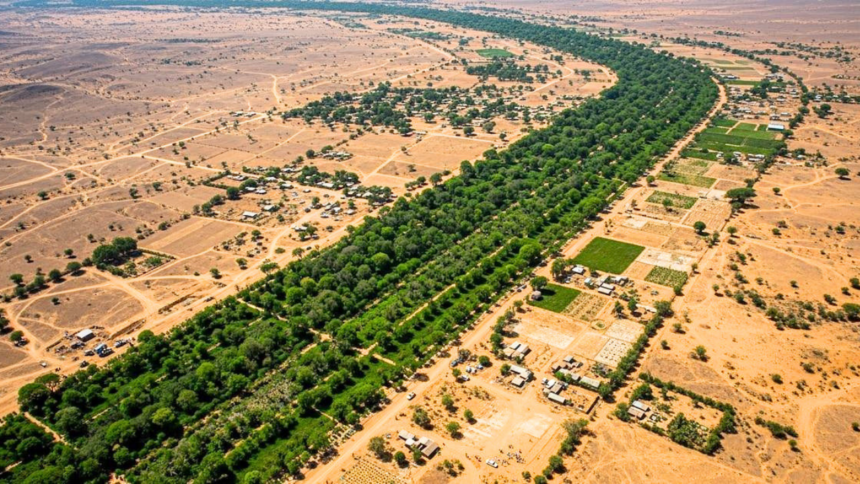
The continent of Africa is embarking on a monumental undertaking, one that has the potential to rewrite the narrative of climate resilience and sustainable development. Spanning over 8,000 kilometers, the Great Green Wall initiative is a sprawling project aimed at revitalizing the Sahel region, a vast semi-arid expanse that stretches from the Atlantic coast of Senegal to the Red Sea shores of Djibouti. This ambitious endeavor not only seeks to combat the ravages of climate change but also aims to restore degraded lands, enhance food security, and create millions of jobs in the process.
Restoring the Sahel’s Fertile Past
The Sahel region has long been grappling with the devastating effects of desertification, a process where fertile lands are gradually converted into arid wastelands. With the Sahara Desert spreading its unforgiving grasp, the Sahel’s fragile ecosystem has been pushed to the brink. The Great Green Wall initiative seeks to reverse this trend by planting a vast swathe of trees, shrubs, and other vegetation across the region. By leveraging cutting-edge technologies, innovative farming practices, and community-based approaches, the project aims to create a contiguous belt of vegetation that will not only stabilize the soil but also provide much-needed shade, fodder, and fuel for local communities.
One of the most significant challenges the project faces is the sheer scale of the undertaking. With over 11 countries participating, the Great Green Wall requires a coordinated effort from governments, civil society organizations, and local communities. However, experts believe that the rewards will far outweigh the costs. By restoring the Sahel’s fertile past, the project has the potential to increase agricultural productivity, enhance food security, and create new economic opportunities for millions of people.
Climate Resilience and Community Empowerment
The Great Green Wall is not just an environmental initiative; it is also a bold experiment in climate resilience and community empowerment. By involving local communities in the planning and implementation process, the project seeks to create a sense of ownership and agency among the people most affected by climate change. This approach not only ensures that the project is tailored to the specific needs of each community but also fosters a culture of sustainability and environmental stewardship.
As the project gains momentum, it has already demonstrated remarkable results. In countries like Niger and Burkina Faso, the creation of community-led tree nurseries has not only provided employment opportunities but also empowered women and youth to take charge of their environment. The project’s focus on climate-resilient agriculture has also led to the development of innovative farming practices that are better suited to the region’s harsh climate.
The Future of Africa’s Green Shield
The Great Green Wall is a testament to Africa’s collective determination to fight climate change and create a more sustainable future. As the project continues to grow and evolve, it has the potential to inspire a new wave of environmental initiatives across the continent. By leveraging the power of collective action, innovative technologies, and community-based approaches, the Great Green Wall can become a beacon of hope for a greener, more resilient Africa.
The success of the Great Green Wall will depend on the continued support of governments, international organizations, and local communities. However, the momentum behind this initiative is undeniable, and the potential benefits are too great to ignore. As the continent of Africa embarks on this colossal effort, it is clear that the future of its green shield hangs in the balance. Will Africa’s Great Green Wall become a reality, or will it remain a distant dream? Only time will tell, but one thing is certain – the stakes are high, and the rewards are worth fighting for.