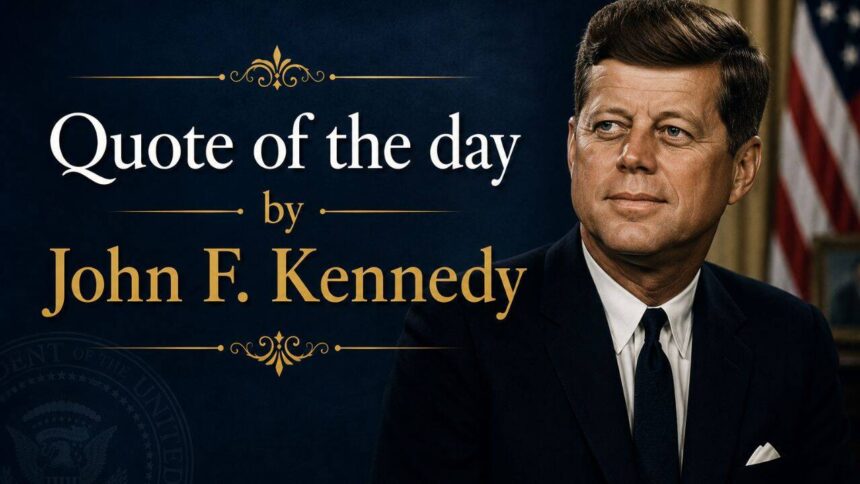
The words of John F. Kennedy, spoken over six decades ago, continue to resonate deeply with people around the world, challenging the conventional notion of what it means to be a citizen. His iconic phrase, “My fellow Americans, ask not what your country can do for you—ask what you can do for your country,” has become a rallying cry for a new generation of leaders, entrepreneurs, and changemakers who are redefining the relationship between individuals and their communities. As the world grapples with complex problems like climate change, social inequality, and economic instability, Kennedy’s call to service serves as a powerful reminder that the fate of our collective future depends on the actions we take today.
Reexamining the Social Contract
For many people, the idea of citizenship is often tied to what they can gain from their country, whether it’s access to education, healthcare, or economic opportunities. However, this narrow focus on individual benefits can lead to a transactional view of citizenship, where people see their relationship with their country as a quid pro quo arrangement. In contrast, Kennedy’s quote invites us to consider a more expansive understanding of citizenship, one that emphasizes the importance of contribution, participation, and mutual responsibility. By asking what we can do for our country, we begin to see ourselves as active stakeholders in the well-being of our communities, rather than just passive recipients of services.
This shift in perspective has profound implications for how we engage with our communities, how we hold our leaders accountable, and how we work together to address the complex challenges we face. When we adopt a service-oriented approach to citizenship, we become more invested in the success of our communities, more willing to take risks and make sacrifices for the greater good, and more committed to building a better future for all. As we navigate the complexities of the 21st century, this vision of citizenship offers a powerful antidote to the cynicism, fragmentation, and disillusionment that often characterize our public discourse.
The Power of Collective Action
The impact of Kennedy’s quote can be seen in the countless individuals and organizations around the world who are working tirelessly to create positive change in their communities. From volunteer programs and community gardens to social enterprises and advocacy groups, people are coming together to address the pressing issues of our time, often with remarkable results. These efforts demonstrate the power of collective action, the idea that when individuals work together towards a common goal, they can achieve far more than they could alone. By asking what we can do for our country, we tap into this collective energy, unleashing a wave of creativity, innovation, and progress that can transform our communities and our world.
Moreover, this approach to citizenship has the potential to bridge the divides that often separate us, whether they be ideological, socioeconomic, or cultural. When we focus on what we can do for our country, rather than what our country can do for us, we begin to see our shared humanity, our common interests, and our mutual aspirations. We begin to recognize that our individual successes are inextricably linked to the success of those around us, and that our collective well-being depends on our ability to work together, to support one another, and to lift each other up. In this way, Kennedy’s quote offers a powerful reminder of the enduring importance of empathy, compassion, and solidarity in our public life.
A Call to Action for a New Generation
As we look to the future, it is clear that the challenges we face will require a new generation of leaders, entrepreneurs, and changemakers who are equipped to tackle the complex problems of our time. Kennedy’s quote serves as a call to action for this new generation, inviting them to rethink their relationship with their country and their communities. By embracing a service-oriented approach to citizenship, young people can become the drivers of positive change, using their talents, skills, and passions to create a better world for all. Whether through volunteering, activism, or social entrepreneurship, the possibilities for engagement and impact are endless, limited only by our imagination, our creativity, and our willingness to take action.
As we reflect on the enduring legacy of John F. Kennedy’s quote, we are reminded that the true measure of our citizenship is not what we receive from our country, but what we give back. By asking what we can do for our country, we become part of a long tradition of service, sacrifice, and collective action that has shaped the course of human history. We become the co-creators of a brighter future, one that is more just, more equitable, and more peaceful for all. And it is this vision of citizenship, this call to service, that will ultimately define our generation and shape the world we leave behind.