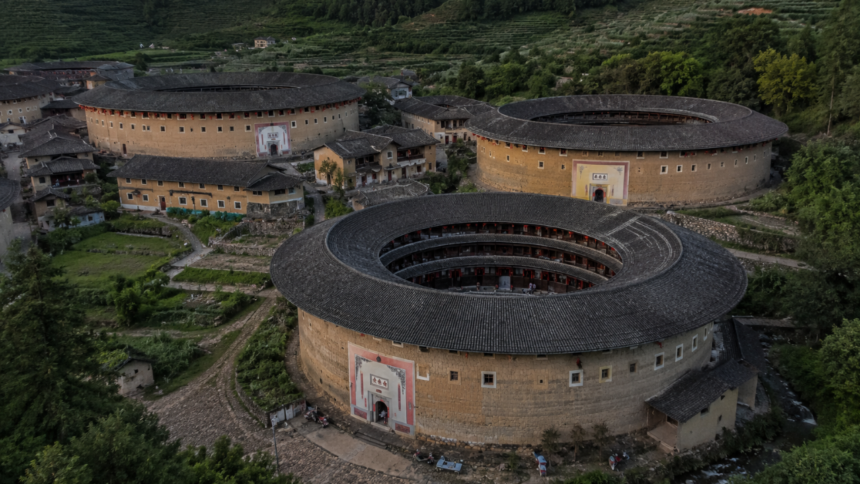
Perched atop a hill in the rural countryside of China’s Fujian Province, the Fujian Tulou earthen fortresses rise like giant doughnuts from the landscape, defying the conventions of modern architecture. These ancient structures have been a subject of fascination for centuries, and their unique design has sparked the imagination of architects and historians alike. But what lies behind the construction of these circular homes, and what secrets do they hold about the people who built them?
Origins and History
The Fujian Tulou earthen fortresses are found in the Hakka region of Fujian Province, where they have been built for centuries as communal dwellings for the Hakka people. The word ‘Tulou’ literally means ‘earth building’ in Chinese, and these structures were designed to protect the inhabitants from harm, while also providing a sense of community and security. The earliest Tulou were built during the Ming dynasty (1368-1644), and they have continued to be constructed and expanded upon over the centuries.
The Tulou were designed as communal homes, where multiple families would live together under one roof. This was a practical solution for the Hakka people, who were often forced to live in remote and mountainous areas. The circular design of the Tulou provided a safe and secure environment, with thick walls made of earth and wood that could withstand attacks and harsh weather conditions. The structures were also designed to be self-sustaining, with their own wells, kitchens, and living quarters.
Design and Architecture
The design of the Fujian Tulou earthen fortresses is a testament to the ingenuity and creativity of the Hakka people. The structures are built using a combination of earth, wood, and brick, with walls that can be up to 3 meters thick. The circular design of the Tulou provides a sense of unity and cohesion, while also allowing for a high degree of flexibility and adaptability. The structures are often surrounded by a moat or a wall, which adds an extra layer of security and protection.
The Tulou are also notable for their unique architecture, which reflects the cultural and spiritual practices of the Hakka people. The structures often feature intricate carvings and decorations, which are meant to ward off evil spirits and bring good fortune. The Tulou are also designed to be environmentally sustainable, with features such as rainwater collection systems and natural ventilation.
Legacy and Preservation
The Fujian Tulou earthen fortresses are a testament to the rich cultural heritage of the Hakka people, and they continue to play an important role in the lives of the people who live in them. However, the Tulou are facing a number of challenges, including urbanization and the decline of traditional practices. Efforts are being made to preserve the Tulou and to promote their cultural significance, but more needs to be done to ensure the long-term survival of these incredible structures.
The Fujian Tulou earthen fortresses are a reminder of the importance of preserving our cultural heritage, and of the need to learn from the past. These incredible structures have much to teach us about community, security, and sustainability, and they continue to inspire and awe people from around the world.