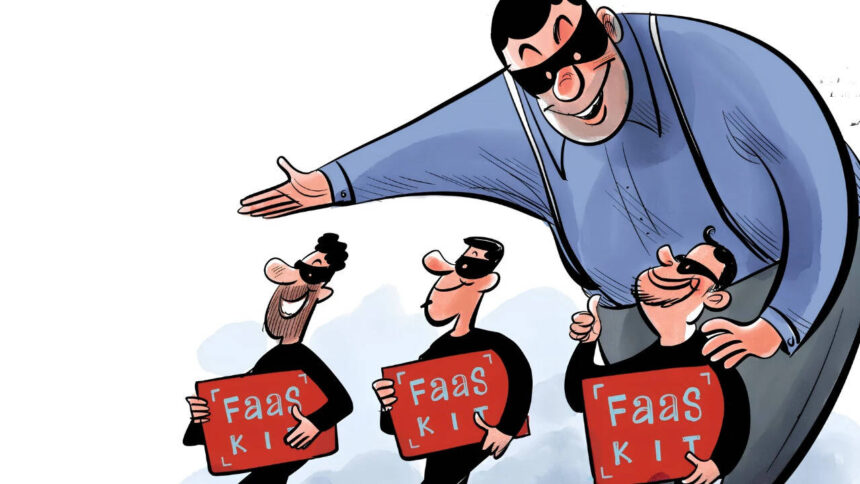
The rapid advancement of artificial intelligence has been a boon for many aspects of our lives, from streamlining office work to helping us stick to our healthy-eating goals. However, this same technology has also enabled a more sinister industry to flourish: cybercrime. What was once the realm of skilled hackers and cybercriminals has now become a subscription-based service, known as Fraud-as-a-Service, where anyone can purchase malicious tools and services to carry out cyberattacks. This disturbing trend has significant implications for individuals, businesses, and governments, and it’s essential to understand how it works and what can be done to combat it.
The Rise of Fraud-as-a-Service
The concept of Fraud-as-a-Service is straightforward: cybercriminals offer their expertise and tools to other individuals or groups, who can then use these services to carry out their own cyberattacks. This can include anything from phishing and ransomware attacks to identity theft and online fraud. The services are often marketed on the dark web, where users can browse and purchase various malicious tools and services, much like they would on a legitimate online marketplace. The prices for these services vary, but they are often surprisingly affordable, making it accessible to a wide range of individuals and groups.
The rise of Fraud-as-a-Service has been facilitated by the increasing sophistication of cybercriminals, who have developed complex networks and supply chains to support their activities. These networks often involve multiple players, including developers, distributors, and customers, all working together to create and disseminate malicious tools and services. The result is a highly efficient and effective system for carrying out cybercrime, which has made it easier than ever for individuals and groups to engage in these activities.
The Impact of Fraud-as-a-Service
The impact of Fraud-as-a-Service has been significant, with cybercrime becoming an increasingly prevalent and costly problem for individuals, businesses, and governments. According to recent estimates, the global cost of cybercrime is projected to reach $10.5 trillion by 2025, up from $3 trillion in 2015. This staggering figure is a testament to the severity of the problem and the need for urgent action to combat it. The rise of Fraud-as-a-Service has also made it more challenging for law enforcement agencies to track and prosecute cybercriminals, as the services are often designed to be anonymous and difficult to trace.
The impact of Fraud-as-a-Service is not limited to financial losses; it also has significant social and psychological consequences. Victims of cybercrime often experience feelings of vulnerability and anxiety, and the trauma can be long-lasting. Moreover, the rise of Fraud-as-a-Service has also led to an increase in cyberbullying, online harassment, and other forms of malicious activity, which can have devastating effects on individuals and communities. As such, it’s essential to address the root causes of cybercrime and work towards creating a safer and more secure online environment for everyone.
Combating Fraud-as-a-Service
Combating Fraud-as-a-Service requires a multi-faceted approach that involves governments, businesses, and individuals working together to prevent and prosecute cybercrime. This can include implementing robust cybersecurity measures, such as firewalls and encryption, as well as educating users about the risks of cybercrime and how to protect themselves. Law enforcement agencies must also work to disrupt and dismantle the networks and supply chains that support Fraud-as-a-Service, using techniques such as undercover operations and intelligence gathering to track and prosecute cybercriminals.
Ultimately, the key to combating Fraud-as-a-Service is to create a culture of cybersecurity awareness and responsibility, where individuals and organizations take proactive steps to protect themselves and others from cybercrime. This requires a fundamental shift in how we think about cybersecurity, from a reactive approach that focuses on responding to threats to a proactive approach that emphasizes prevention and mitigation. By working together and taking a proactive approach to cybersecurity, we can reduce the risk of cybercrime and create a safer and more secure online environment for everyone.
The rise of Fraud-as-a-Service is a disturbing trend that highlights the darker side of innovation and the need for urgent action to combat cybercrime. As we move forward in this increasingly digital age, it’s essential to prioritize cybersecurity and work towards creating a safer and more secure online environment for everyone. By doing so, we can ensure that the benefits of technology are shared by all, while minimizing the risks and negative consequences of cybercrime.