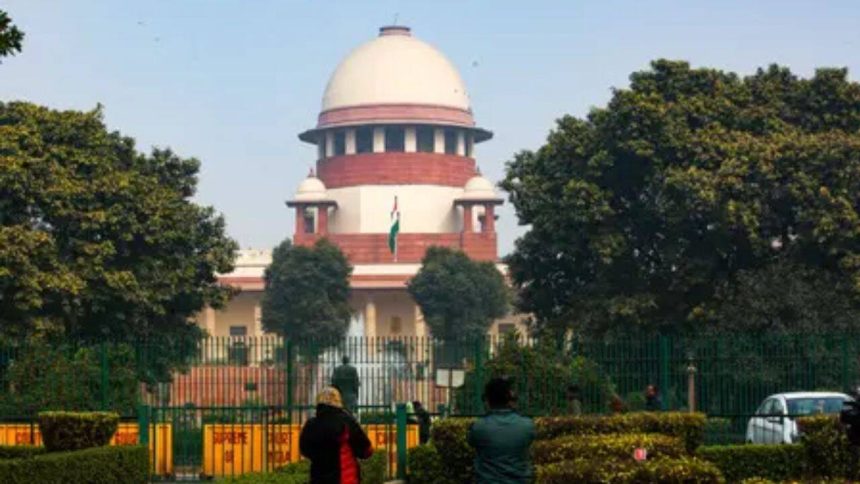
The National Council of Educational Research and Training, or NCERT, has found itself at the center of a heated debate after the Supreme Court intervened in the matter of a contentious chapter on the judiciary in its Class 8 Social Science textbook. The chapter, which had been criticized for its critical framing of the judiciary, has now been revised and released as part of the revised Part 2 of the textbook. The new version of the chapter presents a more conventional civics lesson, focusing on justice, constitutional remedies, courts, tribunals, and dispute resolution.
Judiciary Under Scrutiny
The original chapter had sparked controversy due to its discussion of issues such as corruption within the judiciary and the role of public interest litigations, or PILs. Critics had argued that the chapter presented a biased view of the judiciary, which could potentially undermine the authority and credibility of the institution. The Supreme Court’s intervention in the matter led to a reevaluation of the chapter, with the aim of presenting a more balanced and informative lesson on the judiciary.
The revised chapter marks a significant shift in tone and approach, with a greater emphasis on the importance of the judiciary in upholding the rule of law and protecting the rights of citizens. The new version of the chapter also includes more information on the structure and function of the judiciary, including the role of the Supreme Court, high courts, and subordinate courts.
Implications and Reactions
The revision of the chapter has been met with a range of reactions, with some welcoming the changes as a positive step towards presenting a more accurate and balanced view of the judiciary. Others, however, have expressed concerns that the revised chapter may be too sanitized, and that it fails to adequately address the complexities and challenges facing the judiciary. The debate highlights the challenges of presenting sensitive and complex topics in an educational setting, where the aim is to inform and educate, rather than to provoke or promote a particular agenda.
The NCERT’s decision to revise the chapter also raises questions about the role of the judiciary in shaping the educational curriculum. The Supreme Court’s intervention in the matter has been seen by some as an attempt to exert control over the narrative surrounding the judiciary, and to shape public perceptions of the institution. The implications of this development are likely to be far-reaching, with potential consequences for the independence of educational institutions and the freedom of expression.
Broader Implications
The controversy surrounding the NCERT’s judiciary chapter is also reflective of broader debates about the role of education in shaping public perceptions and understanding of complex issues. The incident highlights the need for a nuanced and balanced approach to presenting sensitive topics, one that takes into account the complexities and challenges of the issue, while also promoting critical thinking and informed discussion. As the educational curriculum continues to evolve, it is likely that such debates will continue to emerge, with important implications for the development of critical thinking and informed citizenship.
The revised chapter is likely to be closely watched, not just by educators and students, but also by the wider public, as it presents a unique opportunity to shape public perceptions of the judiciary and the role of education in promoting informed citizenship. As the debate surrounding the NCERT’s judiciary chapter continues to unfold, it is clear that the implications will be far-reaching, with potential consequences for the development of education, the judiciary, and the broader public discourse.