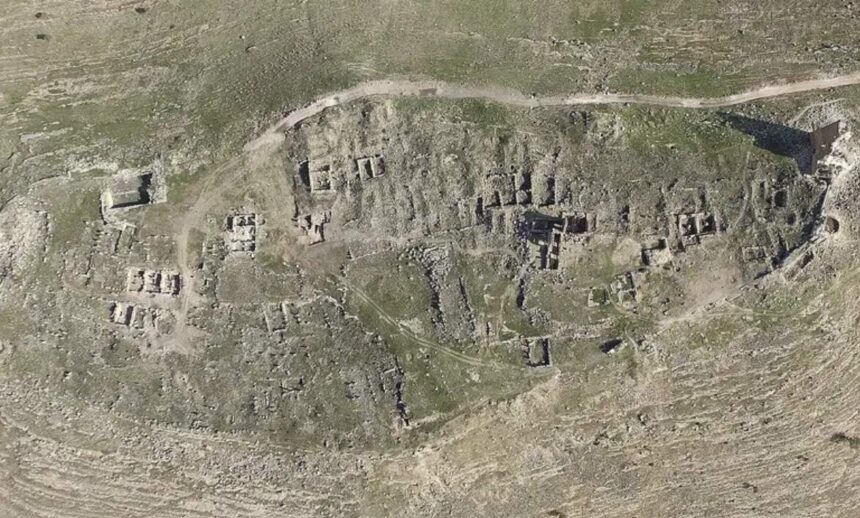
In the heart of modern-day Turkey lies the ancient city of Aizanoi, a treasure trove of archaeological wonders that have been shrouded in mystery for centuries. Recently, a team of researchers has unearthed a significant discovery at the city’s Mithras temple, a 1,700-year-old inscription that sheds light on the transformation of Mithraism, a popular Roman cult, into Christianity during the Roman period. The findings, published in a recent academic paper, offer a rare written account of the shift and provide valuable insights into the early days of Christianity.
Unveiling the Mithras Temple Inscription
The Mithras temple, dedicated to the worship of Mithras, a Persian deity, was a prominent center of worship in Aizanoi during the Roman era. The inscription, etched into a marble slab, measures approximately 1.5 meters in length and contains a message that is both poignant and intriguing. The text, written in ancient Greek, mentions ‘Lord’ and ‘Christ’ in the same breath, indicating a direct connection between the two concepts. This unique mention of Jesus Christ in a Mithraic context offers a fascinating glimpse into the early interactions between Mithraism and Christianity.
The researchers believe that the inscription may have been created during a time of significant upheaval in Aizanoi, as the city’s population struggled to adapt to the changing religious landscape. As Christianity began to gain traction, many Mithraists may have seen the value in converting to the new faith, leading to a gradual integration of Mithraic practices into Christian worship. This phenomenon, known as syncretism, allowed for the blending of different cultural and religious traditions, resulting in the unique blend of Mithraic and Christian elements that is evident in the inscription.
The Rise of Christianity in Aizanoi
The discovery of the inscription provides a unique window into the complex dynamics of Aizanoi during the Roman period. As Christianity spread throughout the empire, the city’s inhabitants were faced with a daunting decision: to adhere to the old Mithraic traditions or to adopt the new Christian faith. The inscription suggests that many people chose the latter, leading to a gradual decline in Mithraic worship and a corresponding rise in Christian devotion.
The researchers point out that the inscription may have been created in a context where Christians and Mithraists coexisted, with the former seeking to integrate the latter’s practices into their own worship. This syncretic approach allowed for a smoother transition between the two faiths, ultimately paving the way for the widespread adoption of Christianity in Aizanoi.
Implications for Our Understanding of Early Christianity
The Mithras temple inscription offers a significant contribution to our understanding of early Christianity, highlighting the complex and often contentious nature of the faith’s early days. By examining the inscription, researchers can gain a deeper understanding of the social, cultural, and religious dynamics that shaped the development of Christianity in the Roman world.
The findings also underscore the importance of continued archaeological research in Turkey, a country that has yielded countless treasures that shed light on the ancient world. As researchers continue to excavate and analyze the sites of Aizanoi and other ancient cities, they may uncover further insights into the lives of our ancestors and the evolution of the world’s major religions.
The Mithras temple inscription is a powerful reminder of the enduring legacy of the past, a testament to the ingenuity and resilience of the people who came before us. As we continue to uncover the secrets of the ancient world, we are reminded of the profound impact that our discoveries can have on our understanding of ourselves and our place in the world.