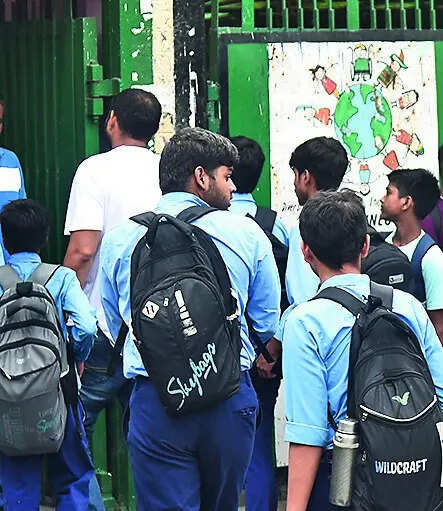
India’s education sector is witnessing a stark shift in student enrollment, with government schools losing a staggering 86 lakh students over the past two years. This significant decline has raised concerns about the quality of education and infrastructure in government-run institutions, which are struggling to compete with their private counterparts. As the numbers reveal, the gap between government and private schools is widening, with private institutions attracting an increasing number of students.
Experts attribute this trend to various factors, including the lack of modern infrastructure, inadequate teacher training, and outdated curriculum in government schools. In contrast, private schools are investing heavily in state-of-the-art facilities, technology, and experienced teachers, making them more attractive to parents seeking quality education for their children. The disparity in resources is further exacerbated by the fact that private schools often have more flexible admission policies, allowing them to cater to a broader range of students.
According to data, the number of students enrolled in government schools has dropped from 19.5 crore in 2019-20 to 18.64 crore in 2021-22. In the same period, private schools have seen a surge in enrollment, with the number of students increasing from 8.5 crore to 9.2 crore. This phenomenon is not limited to urban areas; even rural districts are witnessing a significant shift in student enrollment, with government schools losing ground to private institutions.
First Section
The implications of this trend are far-reaching, with potential consequences for India’s economic and social development. A well-educated workforce is critical for driving economic growth, innovation, and competitiveness. However, the decline of government schools threatens to undermine this effort, as students are increasingly opting for private institutions that often prioritize profit over people. Furthermore, the loss of students in government schools has significant equity implications, as disadvantaged communities are disproportionately affected by the decline in public education.
The government has taken steps to address these concerns, including initiatives to improve infrastructure, teacher training, and curriculum development in government schools. However, more needs to be done to bridge the gap between government and private schools. This may involve increasing funding for government schools, promoting partnerships between public and private institutions, and developing more inclusive and flexible education policies.
Second Section
One of the key challenges facing government schools is the lack of modern infrastructure. Many schools lack basic facilities such as computer labs, science labs, and libraries, making it difficult for students to access quality education. In contrast, private schools often have state-of-the-art facilities, including Wi-Fi-enabled classrooms, sports complexes, and modern laboratories. This disparity in infrastructure has significant implications for student outcomes, as access to quality facilities is critical for academic success.
Another significant challenge facing government schools is the issue of teacher training. Many government school teachers lack the necessary training and resources to provide effective instruction, leading to low student motivation and poor academic performance. In contrast, private schools often invest heavily in teacher training and development, ensuring that their educators are equipped to provide high-quality instruction. This disparity in teacher quality has significant implications for student outcomes, as effective teaching is critical for academic success.
Third Section
The future of India’s education sector hangs in the balance, as the country grapples with the implications of this trend. While government schools are struggling to compete with private institutions, it is essential to recognize the critical role that public education plays in promoting social mobility and economic development. By addressing the challenges facing government schools, policymakers can help ensure that all students have access to quality education, regardless of their background or socio-economic status.
The government must take a comprehensive approach to addressing the decline of government schools, including initiatives to improve infrastructure, teacher training, and curriculum development. This may involve increasing funding for government schools, promoting partnerships between public and private institutions, and developing more inclusive and flexible education policies. By working together, policymakers and educators can help ensure that India’s education sector is inclusive, equitable, and effective in promoting social mobility and economic development.