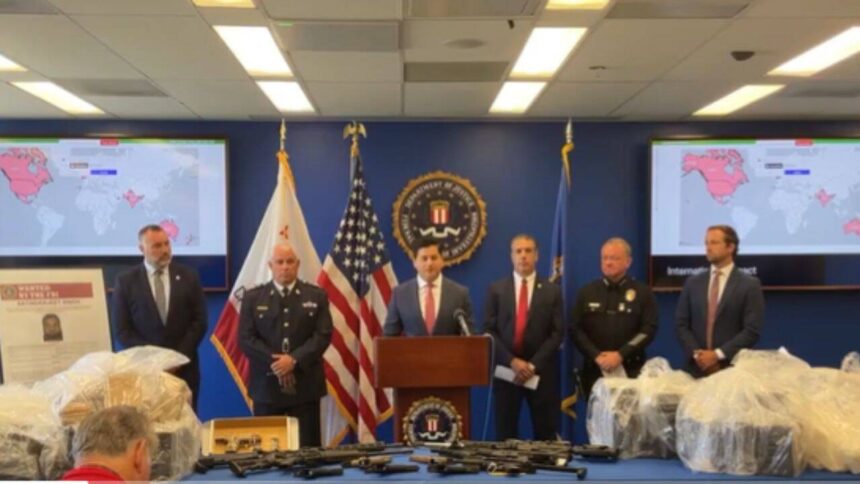
A shocking case of alleged extortion has shaken the Indian law enforcement community, with a Punjab police officer being named by the US Federal Bureau of Investigation (FBI) in a sweeping racketeering case. Gurinderjit Singh Nagra, a cop from Punjab, has been charged in connection with a $400,000 extortion case that is believed to have links to organized crime. The case has sent shockwaves through the Indian police force, with many questioning how one of their own could be involved in such a serious crime. The FBI’s charges against Nagra have led to his immediate transfer, and an investigation is currently underway to determine the extent of his involvement in the alleged extortion scheme.
Background of the Case
The FBI’s investigation into the extortion case began several months ago, with authorities tracking a complex web of financial transactions and communications that ultimately led them to Nagra. The case is believed to involve a group of individuals who were extorting money from businesses and individuals in the United States, with the money being laundered through various channels, including India. The FBI’s charges against Nagra allege that he was involved in the scheme, using his position as a police officer to facilitate the extortion and money laundering activities.
The Indian government has taken swift action in response to the FBI’s charges, with Nagra being immediately transferred to a different department pending the outcome of the investigation. The government has also assured the FBI of its full cooperation in the case, with Indian authorities working closely with their American counterparts to gather evidence and build a case against Nagra and any other individuals who may be involved.
Implications of the Case
The implications of the case are far-reaching, with serious questions being raised about the integrity of the Indian police force. The fact that a police officer was allegedly involved in a serious crime such as extortion has damaged the public’s trust in the force, and has highlighted the need for greater accountability and transparency within the organization. The case has also highlighted the growing problem of organized crime in India, with many experts warning that the country’s police forces are ill-equipped to deal with the sophisticated and well-organized nature of these crimes.
The Indian government has responded to the case by promising to take tough action against any police officers found to be involved in organized crime. The government has also announced plans to increase funding for the police force, with a focus on improving training and resources to help officers tackle the growing problem of organized crime. However, many experts warn that more needs to be done to address the root causes of the problem, including corruption and poor governance within the police force.
International Cooperation
The case has also highlighted the importance of international cooperation in tackling organized crime. The FBI’s investigation into the extortion case is a testament to the growing collaboration between law enforcement agencies around the world, with authorities working together to share intelligence and build cases against individuals and groups involved in serious crimes. The case has shown that organized crime is a global problem, and that it requires a global response to tackle it effectively.
The Indian government has welcomed the cooperation between the FBI and Indian authorities, and has expressed its commitment to working with other countries to tackle the problem of organized crime. The government has also announced plans to increase cooperation with other countries, including the United States, to share intelligence and best practices in tackling organized crime. As the investigation into Nagra and the extortion case continues, it is clear that international cooperation will play a critical role in bringing those involved to justice.
The case of Gurinderjit Singh Nagra is a sobering reminder of the serious challenges facing the Indian police force, and the need for greater accountability and transparency within the organization. As the investigation continues, it is likely that more details will emerge about the extent of Nagra’s involvement in the alleged extortion scheme, and the steps that the Indian government will take to address the problem of organized crime. For now, the case serves as a warning of the dangers of corruption and the importance of international cooperation in tackling serious crime.