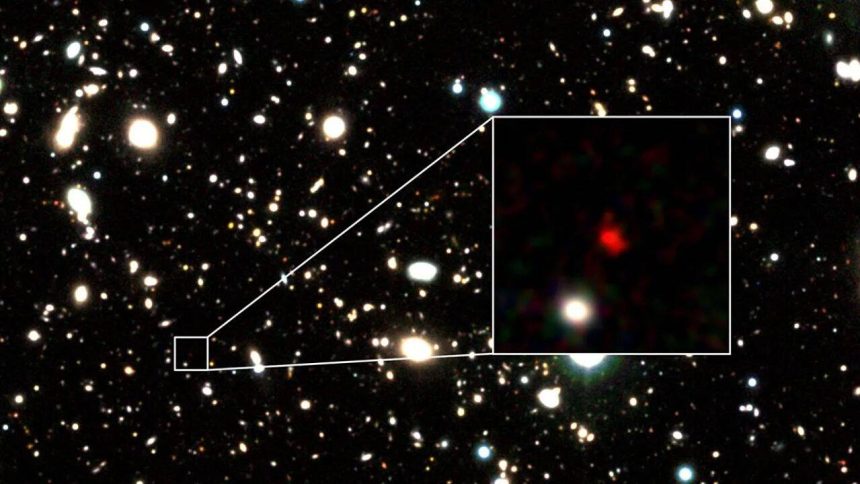
For decades, astronomers have been on a quest to uncover the mystery of the universe’s oldest star clusters. These dense, spherical collections of stars, known as globular clusters, are among the oldest visible structures in the universe, with some estimated to be over 13 billion years old. Despite their age, the early history of these celestial bodies remains shrouded in mystery, with scientists struggling to piece together the events that led to their formation. A new study has finally shed light on this enigmatic topic, offering a fascinating glimpse into the universe’s distant past.
The Formation of Globular Clusters: A Complex Process
Researchers have long believed that globular clusters were born in the early universe, likely as a result of the gravitational collapse of gas and dust in the first few hundred million years after the Big Bang. However, the exact mechanisms driving this process have remained unclear. A team of scientists has now used state-of-the-art simulations to model the formation of globular clusters, taking into account the complex interplay of gravity, gas, and stars. Their findings suggest that these clusters are not the result of a single catastrophic event, but rather a gradual process that unfolded over millions of years.
The simulations showed that globular clusters emerged from the gravitational collapse of massive gas clouds, which themselves were born from the universe’s primordial material. As the gas clouds collapsed, they fragmented into smaller clumps, which eventually merged to form the dense, spherical clusters we see today. The researchers also found that the formation of globular clusters was influenced by the presence of dark matter, a type of matter that does not emit, absorb, or reflect any electromagnetic radiation, yet has a profound impact on the universe’s large-scale structure.
The Role of Dark Matter in Globular Cluster Formation
The study’s findings highlight the crucial role played by dark matter in the formation of globular clusters. Dark matter’s presence helped to regulate the collapse of gas clouds, preventing them from fragmenting into smaller pieces and allowing them to merge into larger clusters. The researchers also found that dark matter’s influence extends to the cluster’s internal dynamics, with the mysterious substance helping to shape the distribution of stars within the cluster. This understanding has significant implications for our understanding of the universe’s evolution, particularly in the early stages of the cosmos.
The study’s results also provide valuable insights into the properties of dark matter, a mysterious substance that has long been a subject of scientific fascination. While dark matter’s existence is well established, its nature and properties remain poorly understood. The researchers’ findings suggest that dark matter may be more complex and dynamic than previously thought, with a potential impact on the formation of galaxies and galaxy clusters.
Unlocking the Secrets of the Universe’s Ancient Past
The study’s findings represent a significant breakthrough in our understanding of the universe’s early history, shedding new light on the mysterious processes that shaped the cosmos. The discovery of globular clusters’ formation mechanism and the role of dark matter in this process has far-reaching implications for our understanding of the universe’s evolution. As scientists continue to study these ancient star clusters, they may uncover even more secrets about the universe’s distant past, providing a fascinating glimpse into the cosmos’s earliest moments.
While the study’s findings have significant implications for our understanding of the universe, they also underscore the complexity and beauty of the cosmos. The universe’s early history remains a subject of ongoing research, with scientists continuing to unravel the mysteries of the universe’s distant past. The discovery of globular clusters’ formation mechanism is a testament to the power of scientific inquiry, inspiring new generations of researchers to explore the universe’s secrets.