There’s something magical about the smell of rain. It’s an experience that transcends age, geography, and culture. As the first droplets of rain hit dry ground, the air fills with an earthy scent that’s both familiar and alluring. We’ve all been there – standing under a stormy sky, feeling the cool raindrops on our skin, and breathing in the sweet aroma of petrichor. But have you ever stopped to think about where this scent comes from? Is it the rain itself? Or is there something more to it, something that’s been hiding in plain sight for centuries?
The Ancient Origins of Petrichor
Petrichor, a term coined by Australian researchers in the 1960s, refers to the distinctive smell that occurs when rain falls on dry soil or rocks. But what’s behind this phenomenon? Researchers have long suspected that it’s linked to the release of oils from plants and soil microorganisms. However, new evidence suggests that petrichor may have an even more fascinating origin – one that takes us back millions of years to the dawn of life on Earth.
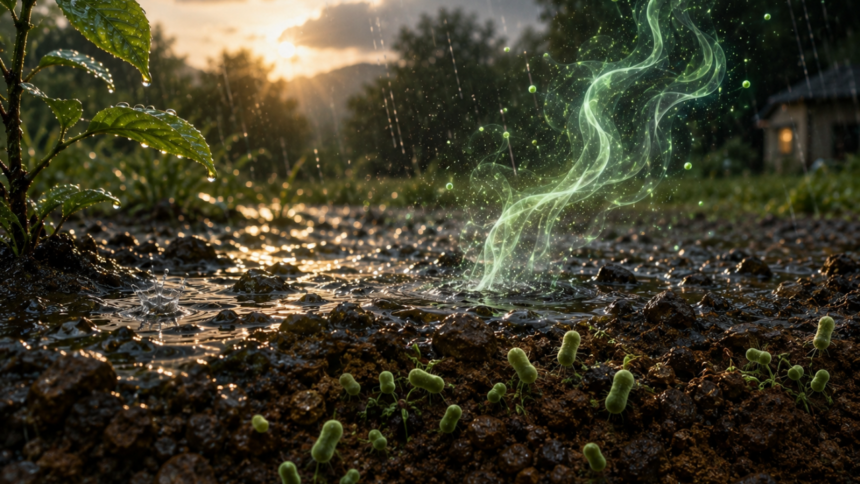
It all starts with the discovery of a type of bacteria called Actinobacteria, which is found in soil and rocks all over the world. These microorganisms have been around for an estimated 3.5 billion years, long before the emergence of complex life forms. And it’s their oils that are responsible for the distinctive smell of petrichor. When rain falls, it releases these oils from the soil, creating a potent cocktail of organic compounds that waft up into the air.
The science behind this process is complex, involving the breakdown of plant material, the release of oils from soil microorganisms, and the interaction of these compounds with the atmosphere. But the end result is a scent that’s both hauntingly familiar and utterly unique – a reminder of the rich, untold history that lies beneath our feet.
The Science of Smell: Unraveling the Mystery of Petrichor
So why do we respond so strongly to the smell of petrichor? The answer lies in the way our brains process odors. When we smell something, our brains create a mental map of the scent – a complex pattern of molecules that’s unique to each individual. But petrichor is different. Its scent is both primal and universal, tapping into a deep well of human experience that transcends language and culture.
Research has shown that petrichor activates the brain’s reward centers, releasing feel-good hormones like dopamine and endorphins. This explains why the smell of rain is often associated with feelings of calmness, relaxation, and even spirituality. It’s as if our brains are hardwired to respond to the scent of petrichor, reminding us of the beauty and wonder of the natural world.
But petrichor is more than just a pleasant smell – it’s also a window into the past. By studying the oils released by soil microorganisms, scientists can gain insights into the Earth’s history, from the evolution of life to the impact of climate change.
The Legacy of Petrichor: A Scent that Transcends Time
Petrichor may be a fleeting experience, but its impact is lasting. Whether we’re standing in a rainstorm or simply walking through a field, the scent of petrichor reminds us of the intricate web of life that surrounds us. It’s a connection to the past, a reminder of the beauty and wonder that lies just beneath our feet.
As we continue to explore the mysteries of petrichor, we’re forced to confront the limits of our knowledge and the power of the natural world. Petrichor is more than just a smell – it’s a reminder of the awe-inspiring complexity of the Earth’s ecosystem and the secrets that still await us in the ancient bacteria that lie beneath our feet.
So next time you catch a whiff of petrichor, remember the ancient history behind it. Remember the Actinobacteria that released those oils millions of years ago. And remember the intricate web of life that connects us all – a web that’s woven from the threads of time, history, and the scent of rain.