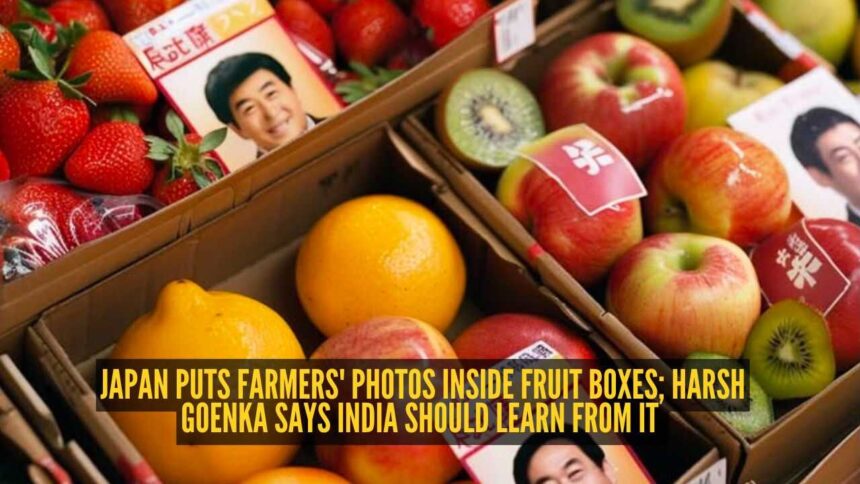
The next time you pick up an apple or a box of strawberries, imagine seeing the smiling face of the farmer who grew them staring back at you. It sounds unusual, but in parts of Japan, that’s exactly what shoppers get. This unique approach to food transparency has been gaining attention worldwide, with many praising the initiative for humanizing the farming process and fostering a sense of connection between consumers and the people who grow their food. Harsh Goenka, a prominent Indian businessman, recently took to social media to express his admiration for this Japanese practice, suggesting that India could learn a thing or two from its implementation.
Putting A Face To The Produce
The idea behind placing farmers’ photos inside fruit boxes is rooted in the desire to create a more personal and engaging shopping experience. By putting a face to the produce, Japanese farmers aim to build trust and appreciation for the hard work that goes into cultivating the food that ends up on consumers’ tables. This approach not only helps to raise awareness about the importance of supporting local agriculture but also serves as a marketing tool, allowing farmers to differentiate their products in a competitive market. As a result, consumers are more likely to feel invested in the story behind the food they buy, which can lead to increased loyalty and a greater willingness to pay a premium for high-quality, locally sourced produce.
One of the key benefits of this initiative is that it helps to break down the anonymity that often characterizes the relationship between farmers and consumers. In many countries, the people who grow our food are faceless entities, rarely recognized or appreciated for their contributions to the food system. By sharing their stories and photos, Japanese farmers are able to reclaim their rightful place at the center of the agricultural narrative, highlighting the care, dedication, and expertise that goes into producing the fresh, healthy food that we all rely on.
Learning From Japan’s Example
As Harsh Goenka’s comments suggest, there are valuable lessons that other countries, including India, can learn from Japan’s innovative approach to farming transparency. By embracing similar initiatives, governments and agricultural organizations can help to promote a more nuanced understanding of the food system, one that recognizes the vital role that farmers play in feeding our communities. This, in turn, can lead to increased support for local agriculture, as well as a greater emphasis on sustainable and equitable farming practices. Moreover, by humanizing the farming process, we can work to create a more empathetic and informed food culture, one that values the people and stories behind the food we eat.
The potential benefits of adopting a similar approach in India are significant. With its large and diverse agricultural sector, India has a unique opportunity to promote a more transparent and equitable food system, one that recognizes the contributions of its millions of farmers. By sharing the stories and photos of these farmers, Indian consumers can develop a deeper appreciation for the food they eat, as well as a greater understanding of the challenges and opportunities facing the country’s agricultural sector. This, in turn, can help to drive demand for locally sourced produce, supporting the livelihoods of Indian farmers and contributing to a more sustainable food future.
A New Era Of Food Transparency
Japan’s decision to put farmers’ photos inside fruit boxes represents a significant step forward in the pursuit of greater food transparency. As consumers become increasingly interested in the story behind their food, initiatives like this one are likely to play an important role in shaping the future of the agricultural sector. By putting a face to the produce, Japanese farmers are helping to create a more personal and engaging shopping experience, one that values the people and stories behind the food we eat. As other countries look to learn from Japan’s example, we can expect to see a new era of food transparency emerge, one that prioritizes the needs and interests of both farmers and consumers.
As we look to the future of food production and consumption, it is clear that initiatives like Japan’s farmer photo program will play an important role in shaping the agricultural landscape. By promoting a more nuanced understanding of the food system and the people who work within it, we can create a more equitable and sustainable food culture, one that values the contributions of farmers and recognizes the importance of their work. Whether you’re a farmer, a consumer, or simply someone who cares about the food you eat, this is a development worth watching, and one that has the potential to make a real difference in the lives of people around the world.