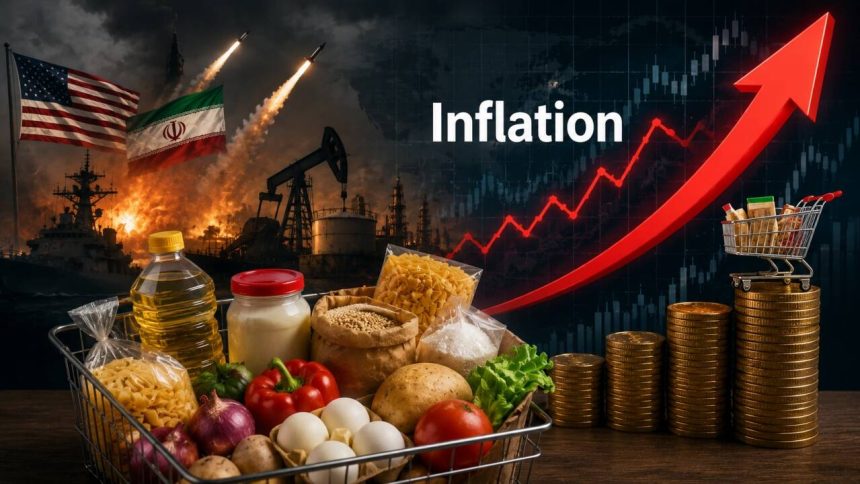
The ongoing US-Iran war has started to take a toll on India’s economy, with the country’s wholesale price inflation rising to 9.87% in June, up from 9.68% in May. This surge in prices has been primarily driven by a sharp increase in the cost of food and non-food items, leaving businesses and consumers bracing for the impact. As the global economy teeters on the edge of uncertainty, India’s rising wholesale prices have become a pressing concern for policymakers and industry leaders alike.
Economic Implications
The latest inflation figures have sparked worries about the potential consequences for India’s economic growth, which has already been facing significant challenges in recent months. With food prices rising at an alarming rate, the average consumer is likely to feel the pinch, potentially leading to reduced spending and lower demand for goods and services. This, in turn, could have a ripple effect on businesses, particularly those in the manufacturing and retail sectors, which are already struggling to cope with the slowdown.
Furthermore, the increase in wholesale prices could also have implications for India’s monetary policy, with the central bank facing a difficult decision on whether to raise interest rates to curb inflation or keep them low to support economic growth. As the situation continues to unfold, one thing is clear: the US-Iran war has brought India’s economic vulnerabilities to the forefront, and policymakers will need to tread carefully to mitigate the effects of the global turmoil.
Impact on Industries
The rise in wholesale prices has far-reaching implications for various industries, including agriculture, manufacturing, and construction. Farmers, who are already struggling with poor crop yields and low prices, may find it difficult to cope with the increasing cost of inputs such as fertilizers and pesticides. Similarly, manufacturers will have to contend with higher raw material costs, which could erode their profit margins and force them to raise prices, potentially affecting demand.
The construction industry, which is a significant contributor to India’s GDP, is also likely to feel the heat, as higher prices of building materials such as steel and cement could lead to increased costs and delays in project completion. As the situation continues to evolve, industry leaders will need to adapt quickly to the changing landscape and find ways to minimize the impact of the rising wholesale prices on their businesses.
Way Forward
As India navigates the challenges posed by the US-Iran war, policymakers will need to take a multi-pronged approach to address the issue of rising wholesale prices. This could involve a combination of monetary and fiscal measures, such as adjusting interest rates, implementing price controls, and providing support to affected industries. Additionally, efforts to boost domestic production and reduce reliance on imports could help mitigate the impact of global price shocks.
Ultimately, the key to weathering the current storm will lie in the ability of policymakers and industry leaders to work together to find solutions that balance the need to control inflation with the need to support economic growth. As the global economy continues to grapple with the fallout of the US-Iran war, India’s response to the crisis will be closely watched, and the country’s ability to navigate these challenging times will have a significant bearing on its future economic prospects.