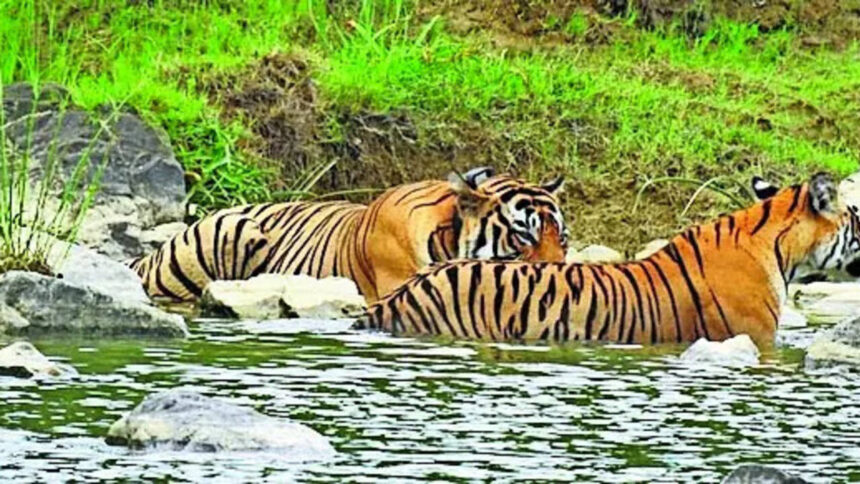
The Chhattisgarh assembly witnessed a heated debate on Wednesday as allegations of a cover-up in the tiger poaching case at the Indravati tiger reserve sent shockwaves across the state. Leader of opposition Charan Das Mahant accused the government of shielding a larger wildlife trafficking syndicate, sparking a fierce exchange with the ruling party. The issue has left many questioning the government’s intentions and the true extent of the poaching case.
Allegations of a Cover-Up
The controversy began to unfold when Charan Das Mahant raised questions in the assembly about the arrest of an Intelligence Bureau (IB) personnel in connection with the tiger poaching case. Mahant accused the government of withholding crucial information regarding the identity of the arrested IB official, fueling speculations about a larger conspiracy. He questioned why the government was refusing to disclose the individual’s name, suggesting that there might be more to the story than meets the eye.
Mahant’s allegations were met with strong denials from the ruling party, with several ministers claiming that the government was committed to bringing the perpetrators to justice. However, the opposition leader remained unconvinced, suggesting that the government’s actions were motivated by a desire to protect a powerful wildlife trafficking syndicate.
The debate has raised crucial questions about the government’s handling of the tiger poaching case and its commitment to protecting the state’s wildlife. While the ruling party has maintained that it is taking all necessary steps to prevent wildlife crimes, the opposition has accused it of turning a blind eye to the true extent of the problem.
Environmental Activists Weigh In
Environmental activists and wildlife experts have expressed concern over the allegations of a cover-up, warning that the situation could have far-reaching consequences for the state’s tiger population. They have called for a thorough investigation into the tiger poaching case, urging the government to disclose the identity of the arrested IB official and provide a detailed account of the events surrounding the incident.
The activists have also highlighted the importance of protecting the Indravati tiger reserve, which is home to a significant population of tigers. They have expressed fears that the poaching case could have a devastating impact on the reserve’s ecosystem, threatening the very existence of the tiger population.
The government’s response to the allegations has been met with skepticism by many, who believe that it is not doing enough to prevent wildlife crimes. The opposition’s accusations have added fuel to the debate, with the issue now set to dominate the state’s political discourse in the coming days.
Call for Transparency
The controversy has raised crucial questions about the need for greater transparency in the government’s handling of wildlife crimes. Many have called for the government to disclose more information about the tiger poaching case, including the identity of the arrested IB official and the extent of the damage caused to the Indravati tiger reserve.
The debate has also highlighted the need for greater cooperation between the government and environmental activists to tackle the problem of wildlife crimes. Many believe that the government needs to work more closely with wildlife experts and conservationists to develop effective strategies for protecting the state’s wildlife and preventing poaching incidents.
As the debate continues to rage, one thing is clear: the government’s handling of the tiger poaching case has left many with more questions than answers. The need for transparency and accountability has never been more pressing, and it remains to be seen how the government will respond to the mounting pressure.
The case has also raised broader questions about corruption and the rule of law in Chhattisgarh. Many believe that the government’s actions are symptomatic of a larger problem, where powerful interests are able to wield influence and undermine the law. The debate has sparked a renewed call for greater accountability and transparency in government, with many demanding action to address the root causes of corruption.
The tiger poaching case has brought the spotlight on the government’s handling of wildlife crimes, but it also has far-reaching implications for the state’s governance and accountability. The need for reform and greater transparency has never been more pressing, and it remains to be seen how the government will respond to the mounting pressure.