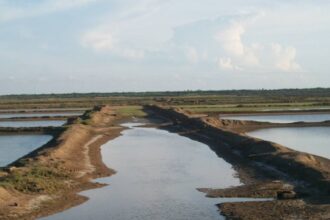
In the heart of Assam’s Brahmaputra River, a remarkable story of dedication and perseverance has unfolded over the past four decades. Jadav Molai Payeng, a 62-year-old native of the region, has single-handedly transformed a barren sandbar into a thriving 1,300-acre forest, teeming with life and biodiversity. This unassuming hero’s journey is a testament to the transformative power of human effort and the importance of protecting our planet’s precious ecosystems.
From Desert to Eden
The sandbar, once a desolate stretch of sand, was ravaged by erosion and changing river patterns. Payeng, who was just 16 when he began his mission, was motivated by the tragic loss of a rhino that had wandered onto the sandbar and perished due to lack of food and shelter. Determined to create a safe haven for wildlife, Payeng planted his first tree – a bamboo shoot – in 1979. Over the years, he continued to plant trees, day after day, often facing harsh weather conditions, isolation, and skepticism from his community.
The initial years were marked by struggle and hardship. Payeng faced numerous challenges, including the threat of wild animals, harsh weather conditions, and the difficulty of accessing the sandbar during the monsoon season. However, his unwavering dedication and commitment to his mission eventually began to yield tangible results. As the forest grew, so did the diversity of wildlife. Payeng’s sanctuary attracted a variety of species, including elephants, rhinos, tigers, and numerous bird species.
A Sanctuary for Wildlife
The forest, now a lush oasis in the midst of the Brahmaputra River, is a testament to Payeng’s tireless efforts. The forest is home to over 100 species of birds, including the rare Bengal florican and the greater adjutant stork. The forest’s unique ecosystem supports a variety of wildlife, including the endangered greater one-horned rhino, the Asian elephant, and the Bengal tiger. Payeng’s sanctuary has become a vital habitat for these majestic creatures, providing them with a safe haven from human-wildlife conflict and habitat loss.
Payeng’s work has not gone unnoticed. His forest has attracted the attention of local authorities, conservationists, and wildlife enthusiasts. The Indian government has recognized Payeng’s efforts and has provided him with support and recognition. Payeng’s story is an inspiration to people around the world, highlighting the impact that one individual can have on the environment and the importance of conservation efforts.
A Legacy of Hope
As Payeng looks back on his 40-year journey, he is filled with a sense of pride and accomplishment. His forest is a testament to the power of human determination and the importance of protecting our planet’s precious ecosystems. Payeng’s legacy extends beyond the forest, inspiring a new generation of conservationists and environmentalists. His story serves as a reminder that even the smallest actions can have a profound impact on the world around us.
Payeng’s journey is a powerful reminder that conservation is not just a moral imperative, but also a vital necessity for the future of our planet. As the world grapples with the challenges of climate change, biodiversity loss, and habitat destruction, Payeng’s story offers a beacon of hope. His forest is a testament to the transformative power of human effort and the importance of protecting our planet’s precious ecosystems.