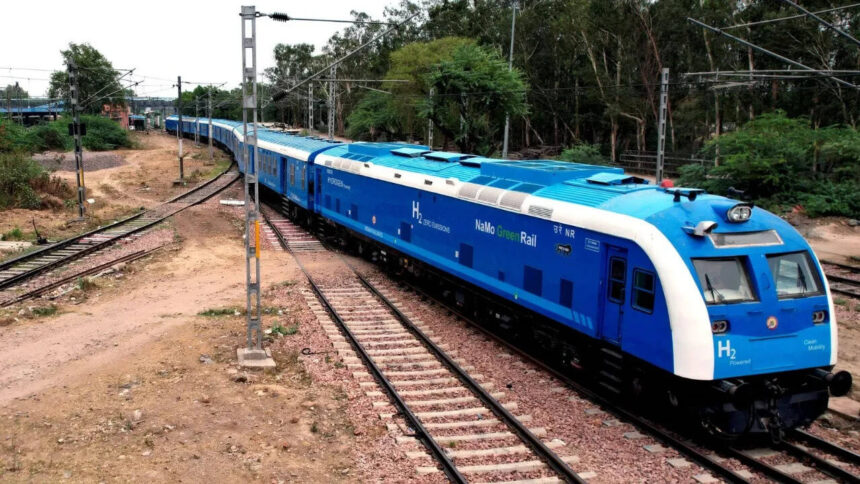
Imagine a train that runs on a fuel that is not only abundant but also produces only water vapour as a direct emission. This is not a concept from a science fiction movie, but a reality that has just begun in India with the launch of its first hydrogen-powered passenger train on the Jind-Sonipat route. The train’s promise lies in its ability to generate electricity onboard using hydrogen, making it a cleaner and more sustainable mode of transportation. This innovation has the potential to revolutionize the way we travel, reducing our carbon footprint and contributing to a cleaner environment.
How Hydrogen Trains Work
A hydrogen train works by using hydrogen to generate electricity onboard, which is then used to power the train’s motors. The process involves the reaction of hydrogen with oxygen from the air to produce electricity, with water vapour as the only direct emission. This is a significant improvement over traditional diesel-powered trains, which emit harmful pollutants and contribute to climate change. The hydrogen train is equipped with a fuel cell system that converts the chemical energy of hydrogen into electrical energy, making it a zero-emission mode of transportation.
The fuel cell system is the heart of the hydrogen train, and it is what sets it apart from other modes of transportation. The system consists of a series of cells that combine hydrogen and oxygen to produce electricity, with each cell consisting of an anode, a cathode, and an electrolyte. The anode is where the hydrogen is introduced, and the cathode is where the oxygen is introduced. The electrolyte is a special material that helps to facilitate the reaction between the hydrogen and oxygen, producing electricity in the process.
Benefits of Hydrogen Trains
The benefits of hydrogen trains are numerous, and they have the potential to revolutionize the way we travel. One of the most significant benefits is the reduction in greenhouse gas emissions, which contribute to climate change. Hydrogen trains produce only water vapour as a direct emission, making them a cleaner and more sustainable mode of transportation. Additionally, hydrogen trains are quieter and produce less vibration than traditional diesel-powered trains, making them a more comfortable mode of transportation for passengers.
Another benefit of hydrogen trains is their potential to reduce operating costs. Hydrogen trains require less maintenance than traditional diesel-powered trains, and they have a longer lifespan. This can help to reduce the overall cost of operating a train, making it a more viable option for transportation companies. Furthermore, hydrogen trains can help to reduce dependence on fossil fuels, which are a finite resource. By using hydrogen as a fuel source, trains can help to reduce the demand for fossil fuels, which can help to mitigate the impact of climate change.
Future of Hydrogen Trains
The launch of India’s first hydrogen-powered passenger train is a significant milestone in the development of hydrogen trains. It marks a major step forward in the quest for cleaner and more sustainable modes of transportation. As the technology continues to evolve, we can expect to see more hydrogen trains being introduced in the future. In fact, several countries around the world are already investing in hydrogen train technology, with plans to introduce their own hydrogen-powered trains in the near future.
The future of hydrogen trains looks bright, with the potential to revolutionize the way we travel. As the world continues to grapple with the challenges of climate change, hydrogen trains offer a cleaner and more sustainable mode of transportation. With their ability to generate electricity onboard using hydrogen, hydrogen trains have the potential to reduce greenhouse gas emissions and contribute to a cleaner environment. As we look to the future, it is clear that hydrogen trains will play a major role in shaping the transportation landscape of tomorrow.