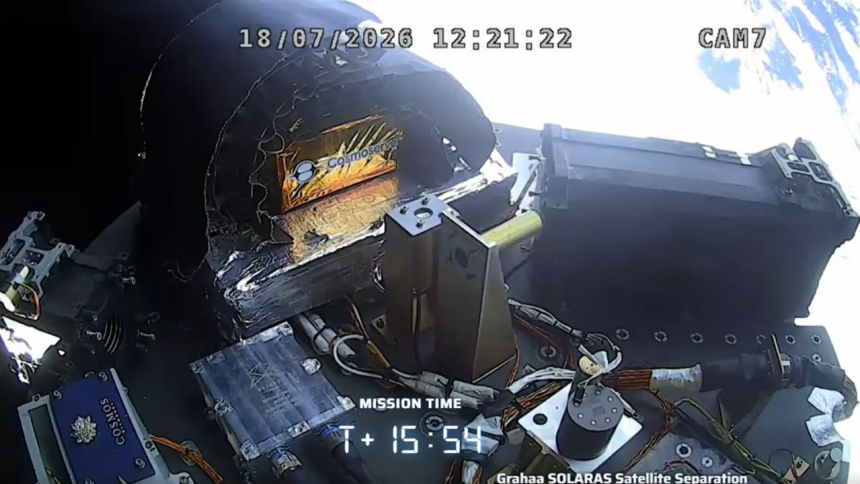
India’s space sector has taken a major leap forward with the successful launch of Vikram-1, a privately developed orbital launch vehicle by Hyderabad-based Skyroot Aerospace. On Friday, the country witnessed a historic moment as six payloads, including two satellites, were carried into low-Earth orbit aboard the rocket. This achievement marks a significant milestone in the opening of India’s space sector to private players, paving the way for a new era of space exploration and innovation. The successful launch of Vikram-1 has sent shockwaves of excitement across the nation, as it demonstrates the potential of private companies to drive progress in the space industry.
Breaking Down the Barriers: Skyroot’s Journey to Success
Founded in 2018 by two entrepreneurs, Pawan Kumar Chandana and Naga Bharath Daka, Skyroot Aerospace has been working tirelessly to develop a privately owned orbital launch vehicle. With a team of skilled engineers and scientists, the company has faced numerous challenges along the way, but their determination and perseverance have ultimately paid off. Vikram-1, named after the Indian astronaut Vikram Sarabhai, marks the culmination of years of hard work and dedication by the team at Skyroot. The rocket’s maiden flight was a testament to the power of innovation and the potential of private companies to drive progress in the space industry.
The success of Vikram-1 is not just a victory for Skyroot Aerospace but also for the Indian space sector as a whole. The country’s space agency, ISRO, has been at the forefront of space exploration and innovation, and the opening up of the sector to private players is a significant step forward. The private space industry has the potential to drive innovation, reduce costs, and increase access to space for various applications. With the successful launch of Vikram-1, India has taken a significant step towards becoming a major player in the global space industry.
Orbital Excellence: The Payloads on Board
The successful launch of Vikram-1 carried six payloads into low-Earth orbit, including two satellites. The payloads were developed by various universities and research institutions across the country, and their successful deployment marks a significant milestone in India’s space sector. The satellites carried on board were designed to conduct experiments in the field of space technology, including Earth observation, communication, and navigation. The successful deployment of these payloads demonstrates the capabilities of the Vikram-1 rocket and the potential of private companies to drive innovation in the space industry.
The payloads carried on board the Vikram-1 rocket included a nanosatellite developed by the Indian Institute of Technology (IIT) Madras, which will be used to study the effects of space radiation on electronics. Another payload was a small satellite developed by the University of Hyderabad, which will be used to test new communication technologies. The successful deployment of these payloads marks a significant milestone in India’s space sector and demonstrates the potential of private companies to drive innovation in the space industry.
The Future of Space Exploration: What’s Next for Skyroot and India’s Private Space Sector?
The successful launch of Vikram-1 marks a significant milestone in India’s space sector, but it is just the beginning. Skyroot Aerospace has already announced plans to launch another rocket, Vikram-2, which will carry a larger payload into orbit. The company is also working on developing a new generation of launch vehicles, which will be capable of carrying heavier payloads into orbit. With the opening up of the space sector to private players, India has taken a significant step towards becoming a major player in the global space industry. The future of space exploration is exciting, and Skyroot Aerospace is at the forefront of this revolution.
As the nation celebrates this historic achievement, the people of India can take pride in the country’s space sector. The successful launch of Vikram-1 marks a significant milestone in India’s space history, and it demonstrates the potential of private companies to drive progress in the space industry. The future of space exploration is bright, and Skyroot Aerospace is leading the charge. With its innovative approach and determination, the company is poised to make significant contributions to the field of space exploration and innovation.